+86-29-8964-0200
info@islamichina.com

Memperkenalkan Kota Larangan
Sebagai kediaman diraja maharaja-maharaja Dinasti Ming dan Qing dari abad ke-15 hingga abad ke-20, Kota Larangan pernah menjadi pusat kuasa Negeri di China feudal akhir. Ia dibina antara 1406 and 1420 oleh maharaja Ming Zhu Di dan menyaksikan pemasyhuran 14 maharaja Ming dan 10 Qing sepanjang berikutnya 505 tahun. Terdapat lebih dari sejuta karya seni yang jarang dan bernilai tinggi dalam koleksi tetap Kota Larangan termasuk lukisan, seramik, meterai, prasasti, arca, barangan bertulis, barangan gangsa, objek enamel, dsb. Kota Larangan telah diisytiharkan sebagai Tapak Warisan Dunia pada 1987 dan disenaraikan oleh UNESCO sebagai koleksi struktur kayu purba yang dipelihara terbesar di dunia.
Fakta Pantas Kota Larangan
• Nama Cina: Gu Gong Bo Wu Yuan 故宫博物院
• Masa Terbaik untuk Melawat: Sepanjang tahun
• Waktu Pelawat yang Disyorkan: Tentang 2 kepada 3 jam
• Waktu Pembukaan (ditutup pada hari Isnin)
Apr 1 hingga Okt 31: 8:30-17:00 (catatan terakhir pada 16:00)
Nov 1 hingga Mar 31: 8:20-16:30 (catatan terakhir pada 15:30)
• Bayaran Masuk
Apr 1 hingga Okt 31: CNY60
Nov 1 hingga Mar 31: CNY40
Galeri Harta Karun: CNY10
Jam & Galeri Jam: CNY10
• Alamat: Tidak. 4 Jalan Jingshanqian, Daerah Dongcheng, Beijing
Apa yang dijangka di Kota Larangan
· Susun atur & Pembinaan
Memanjangkan 750 meter timur-barat dan 960 meter utara-selatan, Gerbang 720,000 kota berluas meter persegi ini adalah kompleks istana terbesar di dunia. Keseluruhan kompleks dijaga rapi oleh dua barisan pertahanan. Satu adalah parit, yang berada 52 meter lebar dan enam meter dalam, dan satu lagi adalah tembok kota, yang berada 3 kilometer panjangnya, 10 meter tinggi dan 8.62 meter lebar di bahagian bawah.
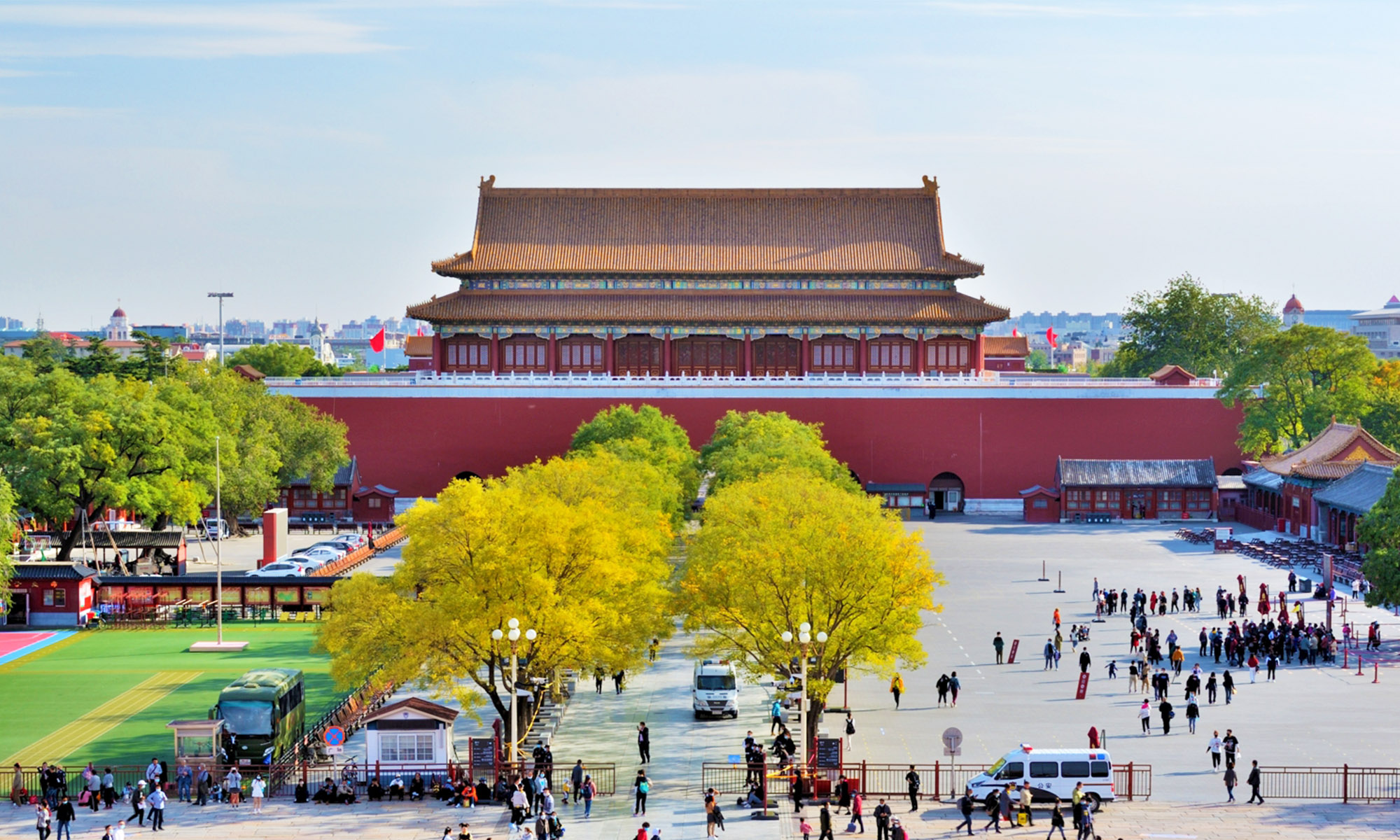
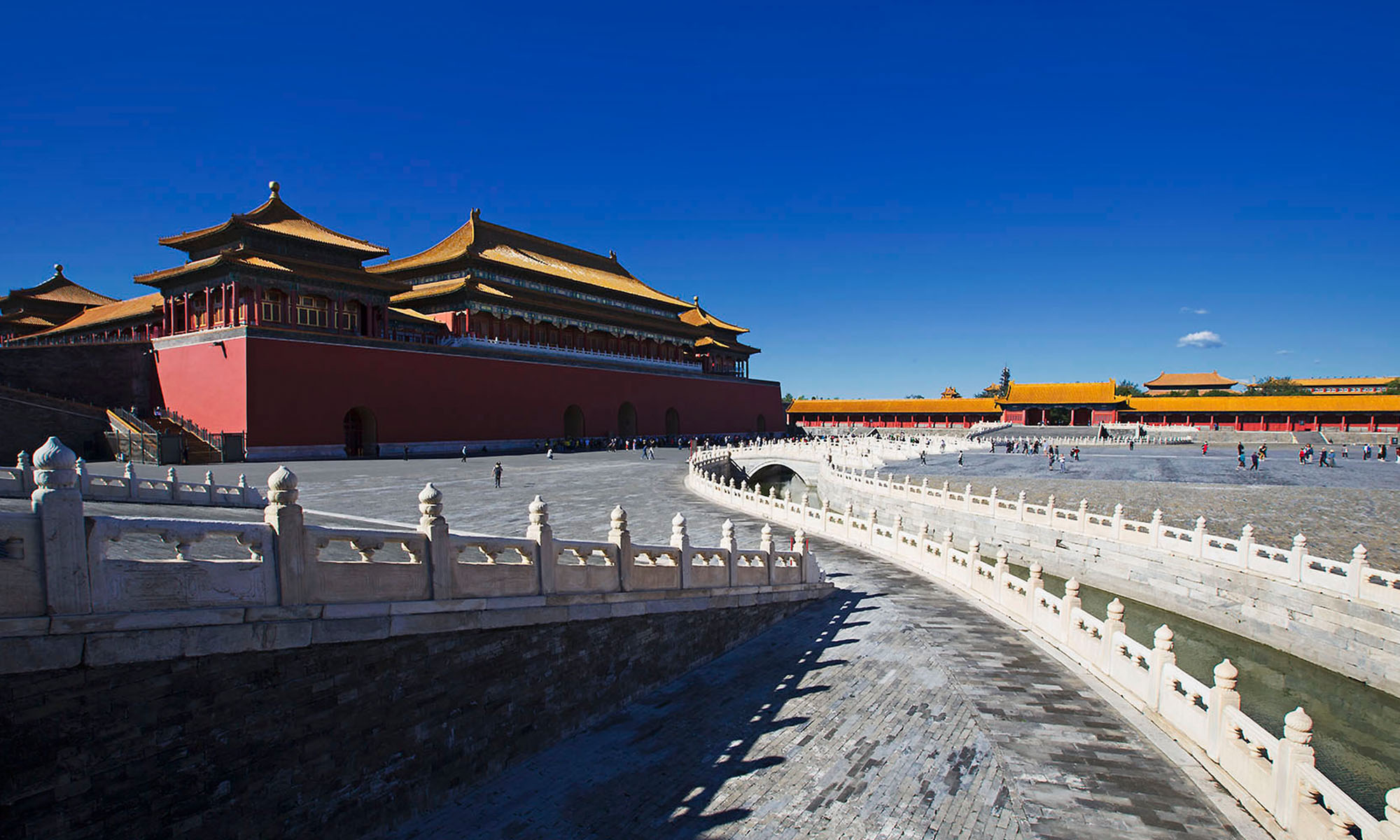
Terdapat empat pintu di Kota Larangan : Wumen (Pintu Meridian) di selatan, Shenwumen (Pintu Kebolehan Ilahi) di utara, Donghuamen di timur dan Xihuamen di barat. Di keempat-empat penjuru terdapat empat menara burung merpati, masing-masing dengan tiga lapisan longkang dan 72 punggung bumbung. Mereka adalah karya agung seni bina purba.
Kota Larangan dibahagikan kepada bahagian selatan dan utara: Bahagian pertama berfungsi sebagai kawasan kerja maharaja manakala bahagian kedua sebagai tempat tinggalnya. Struktur utama disusun sepanjang paksi tengah, dan bangunan di kedua belah pihaknya adalah simetri.
Struktur utama di kawasan kerja yang tidak boleh dilepaskan adalah Tai He Dian (dewan Keselarasan Tertinggi), Zhong He Dian (dewan Keselarasan Tengah) dan Bao He Dian (dewan Penjagaan Keselarasan). Ketiga-tiga dewan utama dibina di atas platform setinggi lapan meter dengan keluasan keseluruhan kira-kira 85,000 meter persegi. Dewan Keselarasan Tertinggi adalah dewan yang terbesar dan paling megah. Ia adalah 60.1 meter lebar, 33.33 meter dalam dan 35.05 meter. Di sini upacara terpenting dinasti feudal diadakan, seperti kenaikan maharaja ke takhta, his marriage and his conferring of titles and issuing orders on expeditions. On these occasions, thousands of people chanted “long life, long life, and long, long life” to his majesty, and hundreds of musical instruments and bells and drums sounded in unison. Behind the Hall of Supreme Harmony is the Hall of Central Harmony, where the emperors used to rest and receive officials before attending major ceremonies. The northernmost structure is the Hall of Preserving Harmony, in which the emperor held banquets and interviewed successful candidates for imperial examinations.
The living quarters include the Palace of Heavenly Purity, Hall of Union and Palace of Earthly Tranquility and the six lesser halls on the east and west sides, which together are called “three main halls and six lesser halls”, where the emperor and his concubines lived. North of the living quarters is a small but exquisite imperial garden. In the Ming Dynasty and at the beginning of the Qing Dynasty, all the emperors lived in the Palace of Heavenly Purity; empresses lived in the Palace of Earthly Tranquility. The Hall of Union was a place for the activities of the empresses. But in the middle and late periods of the Qing Dynasty, the emperors and empresses all moved to the six lesser halls on the west side. The most famous is the Hall of Mental Cultivation). It became the place where most Qing emperors starting from Emperor Yong zheng, lived and handled state affairs. It is also the place where Empress Dowager Cixi attended to state affairs behind the scenes for as long as 40 tahun.
· Symbolic Meanings
The Forbidden City has symbolic meanings that reflect Chinese culture in one way or another.
The name “purple forbidden city” itself is associated with ancient Chinese philosophy and astrology. The Chinese advocated a mutual sensing between man and heaven or the integration of man and heaven. So, the structure of the Forbidden City is patterned after the legendary Heavenly Palace. Ancient Chinese astrologers divided the constellation into three parts, which were surrounded by 28 stars. Antaranya, the Purple Forbidden Enclosure (polar star) was thought to be in the center of the heaven, the center of all stars. Purple in the name refers to the star, meaning that the imperial court was the center of man under heaven. “Forbidden” refers to the living of the imperial family, which was deemed to have supreme dignity that cannot be encroached upon.
In the palace complex, there are 9,999 bilik, and each gate has nine bronze nails. The number was associated with the knowledge about numbers possessed by the ancients. Ancients thought that “9” was the biggest, and since the emperor was the greatest among people, the number “9” is used correspondingly. In Chinese, “9” is pronounced like the word meaning “everlasting”, and so the number is used to reflect the wishes that the rule would last forever.
Astute visitors might notice that all the place names inside the palace complex include the Chinese characters “ren”, “he”,”zhong” atau “an” – such as Tian‘anmen and Tai He Dian. These Chinese characters represent the heart of Confucian ideas, such as fidelity, benevolence, which give prominence to the traditions of Confucianism.
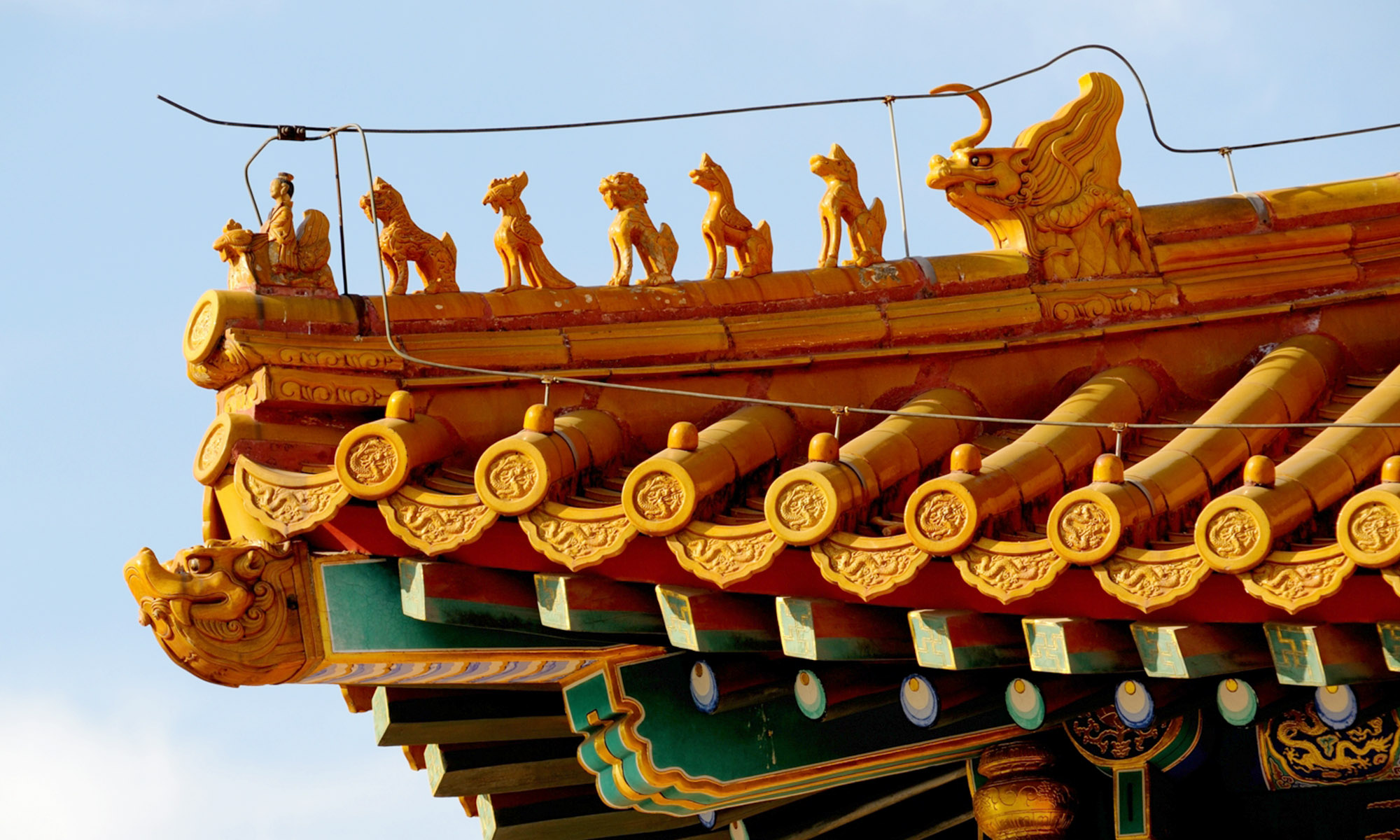
The Palace of Heavenly Purity (Qian Qing Gong), the Hall of Union (Jiao Tai Dian) and the Palace of Earthly (Kun Ning Gong) Tranquility, where emperors and empresses lived, are all associated with the Confucian classic “The Book of Changes”. According to the book, Qian means heaven, representing male; Kun means earth, representing female. Tai means peace and smooth-going. So putting together, it means peace between the heaven and earth, signifying that the emperor and the empress lived in harmony. Color in the palace complex also has profound meaning. The dominant color in the complex is yellow, especially in the layout of the Palace of Heavenly Purity. The use of the color is originated from the theory of “five elements” in the Book of Ministers. The ancients held that the world was made up of “gold, wood, water, fire and earth”. As the five elements were mutually repellent, the world changed precariously. The yellow color represented “earth”, on which all things were founded. Since the emperor was the ruler of the common people, yellow is used for all the imperial palaces.
The only structure with a roof of black tiles is Wen Yuan Ge, or the imperial library. Among the five elements, black symbolizes “water” and water is incompatible with fire, so black tiles are used for the library, representing repellence of fire. While appreciating the buildings, visitors who grasp the symbolic meanings of the structures will find that they fire greater interest. Only when the materialized Chinese culture is understood is it possible to understand the greatness of the Forbidden City or the Palace Museum.
· How the Forbidden City was built?
Di 1406, Emperor Yong Le of the Ming Dynasty began building the Forbidden City. Historical records show that it took one million laborers and 100,000 craftsmen 15 years to complete the project. Despite repeated renovations and expansions by later emperors, the Forbidden City remained more or less the same in appearance and size. All buildings in the Forbidden City are constructed of wood and brick, the best materials at the time. Before entering the Forbidden City, you may see the bricks used to build the wall outside. The brick is called Deng Jiang brick or deposited mud brick. It is made by putting clay into a pool to allow it to deposit and then taking out the fine mud at the bottom and using it to make adobe. The size of each brick is usually larger than that of common bricks. Ia adalah 48 cm long, 24 cm wide and 12 cm thick, and each weighing 24 kilogram. Twelve million bricks were used to build the wall. The brick used for the floor inside the Forbidden City is another kind, called Jin Zhuan or gold brick. The brick features fine texture, golden yellowish in color. When struck, it clinks like a bell. The procedure in making such bricks was complicated. The number of bricks used to build the whole palatial complex topped 100 million.
The bricks and stone slabs are bonded by a kind of very fine material. The material is made of crushed glutinous rice mixed with egg white. Tens of thousands of kilograms of glutinous rice and eggs were used to make this Chinese “mortar”. The timber used came from mountains in suburban Fangshan County as well as from remote Sichuan and Yunnan Provinces. Most of the timber from southern China were shipped through the Grand Canal and put on banks at the Dongbianmen, or the east side gate. Some of the materials used during the Qing Dynasty also came from northeastern China.
All the tiles used in the Forbidden City were prefabricated. Designers determined the size and presented samples, and manufacturers made them as prescribed. Different places use tiles of different designs. Tens of thousands of huge stone slabs were used. The biggest piece is behind the Hall of Supreme Harmony. Carved with nine dragons, the slab measures 16.57 meters in length, 3.07 meters in width, 1.7 meters in thickness and weights about 250 tons. Ia mengambil masa 20,000 laborers to move it from Fangshan to the building site at a cost of 110,000 tales of silver. The hauling of the slab was done in winter. A well was dug every 50 meter, and water was drawn to make ice for moving the slab. Ia mengambil masa 28 days to move it 50 kilometer.
· Priceless Treasures
The Forbidden City is worthy of the name of treasure of the Chinese nation in terms of both materials and architectural art and from its layout to its hidden meanings. Selain itu, Forbidden City is a storehouse of numerous priceless handicrafts, rare curies, paintings and calligraphic works by famous artists, as well as official documents and historical records. Malahan, the Forbidden City is China’s largest museum and biggest treasure house. Wen Hua Hall in the Forbidden City stores more than 10 million official documents drawn up by both central and local government agencies during the more than 500 years of the Ming and Qing Dynasties, jumlahnya 74 jilid, lebih daripada 1,000 pieces. It is these historical materials that are the highest in value. The Wen Yuan Ge (Imperial Library) keeps the Si Ku Quan Shu, which includes the most important academic works in ancient China, jumlahnya 3,503 titles and 36,304 copies. Inside the Forbidden City are more than 10 collection halls: the arts hall of all dynasties, the handicrafts and fine arts hall, the paintings hall, the toy hall of the imperial court of the Qing Dynasty, the bronze objects hall, the porcelain hall, timepiece hall, treasure hall, carvings hall and the hall of furniture of the Ming and Qing Dynasties. They contain about one million pieces, some of which are the only ones of their kind.
How to get to Forbidden City
Dengan Metro
• Naik Laluan Metro 1, and get off at Tiananmen Dong Station (Pintu Keluar A) or Tiananmen Xi Station (Pintu Keluar B). Kemudian, walk to the Forbidden City.
• Naik Laluan Metro 2, and get off at Qianmen Station (Pintu Keluar A). Walk north through the Tiananmen Square and get the Forbidden City.
Dengan Bas
• Naik Bas No. 1, 2, 52, 59, 82, 120, Laluan Bas Pelancong 2 or Tourist Bus Line 1 atau 2, and get off at Tiananmen Dong Station;
• Naik Bas No. 58, 101, 103, 109, 124 atau 685, and get off at Gugong Station.
Additional travel advice on Forbidden City
• Please wear comfortable shoes for it normally takes over 2 hours for the visiting.
• The Forbidden City carries out a south-to-north unidirectional itinerary. Visitors can only enter it through the Meridian Gate (Wumen) and exit from the Gate of Divine Prowess (Shenwumen) or Donghuamen.
• Smoking is forbidden in the Museum.