Introducing Sun Yatsen Mausoleum
Couvrant une superficie de 80,000 mètres carrés, Nanjing Dr. Le mausolée de Sun Yat-sen est situé dans la zone panoramique de la Montagne Pourpre, dans la banlieue est de Nankin. En tant que mausolée de Nankin Dr.. Sun Yat-sen, le père de la République de Chine, Nanjing Dr. Le mausolée de Sun Yat-sen est considéré comme la terre sacrée du peuple chinois, tant dans le pays qu'à l'étranger. Avec une profonde signification historique, une architecture magnifique et un paysage splendide, Nanjing Dr. Le mausolée de Sun Yat-sen est un site incontournable lors d'une visite de Nankin.
Faits rapides sur le mausolée de Sun Yat-sen
• Nom Chinois: Zhong Shan Ling 中山陵
• Meilleure période pour visiter: Mars à Novembre
• Heures de visite recommandées: Environ 2 à 3 heures
• Activités à faire: Photographie, Histoire et culture chinoises
• Heures d'ouverture: 08:30-17:00 Mardi à Dimanche
• Frais d'entrée: Gratuit; 10 CNY pour le Théâtre de musique en plein air; CNY 35 pour la zone panoramique de Linggu; CNY 70 pour le mausolée de Ming Xiaoling; CNY 30 pour le palais de Meiling; CNY 100 pour le billet combiné incluant le Théâtre de musique en plein air, Mausolée de Ming Xiaoling, Temple de Linggu et Palais de Meiling.
• Adresse: No. 7 Rue Shixiang, District de Xuanwu, Nanjing, Province du Jiangsu
À quoi s'attendre au mausolée de Sun Yat-sen
Dr.. Sun Yat-sen (1866-1925) was a great forerunner of the Chinese democratic revolution and led by Dr. Sun the Chinese people brought down the corrupt rule of the Qing Dynasty (1644-1911) and ended 2000 years of the feudal monarchy system, which led the people into a new age.
The majestic mausoleum’s construction was started in 1926 and completed in 1929. The whole scenic area represents an alarm bell as seen from the air, symbolizing the noble spirit and heroic efforts of Nanjing Dr. Sun Yat-sen’s devotion to the Chinese people, fight of oppression and wining the independence of the country. Facing south, the structures, along with the mountain ascends gradually along with the central axis line running from south to the north and is regarded as the most outstanding mausoleum in the china’s modern architectural history.
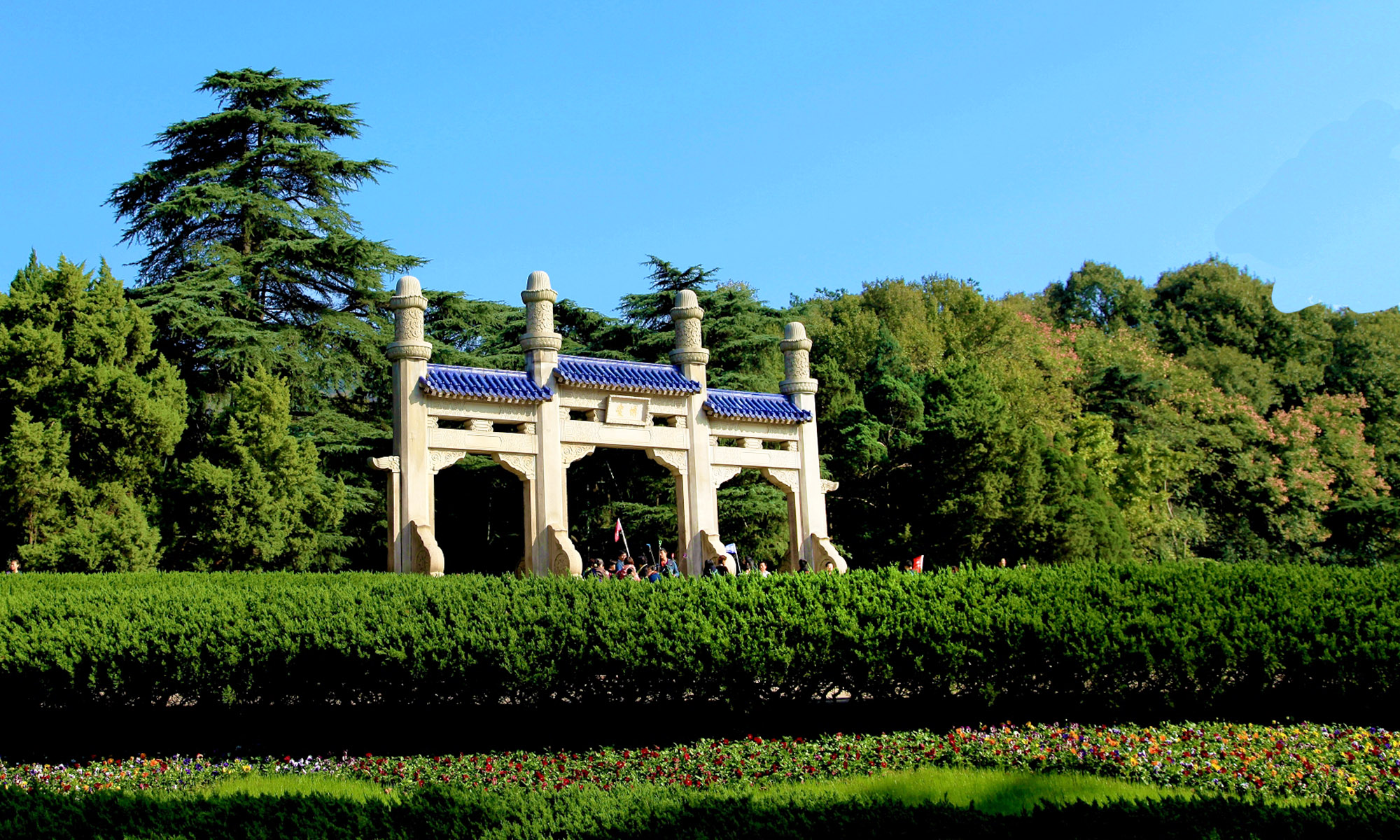
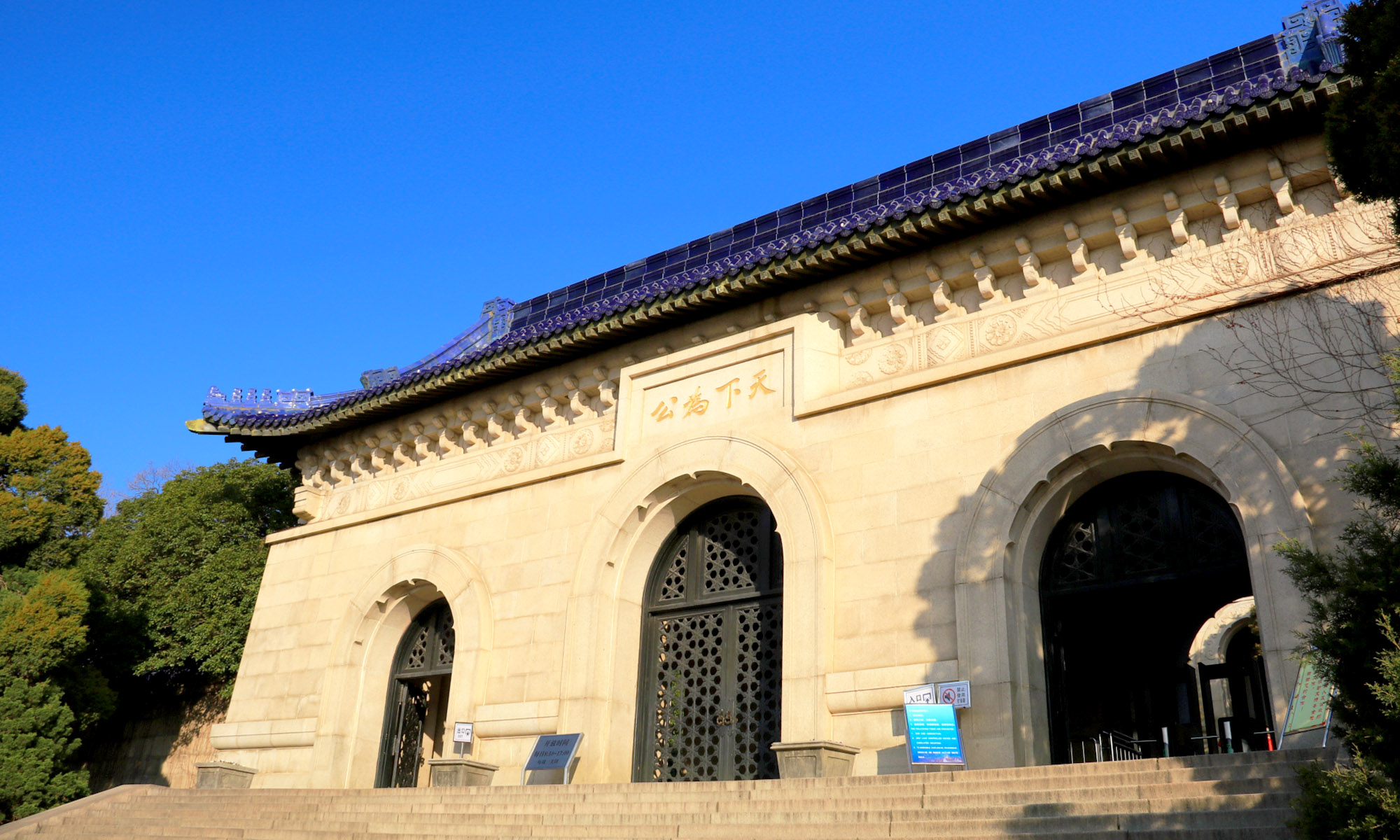
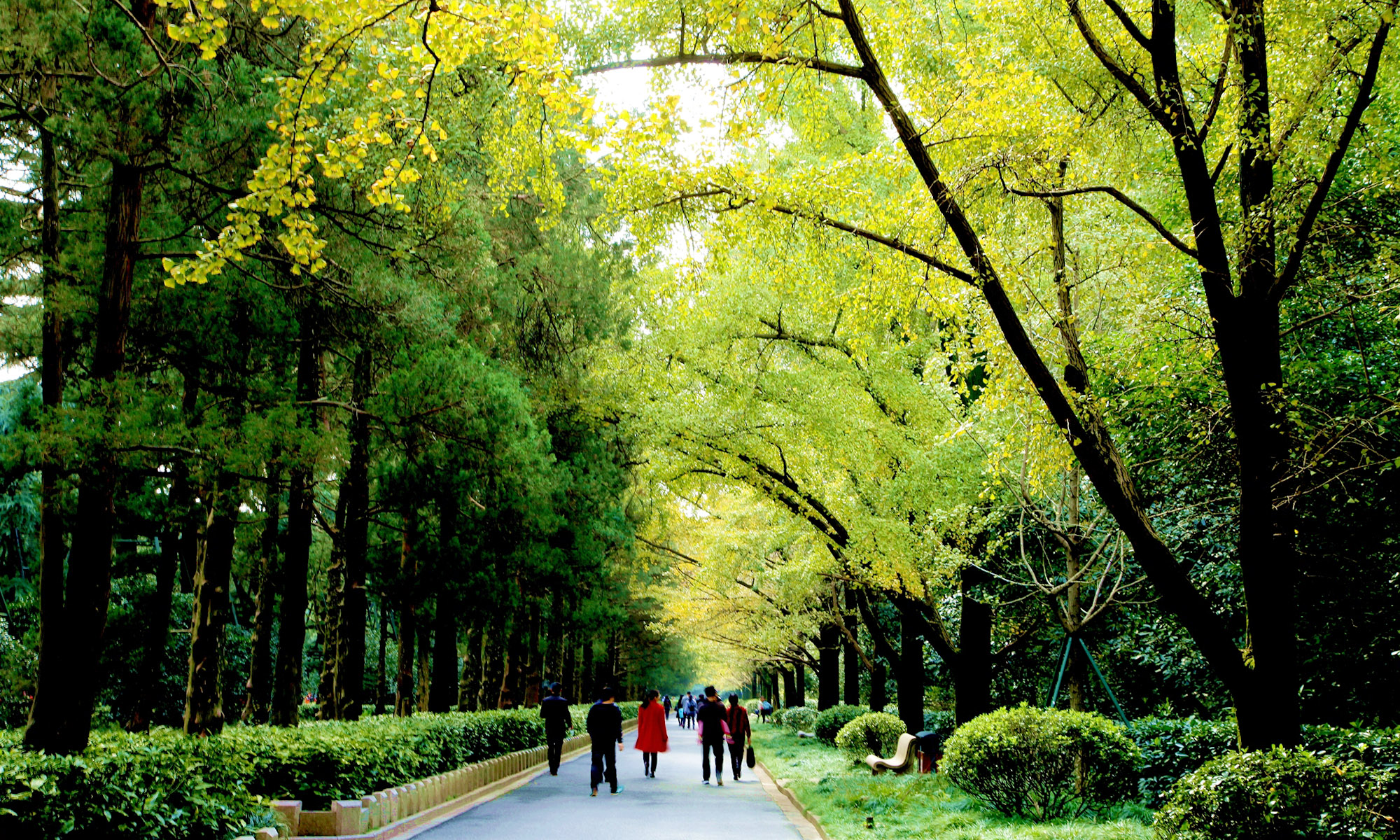
Traveling along the marble road, firstly you will arrive at half-moon square in the south of Nanjing Dr. Sun Yat-sen’s Mausoleum. Nanjing Dr. Sun Yat-sen’s Mausoleum is understated and modest, while endowing grandeur to the Mausoleum. Then at the entrance stands the great marble Paifang (memorial archway) on which is written ‘Bo Ai’ meaning ‘love’. Through Paifang there is a Passway of 480 mètres (environ 1574 pieds) long and 40 mètres (environ 131 pieds) wide, on both sides of which stand orderly pine and cypresses trees. Continuing forward to the end of the Passway, there is the Frontispiece, standing some 16.5 mètres (environ 54 pieds) high and 27 mètres (environ 88 pieds) wide. The Frontispiece has three archways, each of which has a pair of symmetrical enchased copper gates. Four Chinese characters are inscribed on the lintel over the doorways written by Dr. Sun Yat-sen meaning’ the world is commonwealth’, which fully explains the cause he struggled for during his life. Through the Frontispiece is a pavilion made of marble, in which a great stele, 9 mètres (environ 29 pieds) high and 4 mètres (environ 13 pieds) wide, was erected by Kuomintang in memory of Dr. Sun Yat-sen. On the stele there are carved just 24 Chinese characters and no epitaph as people think that there are no words capable of representing this giant of modern China.
Through the Pavilion, climbing along the stairs upward, the Sacrificial Hall is your next encounter. Here is the highest place of Nanjing Dr. Sun Yat-sen’s Mausoleum, some 158 mètres (environ 518 pieds) high. The Sacrificial Hall is located in the center of this plateau. It is an Alhambresque construction combining the architectures of both China and the West and is 30 mètres (environ 98 pieds) long, 25 mètres (environ 82 pieds) wide and 29 mètres (environ 95 pieds) high.
Around the Sacrificial Hall, there are two 12.6-meter-high (environ 41 pieds) Huabiao, ornamental columns like those in Tiananmen Square. Entering the Hall, a 4.6-meter-high stone statue of Dr. Sun Yat-sen sits in the center. He wears long gown with eyes facing forward, with an open book on his lap, demonstrating the wisdom of the great thinker. At the foot of the statue, there are six embossments exhibiting in vivid pictures Dr. Sun Yat-sen’s glorious life and struggles in his revolution. The door of the tomb is in the center of the back wall.
The whole tomb is a hemispherical in shape, with the marble coffin of Dr. Sun Yat-sen set in the center of the chamber. His white marble statue rests atop the rectangle coffin, under which this historical giant forever sleeps.Around the Mausoleum there are many memorial buildings such as the Zhengqi Pavilion, Open-air Music Hall, Waxwork Home of Democratic Revolution, the Sun Yat-sen Museum and so on.
How to get to Sun Yatsen Mausoleum
• Sun Yatsen Mausoleum can be reached by bus 34 and Metro Line 2.
• Rent a car/bus from GGC to enjoy a hassle free private transfer from hotels in Nanjing to Sun Yatsen Mausoleum.
Additional travel advice on Sun Yatsen Mausoleum
• Sun Yatsen Mausoleum is closed on Mondays except for public holidays.
• Visitors can go to nearby attraction sites Ming Xiaoling Mausoleum and Linggu Temple by sightseeing bus, battery car or small train.
• Please keep quiet and do not take photos in the altar.