Introducing Jiuzhaigou Valley
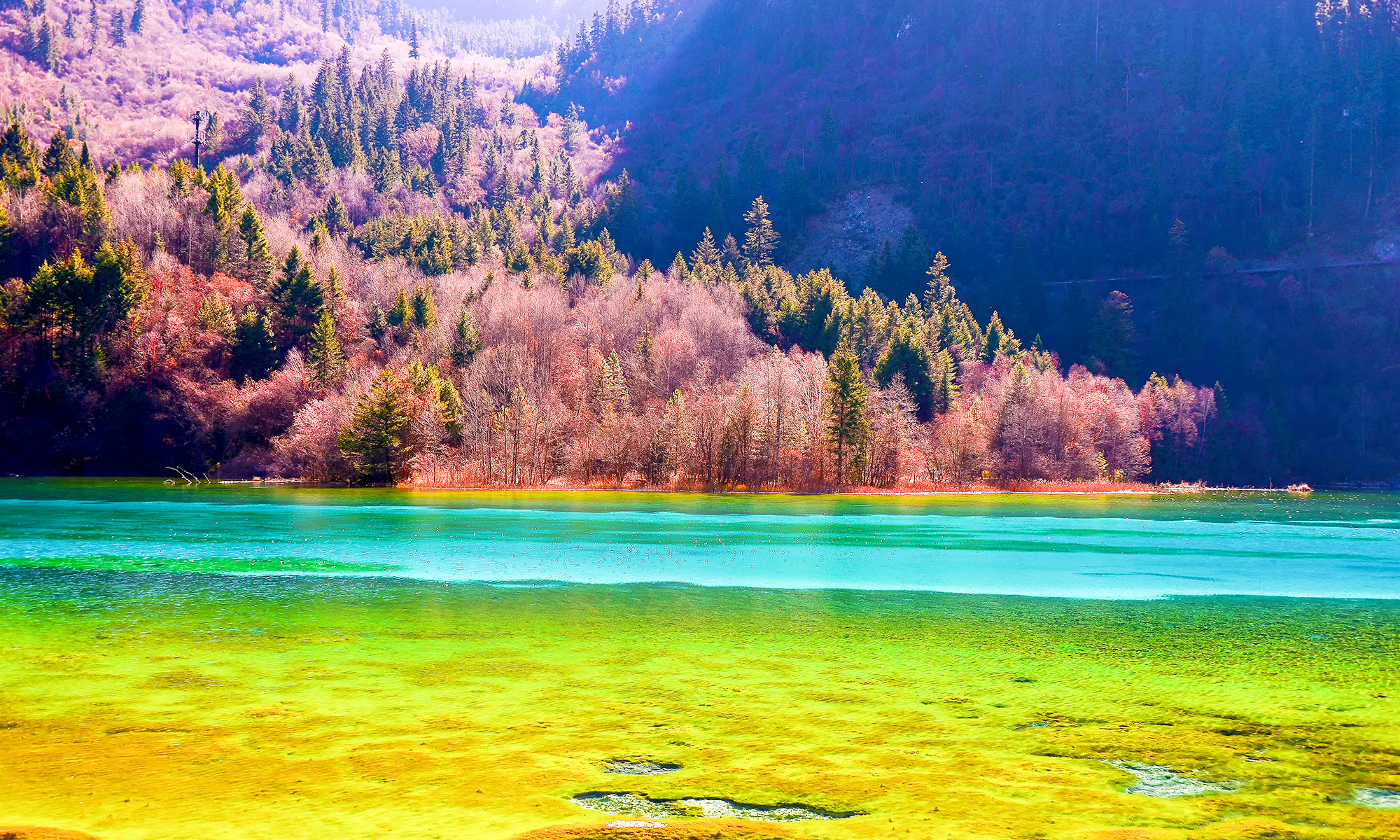
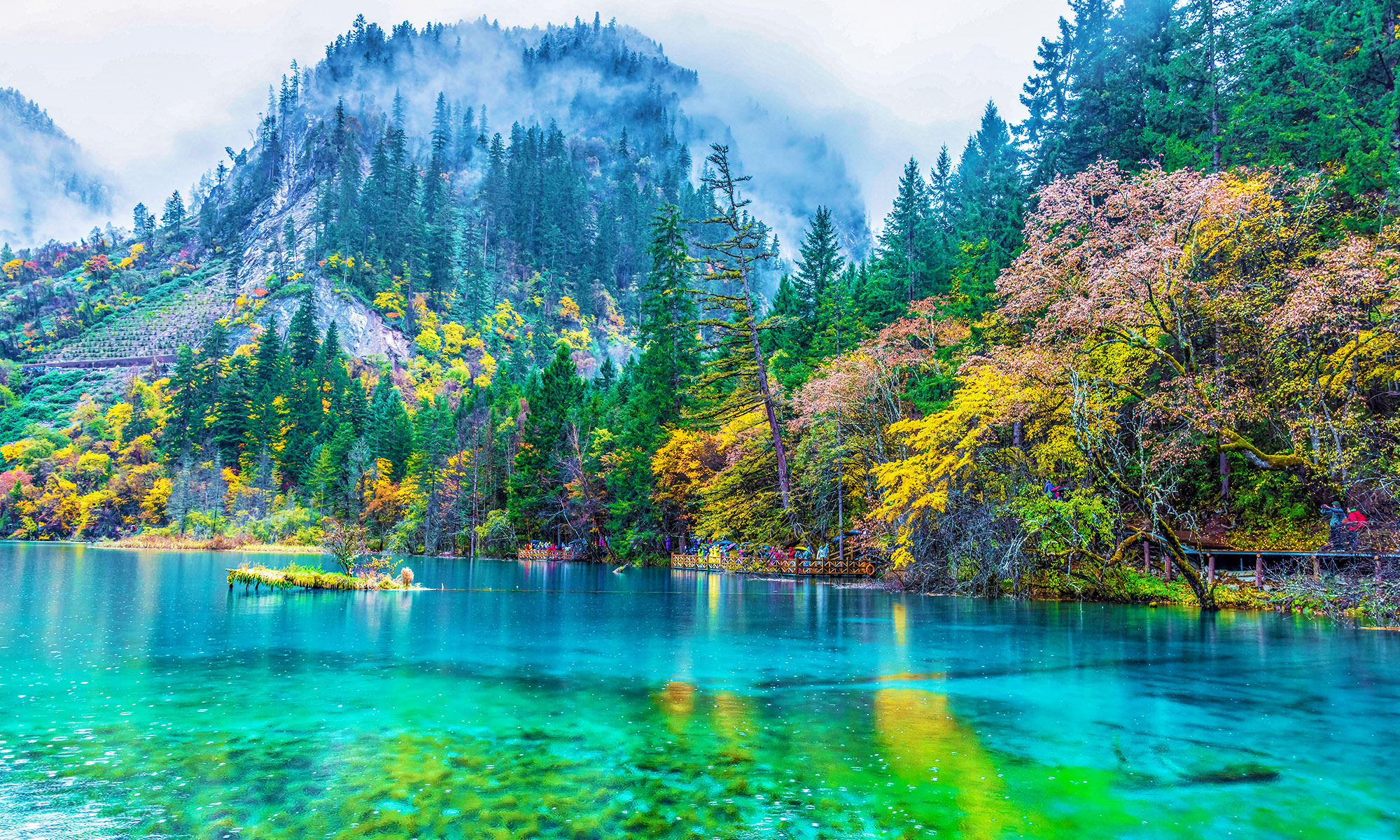
Located in Ngawa Tibetan-Qiang Prefecture, Jiuzhai Valley (Nine Villages Valley) is so-named because of the nine Tibetan villages along the valley. Jiuzhaigou Valley is a UNESCO World Natural Heritage site and is just like a wonderland for visitors, with adarce lakes, waterfalls, and floodland. Jiuzhai Valley has five stunning landscapes: Green Sea, Overlapping Creeks, Colorful Forests, Snow Peaks and Tibetan Villages.
Jiuzhaigou Valley Fast Facts
• Nom Chinois: Jiuzhaigou 九寨沟
• Meilleure période pour visiter: D'avril à octobre
• Heures de visite recommandées: Environ 1 à 2 jours
• Activités à faire: Photographie, Nature, Randonnée
• Heures d'ouverture: 08:00-17:00
• Frais d'entrée: CNY 169 à partir d'avril 1 à novembre 15, CNY 80 de novembre 16 à mars 31
• Adresse: Jiuzhaigou County, Aba Tibetan and Qiang Region, Province du Sichuan
What to expect at Jiuzhaigou Valley
Stretching for 651.34km, Jiuzhai Valley gets its name from the nine Tibetan villages, including Shuzheng Village, Heye Village, Zechawa Village, etc.. The annual average temperature is 6-14°C without severe cold in winter and extreme heat in summer. Jiuzhaigou Valley is surrounded by steep mountains, of which ten reaching clouds, are snow peaks all the year round. The amazing water gathers at the river valley and forms a scenic area centered on mountain lakes, waterfalls and travertine beaches unique in China and rear in the World. Il y a 114 lakes in trapezoidal distribution, 17 waterfalls, 5 travertine beach lands, 47 springs and 11 turbulences with altitude difference of 1,870m, traveling among the forests and valleys between the 12 snow peaks, linking like a Y-shaped string of jade beads and winding for about 60km. The lakes vary from small one of several square meters to the biggest of 7km in length. Jiuzhai Valley, combining primitive beauty, natural beauty and rustic beauty, is of high tour viewing value and scientific value.
Overnight stays in the Jiuzhaigou Valley are not permitted. Even if you have not finished your day trip, you will have to leave the area and stay at one of the many hotels near the entrance. Forward-planning is strongly advised, and booking online or by phone in advance is recommended.
Shuzheng Lakes
Located in Jiuzhaigou County, Aba Tibetan and Qiang Autonomous Prefecture, Sichuan, Shuzheng Lakes, consisting of 20-30 small or large lakes distributed in a terrace shape with total length of 13.8km, are the gate to the beautiful scenery of Jiuzhai Valley. These lakes, surrounded by dense cypress, pine, fir and other green trees, stretch for several miles with altitude difference of nearly 100m. The lake water crosses the embankment from the upstream, falls into the lower lake and forms the superposed waterfall.
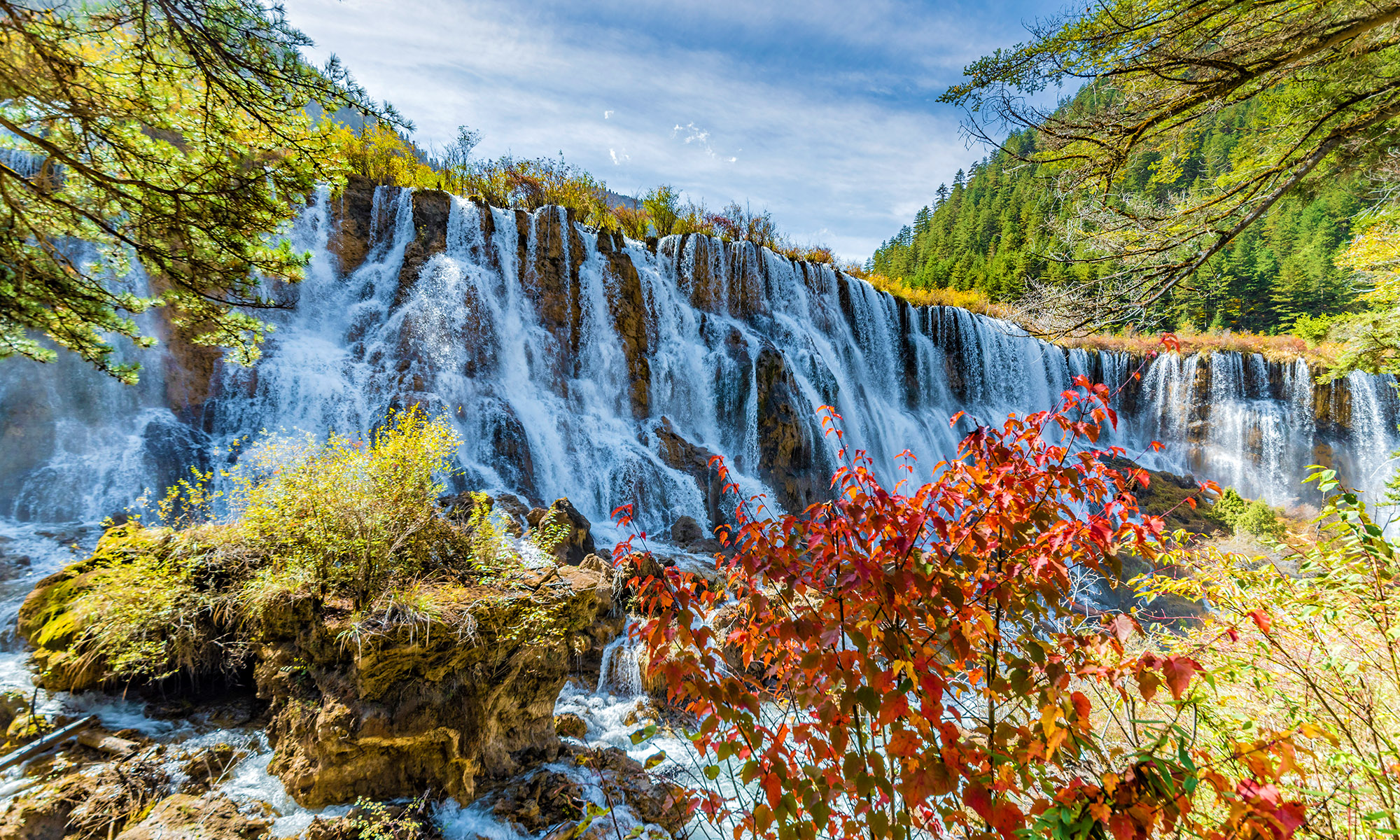
Nuorilang Waterfall
In Tibetan, Nuorilang means the charming man (tall and upright), so Nuorilang Waterfall means the grand waterfall. L'eau des lacs Nuorilang tombe du sommet comme si elle était déversée depuis la Voie lactée et le rugissement résonne dans la vallée. L'eau domine le Sud avec un froid pressant et une fine brume. Lorsque le soleil brille sur l'eau le matin, les arcs-en-ciel sont souvent visibles au-dessus de la vallée, ce qui ajoute du charme à la fascinante cascade.
Comment se rendre dans la vallée de Jiuzhaigou
En bus depuis Chengdu
• Prenez un bus de la gare routière de Chengdu Xinnanmen jusqu'à la zone touristique de la vallée de Jiuzhaigou directement.
• Prenez un bus de la gare de Chadianzi jusqu'au comté de Jiuzhaigou. Puis prenez un taxi jusqu'à la zone touristique.
En avion
• Prenez un vol pour l'aéroport de Jiuhuang puis prenez un bus direct pour la vallée de Jiuzhaigou (environ 88 kilomètres). Actuellement, L'aéroport propose des vols directs vers/depuis Pékin, Shanghai, Xian, Chengdu, Chongqing et Mianyang. Veuillez noter que l'aéroport de Jiuhuang est situé sur un plateau et que les vols peuvent être suspendus en raison de mauvaises conditions météorologiques.
Conseils de voyage supplémentaires pour la vallée de Jiuzhaigou
• Le parc émet jusqu'à 17,000 billets par jour. Les touristes doivent réserver leurs billets en ligne à l'avance.
• Les touristes individuels et les groupes sont reçus à partir du 28 novembre, 2019.
• Veuillez porter des chaussures et des vêtements de randonnée confortables.
• Des vêtements à manches longues sont nécessaires car l'écart de température entre le jour et la nuit est relativement important dans la région.