Introducing Jiayuguan Fortress (d'après Chinaculture.org & Wikipedia)
La forteresse de Jiayuguan n'est pas seulement l'extrémité occidentale de la Grande Muraille de la dynastie Ming (1368-1644), mais aussi un point de passage clé de l'ancienne Route de la Soie., qui a été construite pour la première fois la 5e année (1372) du règne de Hongwu dans la dynastie Ming. Elle est ainsi nommée parce qu'elle est construite au pied de la montagne Jiayu. Avec le col de Juyong et Shanhaiguan, c'est l'un des principaux passages de la Grande Muraille. Parmi les passages de la Grande Muraille, Jiayuguan est le bâtiment militaire ancien le mieux conservé. Le passage est également connu sous le nom de “Premier et plus grand col sous le ciel”. Jiayuguan a une réputation quelque peu redoutable car les Chinois bannis devaient quitter le pays par Jiayuguan vers l'ouest, la grande majorité ne revenant jamais. Amongst those once banished in disgrace was the famous Chinese Opium War Viceroy of Liangguang, Commissioner Lin Zexu, who died in Urumqi where a statue in his honor can today be found in a local park. After three large-scale repairs and decorations in 1950, 1957 et 1973, the Jiayu Pass took on a new look as an impregnable pass. Many visitors come to the Jiayu Pass to cherish the memory of the past.
Jiayuguan Fortress Fast Facts
• Nom Chinois: Jia Yu Guan 嘉峪关
• Meilleure période pour visiter: D'avril à octobre
• Heures de visite recommandées: 1-2 heures
• Activités à faire: Photographie, Randonnée, Architecture, Histoire
• Heures d'ouverture: 08:30-20:00 de mai à octobre; 08:30-18:00 de novembre à avril
• Frais d'entrée: CNY 110 de mai à octobre; CNY 90 de novembre à avril. The entrance ticket includes the First Strategic Post and Overhanging Great Wall.
• Adresse: 6km Southwest of the Jiayuguan City, Province de Gansu
What to expect at Jiayuguan Fortress
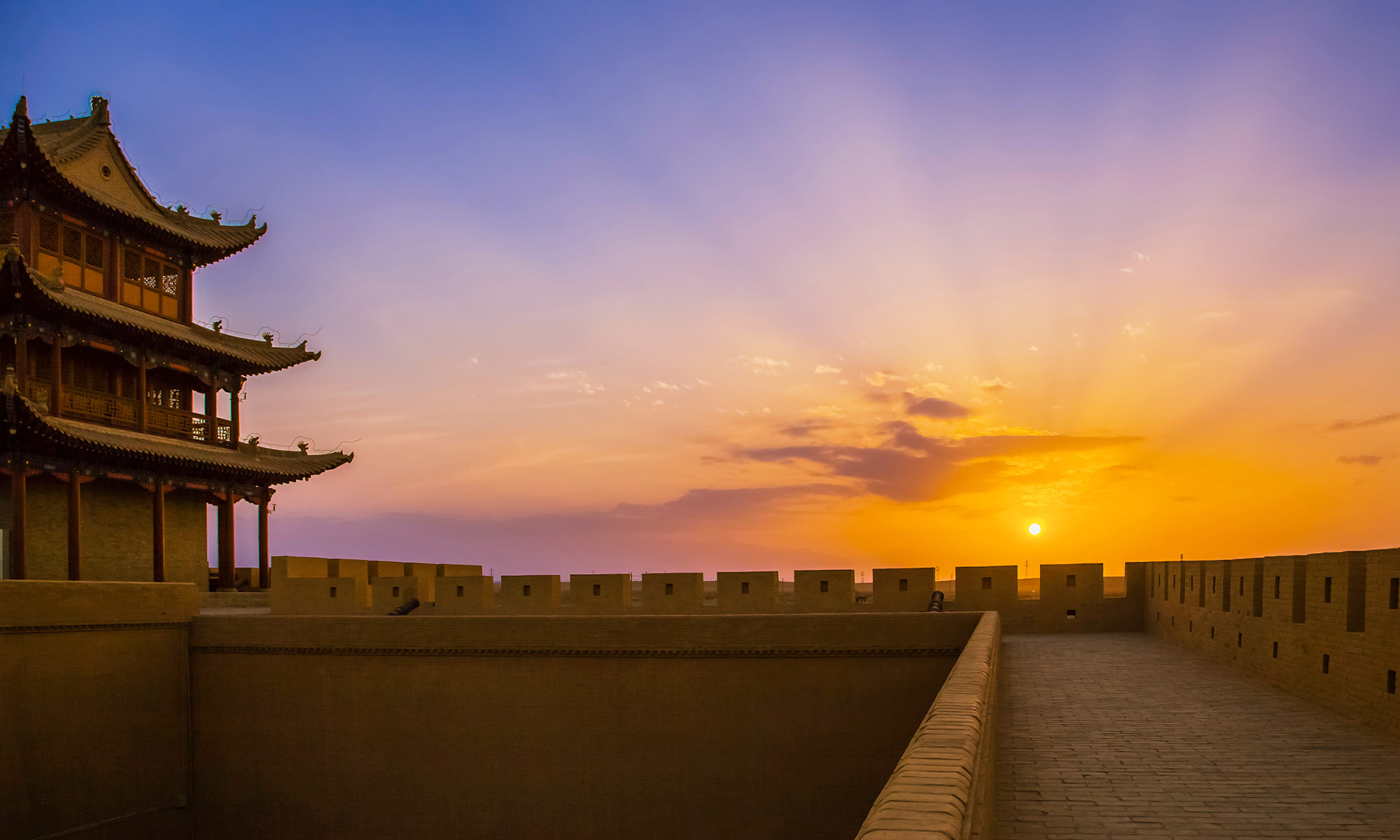
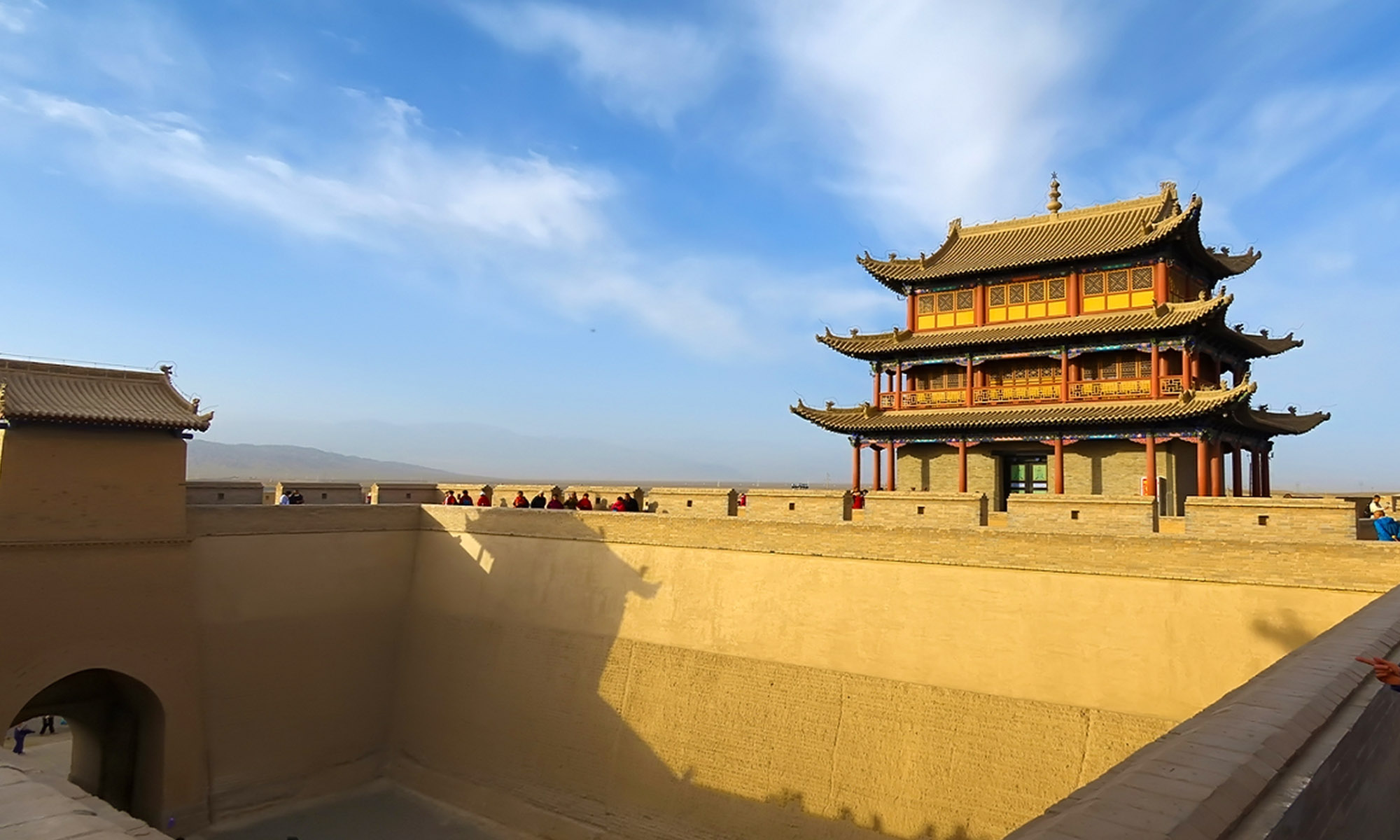
The circumvallation of the Jiayu Pass looks trapeziform and there is a thick wall built outside the western circumvallation, which makes the defense of the circumvallation stronger. The circumvallation is 11.7 meters high and 733.3 meters long in total. There is an area of more than 33,500 square meters of the circumvallation. Outside the northern and southern circumvallation are parallel low cob walls, which are called the additional wall built for defense.
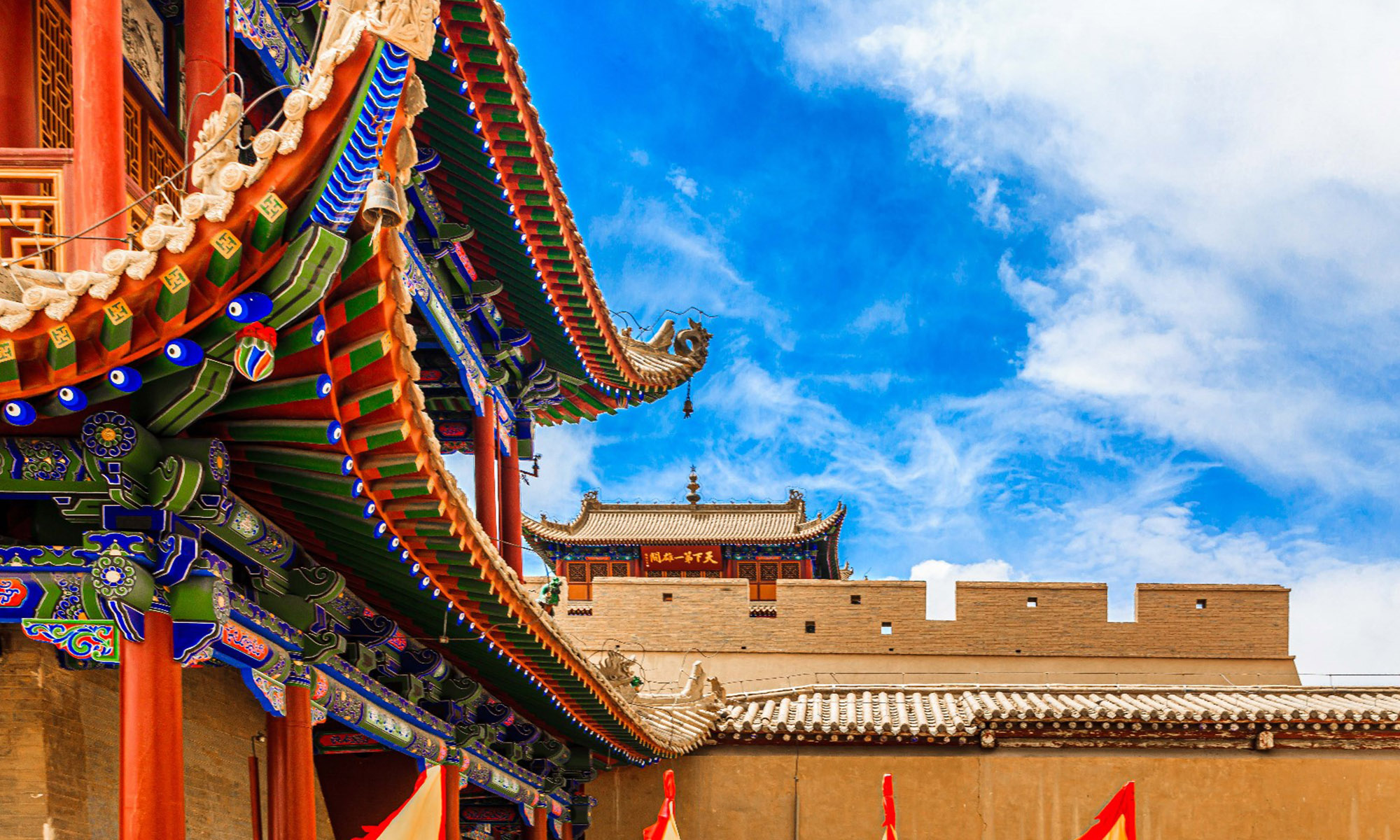
The city walls have two gates: the eastern one named Guanghua Gate and the western one named Rouyuan Gate, both of which have gate towers, 17 mètres de hauteur, three-bay wide, with three-tiered gable and hip roof and surrounded by enclosing porches, looking grand and majestic. In the northern side inside the city walls is a wide slope horse way, directly leading to the top of the city wall.
Outside the eastern and western gate, are built small enceintes of the gates. The gates of small enceintes open southwards, but are not connected with the main gates of the city walls. La porte est de l'enceinte est appelée Chaozong, tandis que celle de l'ouest est appelée Huiji. Plus de 10 à quelques mètres à l'extérieur de la porte ouest se trouvent des barrières doubles quadrangulaires, côte à côte avec les murs de la ville, dont la porte s'ouvre vers l'ouest. Le nom du col de Jiayu est gravé puissamment et vigoureusement sur la partie supérieure de l'encadrement de la porte.
En marchant vers l'ouest en sortant de la porte de la ville, à environ plus de 100 pas, on verra une grande stèle sur laquelle sont gravés quatre grands caractères signifiant col imprenable dans le monde, qui a été érigée sous la dynastie Qing (1644-1911). Aux quatre coins des murs de la ville, il y a une tour de guet à deux étages chacune, comme un blockhaus. Au milieu droit des murs nord et sud de la ville se trouve une tour de guet chacun, qui a deux travées de large avec des avant-toits frontaux. À l'ouest, the south and the north sides of the additional walls also stands a watchtower each. It is said that when building the pass, workmen made a most precise estimation of materials and as a result only one brick was left. This brick is still kept on the eaves of the gate tower of the western enceinte. Outside the eastern enceinte there are some buildings such as the Wenchang Pavilion, the Guandi Temple and the Theatre Building, and inside it there is an Office of Guerrilla Warfare, which were all built in the Qing Dynasty.
How to get to Jiayuguan Fortress
• Jiayuguan Fortress is approximately 6 km away from Jiayuguan City.
• Prendre le bus 4 ou 6 to the Guancheng Scenic Area.
• There is no shuttle bus among Jiayuguan Fortress, the First Strategic Post and the Overhanging Great Wall. It is suggested to charter a minibus to travel between them.
• Rent a car/bus from GGC to enjoy a hassle free private transfer from hotels in Jiayuguan to Jiayuguan Fortress.
Additional travel advice on Jiayuguan Fortress
• Veuillez mettre de la crème solaire, hat and sunglasses to prevent strong sunlight.
• Veuillez vous appliquer de la lotion pour le corps, lip balm and hand cream as it is always dry in Jiayuguan.
• Veuillez préparer une écharpe pour couvrir votre visage en cas de tempêtes de sable. It is better to check the weather forecast in advance when taking outdoor activities.
• The best time for photographing is during the sunset.