+86-29-8964-0200
info@islamichina.com

Présentation du pont Luoyang (d'après Wikipédia)
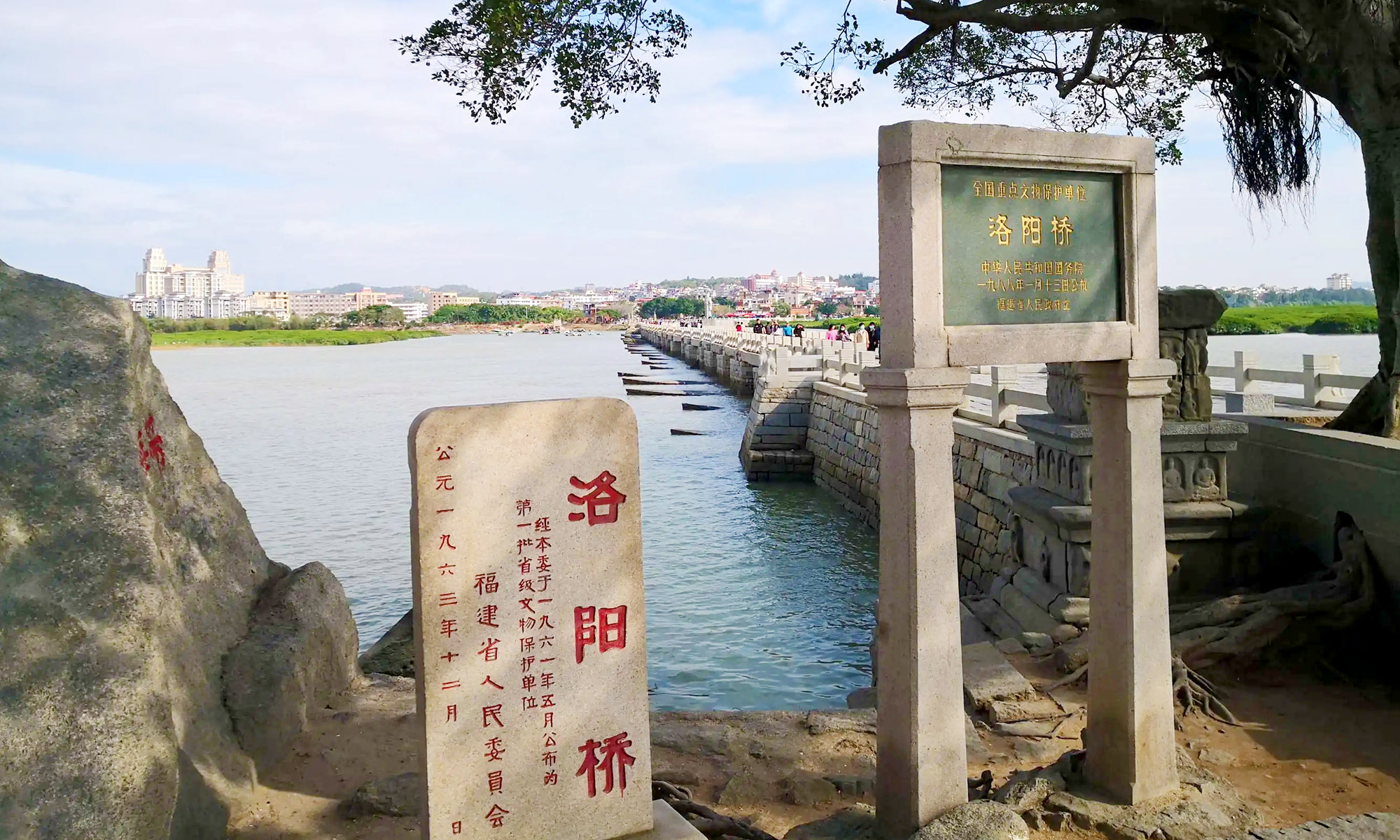
Le pont Luoyang, également connu sous le nom de pont Wan’an, se situe à Quanzhou, dans la province du Fujian, China. Le pont en baie de pierre est situé à l'embouchure de la rivière Luoyang. Étant le premier pont en baie de pierre en Chine, il jouit de la réputation de “faire partie des quatre ponts anciens de Chine”. Le pont Luoyang a été inscrit en tant qu'unité clé de reliques culturelles sous protection nationale en 1988. Dans 2021, Le pont a été inscrit sur la liste du patrimoine mondial de l'UNESCO avec d'autres sites des dynasties Song et Yuan autour de Quanzhou en raison de son importance pour le commerce maritime médiéval en Chine et l'échange de cultures et d'idées à travers le monde.
Informations rapides sur le pont Luoyang
• Nom Chinois: Luo Yang Qian 洛阳桥
• Meilleure période pour visiter: Toute l'année
• Heures de visite recommandées: Environ 1.5 heures
• Activités à faire: Photographie, Histoire et culture, Architecture
• Heures d'ouverture: Toute la journée
• Frais d'entrée: Gratuit
• Adresse: Route Wan’an, District de Luojiang, Ville de Quanzhou, Province du Fujian, China
À quoi s'attendre au pont Luoyang (d'après Wikipédia)
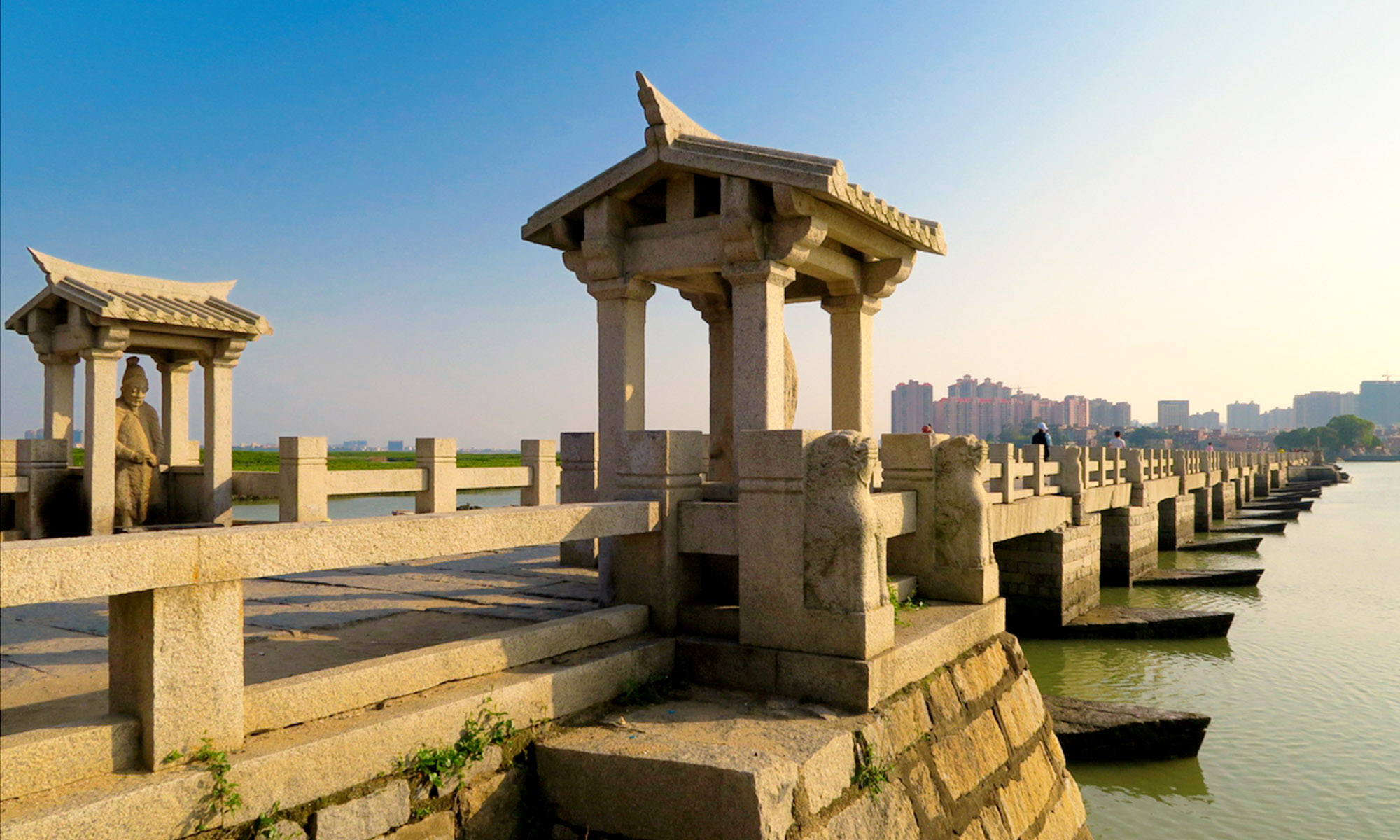
Construction of the Luoyang Bridge started in 1053 et a été achevée en 1059. Since it was built, the Luoyang Bridge has been restored many times. Actuellement, it is about 731 mètres (2,398 pieds) long, 5 mètres (16 pieds) wide and 7 mètres (22 pieds) haute. It has 645 railings, 104 stone lions, 44 ship-like piers, 7 pagodas and 1 pavillon. The bridge plate is made of large-scale boulder strips. Back to the ancient time, the engineer took the advantage of ebbs to successfully build the plate. On both sides of the plate, il y a 500 stone guardrails to protect passers-by from falling into the river.
The stone tower
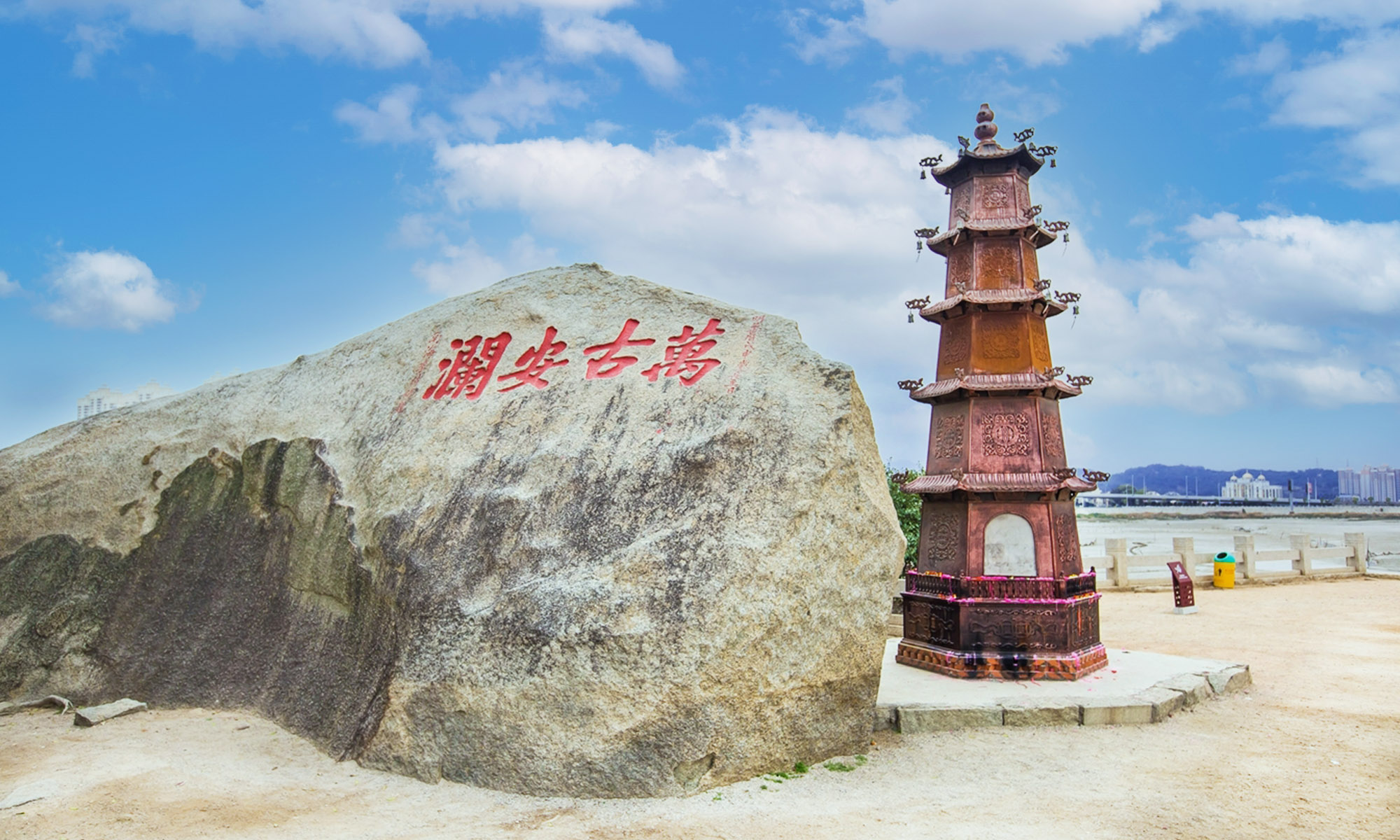
Il y a 7 stone towers outside the guardrails of the bridge, parmi lesquels 3 are pagodas of multi-storied pavilion type, 1 Baoqie Sutra-printing house, 1 Five wheel tower, 1 Jing Zhuang, 1 Zheng feng tower (repress the wind), et 1 foundation base. From south to north, these 7 towers are
Joss
On the south end and the north end of Luoyang bridge, il y a 2 stone joss protecting the bridge on each end. The joss is 1.63 mètres de hauteur, facing each other, and they were all built during the northern song dynasty. Those sculptures all have Han nationality (the majority group of people in China), wearing hamlet and armor, holding long sword in hands.
Bridge Pavilion
There are two stone pavilions on Zhongzhou island. One is called “Zhongting” (the middle pavilion), a foursquare pavilion located in the north side of Zhongzhou island. The exact year of its building is unable to verify. The existing pavilion is, in fact, reconstructed on the basis of the body in the late Qing and early Ming dynasty, after the founding of the People’s Republic of China. The other pavilion is called “Xi chuan sweet rain pavilion”, built to commemorate the magistrate of Jinjiang county, Fang Ke, in Ming dynasty. Folklore has it that Fang’s prayer for rain came true, then folks built this pavilion to commemorate him.
Memorial Architecture
A ancestral temple to commemorate Cai Zhonghui can be found 500 meters away from the south end of the bridge, which was built by descendants to remember Cai’s contribution to build Luoyang bridge. This temple starts to build in northern song dynasty, and the existing one is in the construting style of Qing dynasty, which is oriented north and south and have 3 halls with 3 des pièces. Zhaohui temple is built in the north side of the bridge, and the existing temple is also in Qing’s style. It has 2 halls with 5 des pièces. The exact year when the temple started to build is lost track, but archaeologists assume its predecessor is Zhenhai nunnery and then changed its name to Zhaohui temple. On the south end of the bridge, il y a beaucoup de sculptures faites pendant le processus de construction, y compris le célèbre “pont Wan’an”, qui possède 153 lettres sur le monument en pierre de 3 mètres de haut et 1,5 mètre de large. De plus, 26 monuments avec des gravures, qui datent de différentes périodes de la construction du pont se trouvent du côté nord du pont, île de Zhongzhou et côté sud.
Comment se rendre au pont de Luoyang
• Prendre le bus 701 jusqu'au parking Luoyang Gujie à Luoyang.
• Prendre le bus 19, 61 & K509 jusqu'au village de Qiaonan.
• Louez une voiture/un bus depuis GGC pour profiter d'un transfert privé sans tracas depuis les hôtels de Quanzhou jusqu'au pont Luoyang de Quanzhou.
Conseils de voyage supplémentaires pour le pont Luoyang
• Veuillez porter des chaussures confortables.