+86-29-8964-0200
info@islamichina.com

Introducing Dunhuang Mogao Caves (dari Wikipedia)
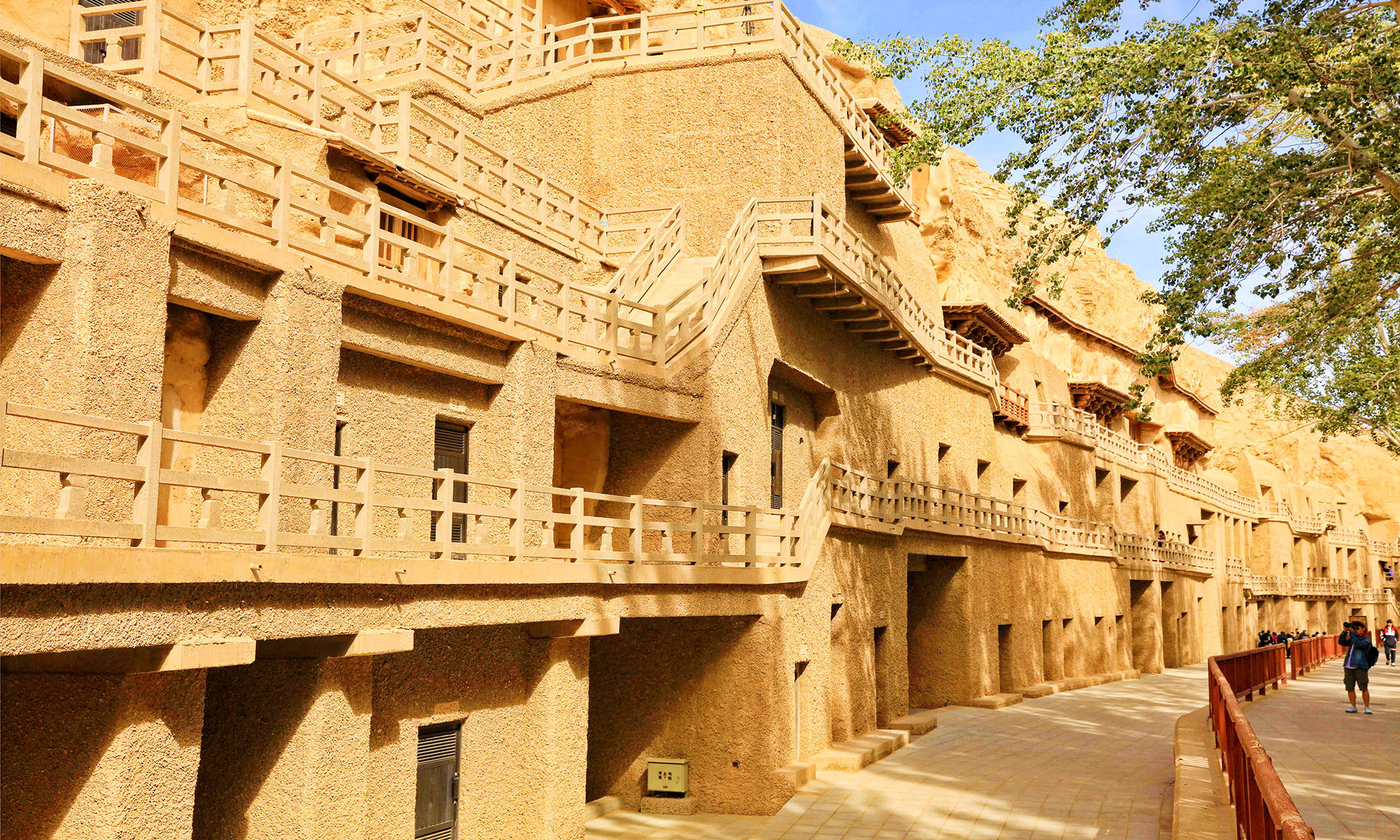
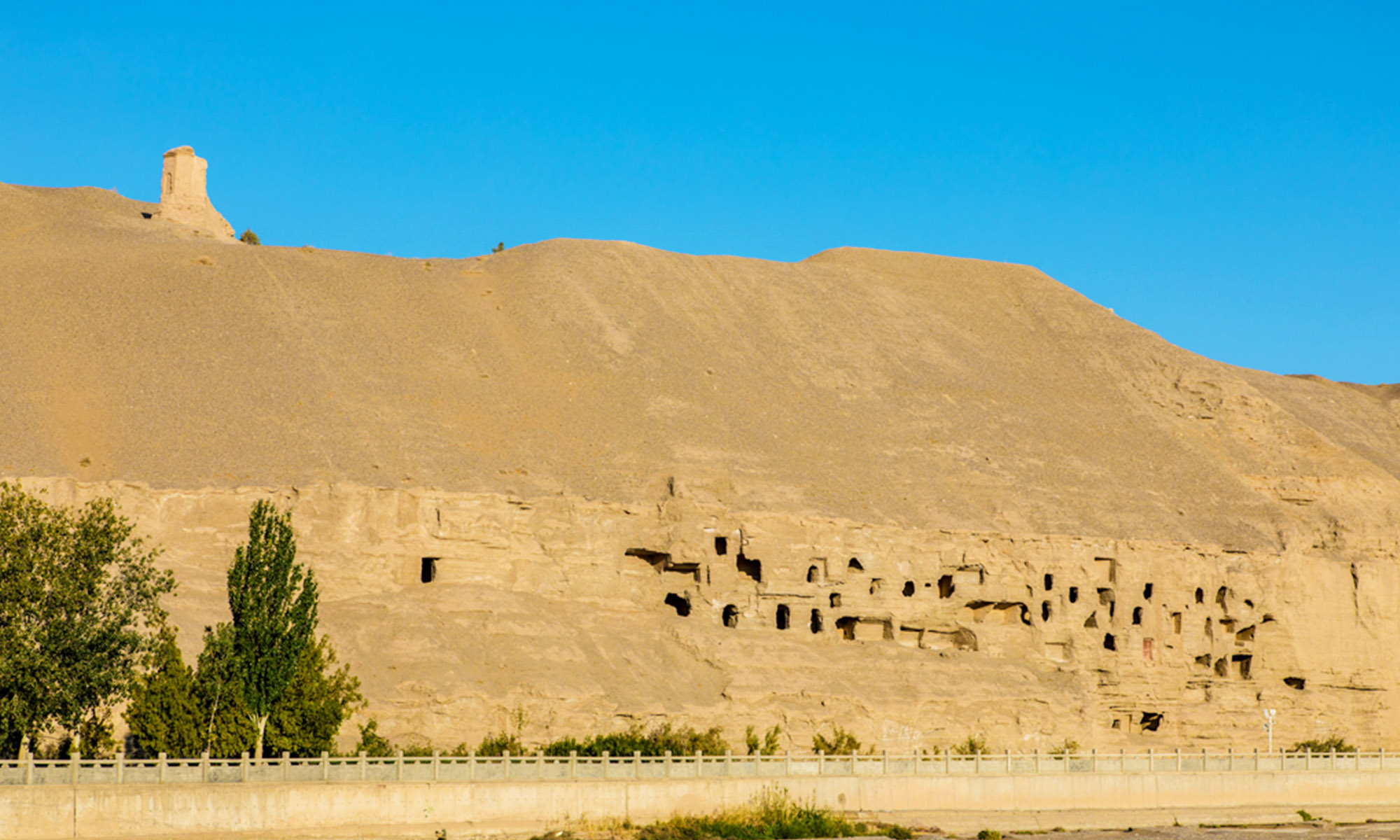
Gua Mogao, also known as the Thousand Buddha Grottoes or Caves of the Thousand Buddhas, membentuk sebuah sistem dari 500 Kuil 25 km (16 mil) sebelah tenggara pusat Dunhuang, sebuah oasis yang terletak di persimpangan agama dan budaya di Jalur Sutra. Gua-gua ini berisi beberapa contoh terbaik seni Buddha yang mencakup periode 1,000 tahun. Gua-gua pertama digali pada tahun M 366 sebagai tempat meditasi dan ibadah Buddha. Gua Mogao adalah gua Buddha Tiongkok yang paling dikenal dan, bersama dengan Gua Longmen dan Gua Yungang, merupakan salah satu dari tiga situs pahatan Buddha kuno terkenal di Tiongkok. Sekumpulan dokumen penting ditemukan di 1900 di yang disebut “Gua Perpustakaan”, yang telah ditutup tembok pada abad ke-11. Isi perpustakaan kemudian tersebar di seluruh dunia, dan koleksi terbesar saat ini ditemukan di Beijing, London, Paris dan Berlin, dan Proyek Internasional Dunhuang ada untuk mengoordinasikan dan mengumpulkan karya ilmiah tentang naskah Dunhuang dan bahan lainnya.
Fakta Cepat Gua Mogao Dunhuang
• Nama Cina: Mo Gao Ku 莫高窟
• Waktu Terbaik untuk Mengunjungi: April, Mei, Jun, Sept & Oktober
• Jam Kunjungan yang Disarankan: Sekitar 4 ke 6 jam
• Jenis: Situs Warisan Dunia, Buddhisme, Patung-patung, Gua-gua
• Jam Buka: 08:00-18:00 dari Apr hingga Nov; 09:00-17:30 dari Des hingga Mar
• Biaya Masuk: CNY238 dari April hingga November; CNY140 dari Desember hingga Maret
• Alamat: Kota Mogao, Dunhuang, Provinsi Gansu
Apa yang dikatakan UNESCO tentang Gua Mogao Dunhuang
Dipahat di tebing di atas Sungai Dachuan, Gua Mogao di tenggara oase Dunhuang, Provinsi Gansu, mencakup yang terbesar, paling kaya, dan gudang seni Buddha yang digunakan paling lama di dunia. Pertama kali dibangun pada 366 M dan mewakili pencapaian besar seni Buddha dari abad ke-4 hingga abad ke-14. 492 gua-gua saat ini terpelihara, menyimpan sekitar 45,000 meter persegi mural dan lebih dari 2,000 patung yang dilukis. Gua 302 of the Sui dynasty contains one of the oldest and most vivid scenes of cultural exchanges along the Silk Road, depicting a camel pulling a cart typical of trade missions of that period. Gua-gua 23 dan 156 of the Tang dynasty show workers in the fields and a line of warriors respectively and in the Song dynasty Cave 61, the celebrated landscape of Mount Wutai is an early example of artistic Chinese cartography, where nothing has been left out – mountains, rivers, cities, Kuil, roads and caravans are all depicted. As evidence of the evolution of Buddhist art in the northwest region of China, the Mogao Caves are of unmatched historical value. These works provide an abundance of vivid materials depicting various aspects of medieval politics, economics, budaya, arts, agama, ethnic relations, and daily dress in western China. Gaya artistik unik seni Dunhuang bukan hanya merupakan gabungan dari tradisi seni Tionghoa Han dan gaya yang diadopsi dari kebiasaan kuno India dan Gandhara, tetapi juga merupakan integrasi seni orang Turki, Tibet kuno dan kelompok etnis Tionghoa lainnya. Banyak dari mahakarya ini adalah ciptaan talenta estetika yang tiada tara. Penemuan Gua Perpustakaan di Gua Mogao di 1990, bersama dengan puluhan ribu manuskrip dan peninggalan yang dikandungnya, telah diakui sebagai penemuan terbesar dunia mengenai budaya Oriental kuno. Warisan penting ini memberikan referensi yang tak ternilai untuk mempelajari sejarah kompleks Tiongkok kuno dan Asia Tengah.
Apa yang dapat diharapkan di Gua Mogao Dunhuang
Gua Mogao membentang sejauh 1.6 km (0.99 mil) dari utara ke selatan, dan memuat sebanyak 492 sel-sel dan tempat suci gua yang dikenal. Di dalam ini, lebih dari 2000 patung yang dilukis dan sekitar 45,000 meter persegi (484375.97 luas (m2). kaki.) dapat ditemukan mural. Lebih dari 50,000 naskah, ditulis atau dilukis antara abad ke-4 dan ke-12, ditemukan di Gua Perpustakaan di 1900.
Gua Perpustakaan dan Museumnya (dari Akademi Dunhuang)
Di 1900, seorang pendeta Dao Wang Yuan-lu (1849-1931), yang menunjuk dirinya sendiri sebagai penjaga gua-nempel di Dunhuang, secara tidak sengaja menemukan gua yang disegel (Gua masa kini 17, dikenal sebagai Gua Perpustakaan) memuat harta karun yang sangat berharga lebih dari 50,000 naskah. Kebanyakan naskah ini yang berasal antara abad ke-4 dan ke-11 adalah Buddhis, serta Daois, Maniche dan Kristen Nestorian. Naskah-naskah tersebut, di atas kertas, sutra, kayu dan bahan lainnya, adalah lukisan, cetakan, dan tulisan dalam banyak bahasa, termasuk Sanskerta, Tibet, Tangut, Uyghur, Khotanese, Kuchean, Sogdian, Mongolian and even Hebrew in addition to Chinese. The contents cover religion, sejarah, literature, astronomy, astrology, and private or official correspondence. During the tumultuous years between the late 19th and the early 20th century in China, thousands of cultural artifacts were carried off by foreigners. Long before the Dunhuang treasure was found, this “international race” for treasure had already started. In Dunhuang, Wang was deceived and bribed by the foreign archaeologists to give away the priceless manuscripts, paintings and statues for a small “donation”. The Hungarian-British Aurel Stein (1862-1943) is unquestionably the most villainous of the archaeologists, followed by Paul Pelliot (1878-1945) of France, and Albert von Le Coq (1860-1930) of Germany, Langdon Warner (1881-1955) of the USA, Sergei Oldenberg (1863-1934) of Russia, and Otani Kozui (1876-1948) and Zuicho Tachibana of Japan. Other than the manuscripts, Oldenberg also removed 16 murals and 61 fragments from the caves. Warner even used a special chemical solution for detaching the wall-paintings to remove several pieces of murals, and a three foot Tang statue of kneeling Bodhisattva. In his word it was a “rescue” which was and is still the most popular euphemism for plundering Otani Kozui and/or smuggling in most of these nefarious enterprises. Fortunately he was stopped by the local people on his second trip planning to “rescue” more. After the involvement of the Chinese government, the caves with their magnificent murals and polychromed statues have been saved; however considerable archaeological artifacts had already been removed from China. The collections now are scattered throughout museums and institutes, or in the hands of private collectors in different countries. Only a very small part of the manuscripts found in the Library Cave remains in China. Opposite the Library Cave is a museum dedicated to the discovery of the Cave. The building was originally the Daoist Trinity Palace (also known as The Lower Temple), the residence of WangYuan-lu. Exhibits in the museum include narratives and photos of the discovery of the treasures and their fate. Some of the artifacts that remain in China are also displayed. It demonstrates how the Dunhuang treasures were scattered all over the
The Architecture of Dunhuang Grottoes (dari Akademi Dunhuang)
The architecture of the Dunhuang caves can be grouped into three types, Meditation Cave, Central-pillared Cave and Assembly Hall. The Meditation Cave is an earlier type of cave which has a square or rectangular main chamber, with meditation cell openings along both sides of the main(west) niche. This design was derived from the Vihara (monks’ resident) style of India, such as those found in the Ajanta caves. When cave construction first started in China, they were mainly constructed and decorated with Indian characteristics mixed with Chinese traits. The size of the meditation cells is only one to two square metres each, just big enough for one person to practise sitting meditation. The cave ceiling is either flat or in a truncated pyramidal shape. Today only three caves of this type exist in Dunhuang. The Central-pillared cave has a rectangular main chamber with a central square pillar, niches on each side of it, a gable ceiling at the front part and a flat ceiling at the back portion of the cave. This design was derived from the Chaitya (assembly or prayer hall that houses a stupa) type of Indian architecture. A stupa is a religious structure that serves as a receptacle for relics; it can also be just a site of worship and pilgrimage (called chaitya in this case), representing the Buddha. It may be in the shape of a dome, mound, or pagoda and must have an odd number of storeys. The central square pillar in the caves served as a stupa for devotees to worship or practice circumambulation (walking meditation around the stupa in clockwise direction). The gable ceiling is to imitate the traditional Chinese wooden structure. This type of cave was the most popular from the earliest period until the Northern Zhou (557-581). The Assembly Hall cave, mainly for devout Buddhists to gather and worship, has a square or rectangular assembly hall with a main niche. It became popular from the Tang Dynasty (618-907) onwards, and most caves in Dunhuang are of this type. Usually the cave has one or more statues on an altar or in a niche in the main wall facing the entrance. Kemudian, the main niches and the dais were changed to different shapes or styles, but the overall design of the cave remained the same.
Polychromed Statues (dari Akademi Dunhuang)
Ada 2415 statues remaining in Dunhuang, although many of them were restored in the Qing dynasty (1638-1911). Those still untouched are very valuable. The art styles of Chinese Buddhist statues were originally influenced by the Gandhara and Mathura styles in India, along with some other characteristics from Central Asia. Gandhara (present-day northern Pakistan and eastern Afghanistan) was invaded by Alexander the Great in 327 SM, and then became an Indian Buddhist kingdom ruled by the Kushans (descendants of the Yuezhi from northwestern China) from 60 BC-c.230 AD. Gandhara art style has deep Hellenistic influences. Statues of Buddha were sculpted with him having a straight, sharply chiseled nose and brow, classical lips, wavy hair, drapery robes and contemplative attitude. Since the caves of the Dunhuang Grottoes are located in a cliff composed of sandstone, fine sculpting or stone carvings are not possible. Usually a statue was modeled in clay stucco over a reed bound armature (or over a sandstone base for a colossal Buddha) and then polychromed. Lively shapes created by sculpting are complemented by paintings, which can produce decorations not achievable by the former. In Dunhuang, one can see statues of Buddha, Bodhisattva, disciples, devarajas (the Four Heavenly Kings, Guardians of the four directions), and others. In the earliest period, there was usually a Buddha by himself or with two flanking Bodhisattvas in the main niche. Later on, dua murid, usually identified as Kasyapa and Ananda, were added beside him. Kemudian, protectors of Buddhism, devaraja and vajrapani (literally, the one who holds a thunderbolt, and appears as a wrestler in Chinese art) were added at the outside edge of the niche. According to the sutras, a Buddha (usually dressed as a monk) has 32 auspicious signs, some of which have become stereotypical for his images, such as urna (the white curl between his eyebrows), usnisa (the fleshy protuberance on his head), and elongated ear loops.
Murals of Mogao Caves
Murals, which can express rich content and complicated scenes better than statues, are a very important part of Dunhuang art. A mural is a painting on a treated wall. Three layers of plaster were applied to the rock to provide a smooth surface upon which to paint. In Dunhuang caves, almost all of the walls, and even the ceilings, have paintings. There are seven kinds of murals in Dunhuang, categorized according to their content: Buddhist Images, Narratives of Buddhist Stories, Historical Stories of Buddhist Events, Narratives from the Sutra (Jingbian), Decorative Patterns and Caisson, Apsaras (The Flying Celestials), and Portraits of Donors.
How to get to Mogao Caves
• Mogao Caves are located approximately 25 km from downtown Dunhuang.
• Rent a car/bus from GGC to enjoy a hassle free private transfer from hotels in Dunhuang to Mogao Caves.
Additional travel advice on Mogao Caves
• Photo taking is not allowed in the caves.
• Only 6,000 visitors are allowed per day. Please book ticket in advance, especially during peak season from May to Oct.
• Visitors are required to arrive at the Mogao Caves Digital Display Center in advance and watch two documentaries on the caves. Then take shuttle bus to the Caves for exploration.