+86-29-8964-0200
info@islamichina.com

Introducing Longmen Grottoes (Vikipedi'den)
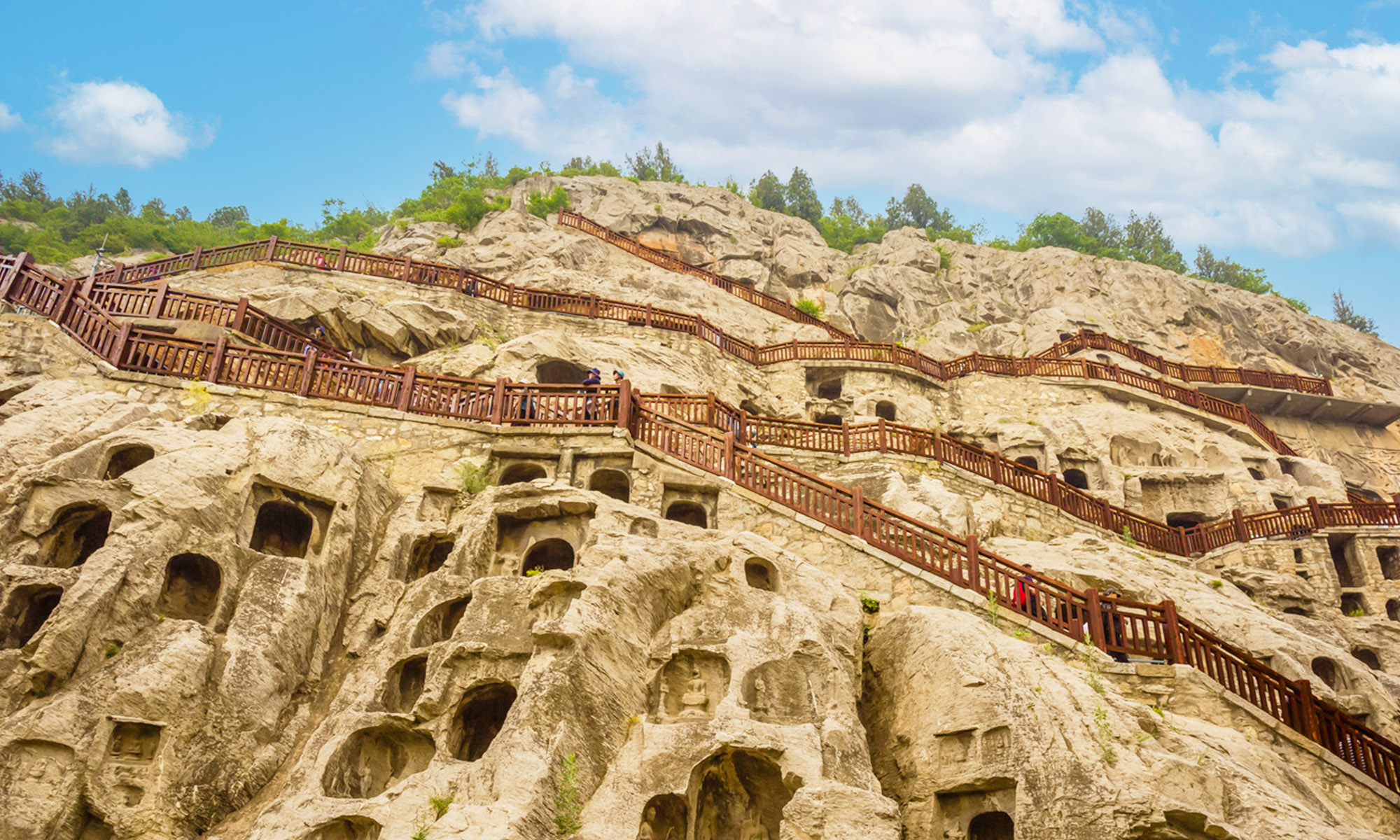
Longmen Mağaraları veya Longmen Mağaraları, Çin Budist sanatının en güzel örneklerinden bazılarıdır. Shakyamuni Buddha ve öğrencilerinin on binlerce heykelini barındırıyorlar, bulundukları yer 12 kilometre (7.5 mil) günümüz Luoyang'ın güneyinde. Görüntüler, bir zamanlar boyanmış olanlar da dahil, dış kaya rölyefleri ve Xiangshan ve Longmenshan kireçtaşı kayalıklarından oyulmuş yapay mağaralar içinde oyulmuştur, doğu ve batıya doğru uzanan. Yi Nehri bunların arasında kuzeye doğru akmaktadır. Alternatif adı olan “Ejderha Kapısı Mağaraları” Yi Nehri'nin akışını engelleyen iki tepesi ile tipik “Çin kapı kulelerine” güneyden Luoyang'a girişte bir zamanlar işaret olan. Kadar çok 100,000 heykel içerir 2,345 mağaralarda, boyları 1 inç (25 mm) to 57 feet (17 m) arasında değişen. Bölgede ayrıca neredeyse 2,500 stela ve yazıtlar bulunmaktadır, hence the name “Forest of Ancient Stelae”, as well as over sixty Buddhist pagodas. Situated in a scenic natural environment, the caves were dug from a 1 kilometre (0.62 mil) stretch of cliff running along both banks of the river. 30% date from the Northern Wei and 60% from the Tang dynasty, caves from other periods accounting for less than 10% of the total. Starting with the Northern Wei Dynasty in 493 MS, patrons and donors included emperors, Wu Zetian, members of the royal family, other rich families, generals, and religious groups. In 2000 the site was inscribed upon the UNESCO World Heritage List as “an outstanding manifestation of human artistic creativity,” for its perfection of an art form, and for its encapsulation of the cultural sophistication of Tang China.
Longmen Grottoes Fast Facts
• Çince Adı: Long Men Shi Ku 龙门石窟
• Ziyaret İçin En İyi Zaman: April, May, Haziran, Eylül & October
• Tavsiye Edilen Ziyaret Saatleri: Saat 2 to 3 saat
• Tür: UNESCO Dünya Mirası, Budizm
• Çalışma Saatleri: 08:00-18:00 (Şubat 1 Mar'a 31); 08:00-18:30 (Nisan 1 Ekim'e kadar 7); 08:00-18:00 (Ekim 8 Kasım'a 14); 08:00-17:00 (Kasım 15 Jan'a 31)
• Giriş Ücreti: CNY 90, 12 yaş altı çocuklar için ücretsiz 1.2 metre (3.9 feet).
• Adres: Longmen Caddesi, Longmen Kasabası, Luolong Bölgesi, Luoyang, Henan Eyaleti
UNESCO'nun Longmen Mağaraları hakkında söyledikleri
Longmen Mağaraları, Luoyang'ın eski başkentinin güneyinde, Yi Nehri'nin her iki yakasında yer almaktadır, Henan Eyaleti, şunları içermektedir: 2,300 1 km uzunluğunda dik kireçtaşı kayalara oyulmuş mağaralar ve nişler. Bunlar neredeyse 110,000 Buda taş heykelleri, dahili 60 stupalar ve 2,800 kitabeler üzerine oyulmuş yazıtlar. Luoyang, geç Kuzey Wei Hanedanı ve erken Tang Hanedanı dönemlerinde başkentti, ve oyma işleminin en yoğun dönemi 5. yüzyılın sonundan 8. yüzyıl ortalarına kadar sürmektedir. Batı Tepe kayalıklarında 5. yüzyılın sonları ve 6. yüzyılın başlarında oyulmuş en eski mağaralar Guyangdong ve Üç Binyang Mağarası'nı içermektedir, hepsi büyük Buda figürlerini içeriyor. Yaofangdong Mağarası içeriyor 140 çeşitli hastalıklar ve rahatsızlıklar için tedavileri kaydeden yazıtı. Bu mağaradaki heykel çalışması devam etti bir 150 yıl boyunca, sanat tarzındaki değişiklikleri göstererek. Tang Hanedanlığı'nın 7. ve 8. yüzyıllarındaki Budist mağaralarında keşfedilen heykel stilleri, özellikle Fengxiansi Mağarası'ndaki dev heykeller, Kraliyet Mağara Tapınakları sanatının en eksiksiz temsil örnekleridir, ve bu sanat çeşitli bölgelerden gelen sanatçılar tarafından taklit edilmiştir. İki heykel sanatı stili, önceki 'Orta Çin Stili' ve sonraki 'Büyük Tang Stili' ülke içinde ve dünyada büyük etki yaptı, ve diğer Asya ülkelerinde heykel sanatlarının gelişimine önemli katkılarda bulundular.
Longmen Mağaralarında neler beklenir
Longmen Mağaraları Araştırma Enstitüsü'ne göre, var 2345 mağaralar ve nişler, 2800 kitabeler, 43 pagodalar ve üzeri 100,000 sitedeki Budist heykeller. 30% mağaraların tarihleri Kuzey Wei Hanedanı'na aittir (386-535), 60% Tang Hanedanı'ndan (618-907), ve diğer dönemlerden mağaralar daha az 10%. Bu hanedanlardan Çin sanatının en etkileyici koleksiyonudur, ve, tarihlenen 316 to 907.
Qianxi Tapınak Mağarası (Gizli Akarsu Tapınağı Mağarası)
Qianxi Tapınak Mağarası mağara numarasıdır 20. modern merdivenlerle ulaşılır, uçurumun yüzüne beton merdivenler, Qianxi Tapınak Mağarası, batı tepenin kuzey kenarında büyük bir mağaradır. Gaozong’un hükümdarlığı sırasında yapılmıştır (653-80), mağarada dev bir heykel vardır, oturur, early Tang Dynasty Amitabha Buddha seated on a square pedestal with loose clothes, a naked chest, and a plump face. His hands take the abhaya mudra, symbolizing fearlessness. The Bodhisattvas Avalokitesvara and Mahasthamaprapta stand to each side. Two armored heavenly kings protect the entrance. The statues are carved with a sophisticated expression typical of Tang style.
The Three Binyang Caves
There are three “Binyang” caves at Longmen: the middle cave (Northern Wei, c. 523 MS), and a north and a south cave on either side of it. The Middle Binyang Cave is the most prominent. It was built by Emperor Xuanwun of the Northern Wei Dynasty to commemorate his father Emperor Xiaowen, and also his mother. It is said that 800,000 workers created it over the period from 500 to 523. In the main wall of this cave, beş çok büyük Budist heykel oyulmuş, hepsi Kuzey Wei tarzında. Merkezdeki heykel Sakyamuni Buda'ya aittir ve yanında dört Bodhisattva tasviri bulunur. İmparatorluk alayı rölyefleri mağaranın ön duvarından kaldırılarak Kansas City'deki Nelson-Atkins müzesine ve New York'taki Metropolitan Müzesi'ne kaldırılmıştır. Ön duvardaki diğer rölyefler arasında Manjusri ile Vimalakirti arasındaki tartışma yer alır, ve Mahasattva Jakata. Güney Binyang Mağarası, Kuzey Wei hanedanı döneminde başlanmış ve Tang'da tamamlanmıştır. Ana heykel bir Amitabha'dır, Kuzey Wei'nin görkemli ve görkemli heykellerinin Tang'ın daha canlı tarzına geçişini temsil ettiği söylenir. Bodhisattvalar dahil olmak üzere mağara duvarlarına çok sayıda heykel oyulmuştur. Kuzey Binyang Mağarası, Kuzey Wei Hanedanı'nda başlatıldı ve Tang Hanedanı'nda tamamlandı. Amitabha'nın sağ el mudrası Kapitthaka'dır (“korkuyu ortadan kaldırmak”). Guanyin sol elinde küçük bir vazoyu ve sağ elinde bir nilüferi taşır. Üç Binyang mağarası, Kuzey Wei imparatoru Xuanwu tarafından ailesine anma olarak planlandı, ama sadece orta mağara kendi hanedanlığı sırasında tamamlandı.
On Bin Buddha Mağarası
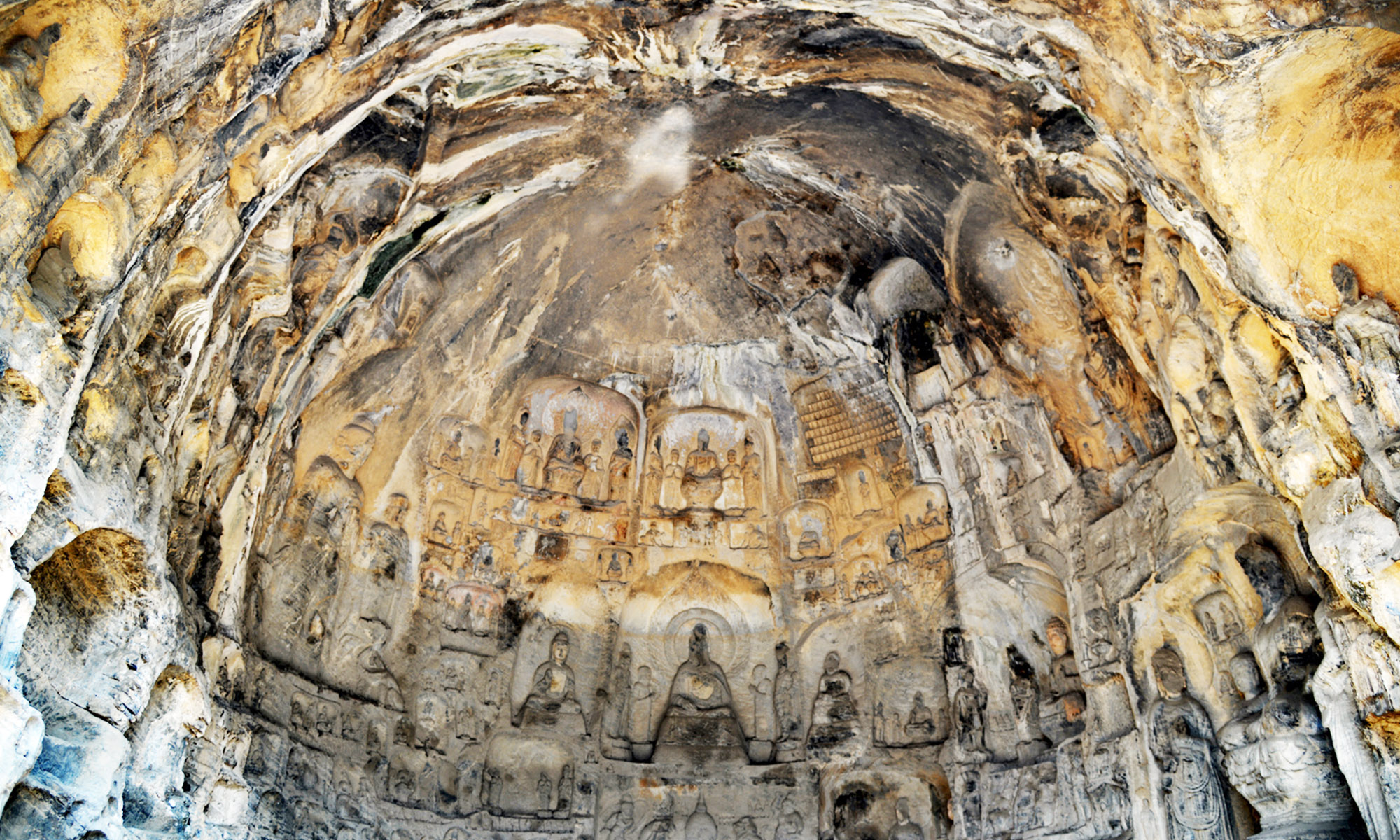
On Bin Buddha Mağarası inşa edildi 680 İmparator Gaozong ve eşi İmparatoriçe Wu Zetian tarafından. Burada yer alır 15,000 Küçük nişlere oyulmuş Buddhalar, birbirinden farklı, en küçük Buddha ise 2 santimetre (0.79 in) arasında değişen. Mağaranın merkezi grubu bir Amida beşlisi; tahrip edilmiş Guanyin’in su şişesi sol köşede seçilebiliyor. Daha küçük bir figür, bir mandorla içinde, Guanyin ile öğrencisi arasına yerleştirilmiştir. Daha küçük figür ise kendisi daha küçük başka figürlerle çevrilidir. Merkezi grubun üzerinde, Amida'nın Batı cennetinde yeniden doğan ruhlar lotus çiçekleri üzerinde oturuyorlar. Yan duvarlarda, Mağaraya adını veren sayısız minik damgalı Buda figürleri yer alır.
Lotus Çiçeği Mağarası
Lotus Çiçeği Mağarası, tarih olarak 527, Kuzey Wei dönemine aittir. Bu mağara, tavanındaki kubbeye oyulmuş muhteşem lotus çiçeği nedeniyle adlandırılmıştır. Çiçeğin etrafında altı apsara bulunur (cennet hizmetçileri). Güney duvarda birkaç küçük Buda oyulmuştur. Ayrıca nişlerde güney ve kuzey duvarlarda tapınaklar görülmektedir.
Fengxian Tapınağı Mağarası
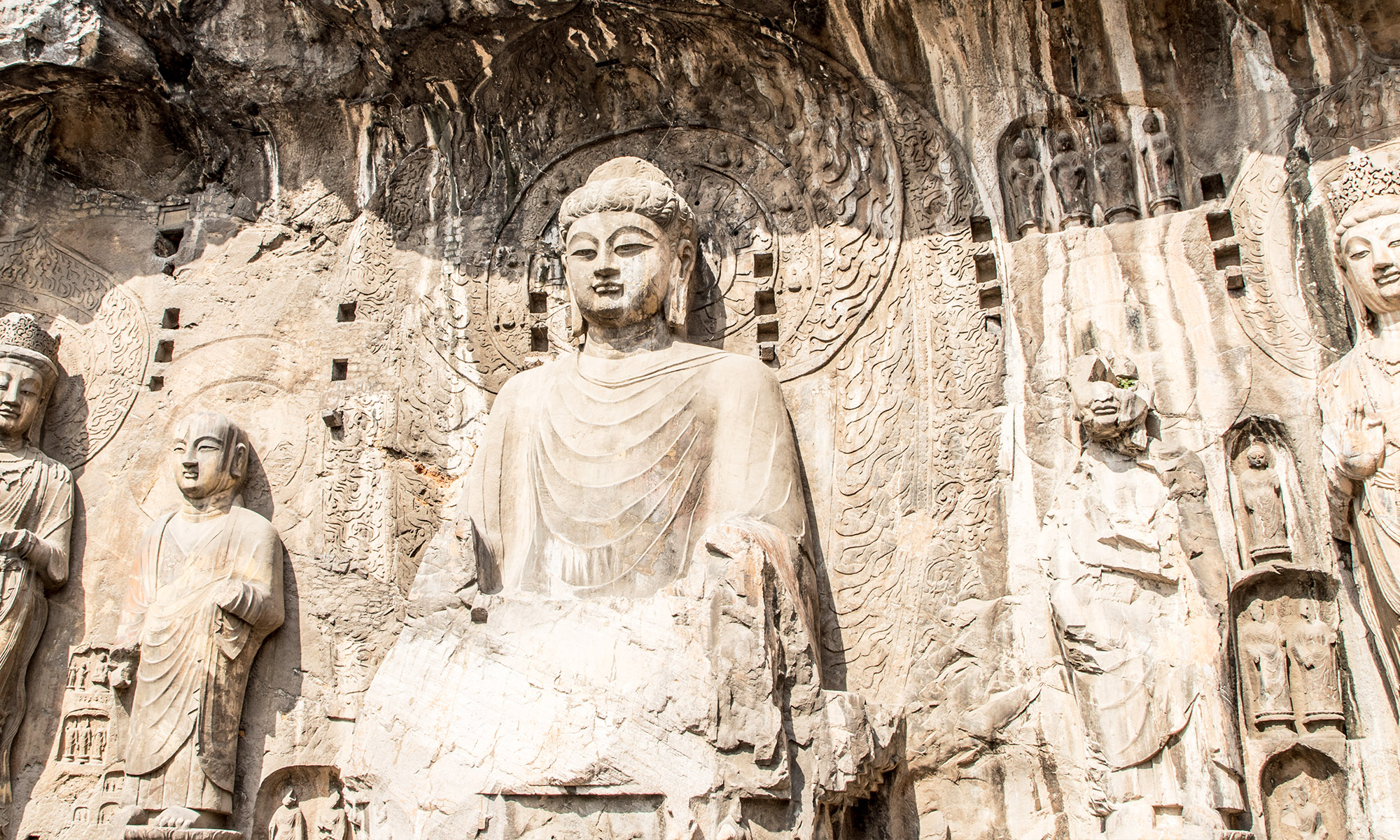
Fengxian Tapınağı Mağarası, batı tepesine oyulmuş tüm mağaraların en büyüğüdür ve yapımı arasında gerçekleşmiştir 672 ve 676 İmparatoriçe Wu Zetian için. Oymaların Tang hanedanının mimari mükemmelliğinin zirvesi olduğu iddia edilmektedir. Mağara içindeki kutsal alanın ölçüleri 39 m x35m. Longmen Mağaraları'ndaki en büyük Buddha heykeline sahiptir. Dokuz dev oymadan, en etkileyici Vairocana Buddha görüntüsü Fengxian Tapınağı'nın arka duvarına oyulmuştur. Görüntü 17,14 m yüksekliğinde olup 2 m uzunluğunda kulaklara sahiptir. Bu figürün kaidesindeki bir yazıt oyma yılı olarak 676 verilmektedir. Buddha'nın ana görüntüsünün solundaki Bodhisattva taç ve incilerle süslenmiştir. Ayrıca kötü ruhu ezen ilahi bir kişi de gösterilmektedir. The main Vairocana image’s features are plumpish and of peaceful and natural expression. Each of the other large statues are carved with expressions matching their representative roles. These were carved at the orders of Empress Wu Zetian, and are considered uniquely representative of the Tang dynasty’s “vigorous, elegant and realistic style.” The huge Vairocana statue is considered as “the quintessence of Buddhist sculpture in China.” The Vairocana statue also provides at its base the names of the artisans who worked here, the name of the Emperor Gaozong, who was the donor, and also honors Wu Zetian. It is said that Wu Zetian donated “twenty-thousand strings of her rouge and powder money” to complete this edifice. Bu nedenle, it is conjectured that the Vairocana Buddha was carved to resemble the Empress herself.
Medical Prescription Cave
The Medical Prescription Cave, has small inscriptions of 140 medical prescriptions for a wide range of medical problems from the common cold to insanity. These are seen carved right at the entrance on both walls. These carvings are dated from the late Northern Wei period to the early Tang Dynasty.
Guyang Cave
The Guyang Cave is recorded as the oldest Longmen cave with carvings in the Northern Wei style. It is also the largest cave, located in the central part of the west hill. It was carved under the orders of Emperor Xiaowen. The earliest carving in this limestone cave has been now dated at 478 MS, during the period when Emperor Xiaowen is thought to have been moving his capital from Datong to Luoyang. The Buddhist statues in the niches of this cave are very well sculpted. Ayrıca burada bulunanlar arasında 600 Kuzey Wei tarzında ince hat yazılarıyla yazılmış yazıtlar. Mağara içindeki birçok heykel kraliyet tarafından sağlanmıştır; Dini gruplar bu faaliyeti desteklemiştir. Mağarada üç çok büyük görüntü bulunmaktadır – ortadaki görüntü Sakyamuni Buda'dır ve her iki yanında Bodhisattvalar vardır. Görüntülerin özellikleri Kuzey Wei tarzını göstermektedir, genellikle ince ve zayıf figürler. Yaklaşık 800 Mağara içindeki duvarlarda ve nişlerde yazıtlar, Çin'deki herhangi bir mağaradan en çok yazıt. Mağaranın kuzey ve güney duvarlarında iki sıra niş bulunmaktadır, bu nişlerde çok sayıda görüntü bulunmaktadır; Sanatçılar kendi isimlerini kaydetmiştir, tarihlerini, ve bunları kazıma nedenlerini.
Huangfugong Mağarası
Huangfugong oyulmuştur 527. Tek bir bütün olarak tek seferde tamamlanmış ve çok iyi korunmuş. Lentoya oyulmuş yedi Budha, ahşap işçiliği görünümü vermektedir. Ana salonda yedi çok büyük figür görülür; Budha figürü iki Bodhisattva ve iki öğrencisiyle kuşatılmıştır. Ayrıca, mağaranın nişlerinde Budist gruplarının figürleri de görülmektedir. Tavanda çok büyük bir lotus çiçeği deseni oyulmuştur, Sekiz müzik apsarasıyla çevrilidir.
Longmen Mağaralarına nasıl gidilir
• Longmen Mağaraları, Luoyang şehir merkezine yaklaşık 15 km uzaklıktadır.
• Otobüse binin 53/ K53, 60/ K60, 71, 81/ K81, 99/ K99, ya da 167 Longmen Shiku İstasyonu'na.
• Luoyang’daki otellerden Longmen Mağaralarına zahmetsiz özel bir ulaşım için GGC’den araba/otobüs kiralayın.
Longmen Mağaraları hakkında ek seyahat tavsiyeleri
• Please wear comfortable walking shoes as there are many stairs and take care while climbing up and down the stairs.
• The lights in the caves are dim, so take a flashlight will be helpful.
• Luoyang Peony Festival is from April 1st to May 10th every year and there would be crowds at sightseeing spots. It is better to avoid travelling in Luoyang during the peak season.