+86-29-8964-0200
info@islamichina.com

Introducing Longmen Grottoes (من ويكيبيديا)
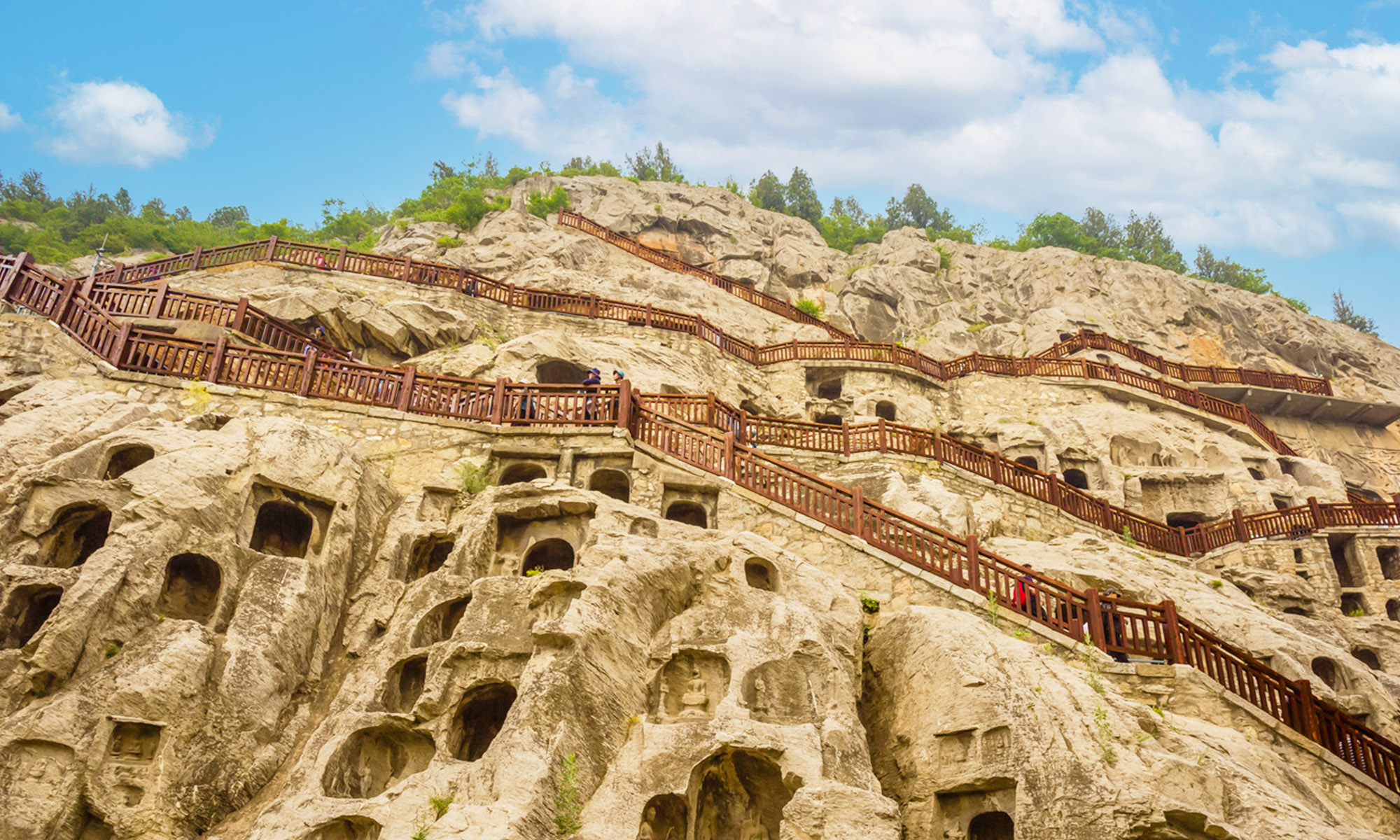
The Longmen Grottoes or Longmen Caves are some of the finest examples of Chinese Buddhist art. Housing tens of thousands of statues of Shakyamuni Buddha and his disciples, they are located 12 كم (7.5 mi) south of present-day Luoyang. The images, many once painted, were carved as outside rock reliefs and inside artificial caves excavated from the limestone cliffs of the Xiangshan and Longmenshan, running east and west. The Yi River flows northward between them. The alternative name of “Dragon’s Gate Grottoes” derives from the resemblance of the two hills that check the flow of the Yi River to the typical “Chinese gate towers” that once marked the entrance to Luoyang from the south. There are as many as 100,000 statues within the 2,345 caves, ranging from 1 inch (25 mm) إلى 57 feet (17 m) in height. The area also contains nearly 2,500 stelae and inscriptions, hence the name “Forest of Ancient Stelae”, as well as over sixty Buddhist pagodas. Situated in a scenic natural environment, the caves were dug from a 1 kilometre (0.62 mi) stretch of cliff running along both banks of the river. 30% date from the Northern Wei and 60% from the Tang dynasty, caves from other periods accounting for less than 10% of the total. Starting with the Northern Wei Dynasty in 493 ميلادي, patrons and donors included emperors, Wu Zetian, members of the royal family, other rich families, generals, and religious groups. في 2000 the site was inscribed upon the UNESCO World Heritage List as “an outstanding manifestation of human artistic creativity,” for its perfection of an art form, and for its encapsulation of the cultural sophistication of Tang China.
Longmen Grottoes Fast Facts
• الاسم الصيني: Long Men Shi Ku 龙门石窟
• أفضل وقت للزيارة: April, مايو, Jun, سبتمبر & أكتوبر
• ساعات الزيارة الموصى بها: حوالي 2 إلى 3 ساعات
• Type: UNESCO World Heritage, البوذية
• ساعات العمل: 08:00-18:00 (فبراير 1 إلى مار 31); 08:00-18:30 (أبريل 1 إلى أكتوبر 7); 08:00-18:00 (أكتوبر 8 إلى نوفمبر 14); 08:00-17:00 (نوفمبر 15 to Jan 31)
• رسوم الدخول: يوان صيني 90, free for children below 1.2 أمتار (3.9 feet).
• العنوان: Longmen Avenue, Longmen Town, منطقة لولوغونغ, لو يانغ, مقاطعة خنان
What UNESCO says of Longmen Grottoes
The Longmen Grottoes, located on bothsides of the Yi River to the south of the ancient capital of Luoyang, Henan province, comprise more than 2,300 caves and niches carved into the steep limestone cliffs over a 1km long stretch. These contain almost 110,000 Buddhist stone statues, more than 60 stupas and 2,800 inscriptions carved on steles. Luoyang was the capital during the late Northern Wei Dynasty and early Tang Dynasty, and the most intensive period of carving dates from the end of the 5th century to the mid-8th century. The earliest caves to be carved in the late 5th and early 6th centuries in the West Hill cliffs include Guyangdong and the Three Binyang Caves, all containing large Buddha figures. Yaofangdong Cave contains 140 inscription recording treatments for various diseases and illnesses. Work on the sculpture in this cave continued over a 150 year period, illustrating changes in artistic style. The sculptural styles discovered in the Buddhist caves of the Tang Dynasty in the 7th and 8th centuries, particularly the giant sculptures in the Fengxiansi Cave are the most fully representative examples of the Royal Cave Temples’ art, which has been imitated by artists from various regions. The two sculptural art styles, the earlier “Central China Style” and the later “Great Tang Style” had great influence within the country and throughout the world, and have made important contributions to the development of the sculptural arts in other Asian countries.
What to expect at Longmen Grottoes
According to the Longmen Caves Research Institute, هناك 2345 caves and niches, 2800 inscriptions, 43 pagodas and over 100,000 Buddhist images at the site. 30% of the caves date from the Northern Wei Dynasty (386-535), 60% from the Tang Dynasty (618-907), and caves from other periods less than 10%. It is the most impressive collection of Chinese art from these dynasties, و, dating from 316 إلى 907.
Qianxi Temple Cave (Hidden Stream Temple Cave)
The Qianxi Temple Cave is cave number 20. Reached by modern, concrete stairs up the face of a cliff, Qianxi Temple Cave, is a large cave on the northern edge of the west hill. Made during Gaozong’s reign (653–80), the cave has a statue of a huge, seated, early Tang Dynasty Amitabha Buddha seated on a square pedestal with loose clothes, a naked chest, and a plump face. His hands take the abhaya mudra, symbolizing fearlessness. The Bodhisattvas Avalokitesvara and Mahasthamaprapta stand to each side. Two armored heavenly kings protect the entrance. The statues are carved with a sophisticated expression typical of Tang style.
The Three Binyang Caves
There are three “Binyang” caves at Longmen: the middle cave (Northern Wei, ج. 523 ميلادي), and a north and a south cave on either side of it. The Middle Binyang Cave is the most prominent. It was built by Emperor Xuanwun of the Northern Wei Dynasty to commemorate his father Emperor Xiaowen, وأيضاً والدته. يُقال إن 800,000 العمال أنشأوه على مدى فترة من 500 إلى 523. في الجدار الرئيسي لهذه الكهف, تم نحت خمسة تماثيل بوذية كبيرة جدًا كلها على طراز وي الشمالي. التمثال المركزي هو لبوذا ساكيا موني محاط بأربع صور للبوديساتفا. تمت إزالة نقوش موكب إمبراطوري من الجدار الأمامي للكهف إلى متحف نيلسون-أتكينز في كانساس سيتي وإلى متحف المتروبوليتان في نيويورك. تشمل النقوش الأخرى على الجدار الأمامي مناقشة بين مانجوشري وفيمالاكيرتي, ووحدة البوديساتفا جاكاتا. بدأت كهف ساوث بينيانغ خلال سلالة وي الشمالية واكتملت في عهد تانغ. الصورة الرئيسية هي أمِتابها, يُقال إنها تمثل الانتقال من النحت الرسمي والهيبوي لسلالة وي الشمالية إلى الأسلوب الأكثر حياة وواقعية لعهد تانغ. Numerous sculptures have been carved into the cave walls including Bodhisattvas. The North Binyang Cave was begun in the Northern Wei dynasty and completed in the Tang dynasty. Amitabha’s right-hand mudra is Kapitthaka (“removing fear”). Guanyin carries a small vase in her left hand and a lotus in her right. The three Binyang caves were planned by the Northern Wei emperor Xuanwu as a memorial to his parents, but only the central cave was completed during his dynasty.
Ten Thousand Buddhas Cave
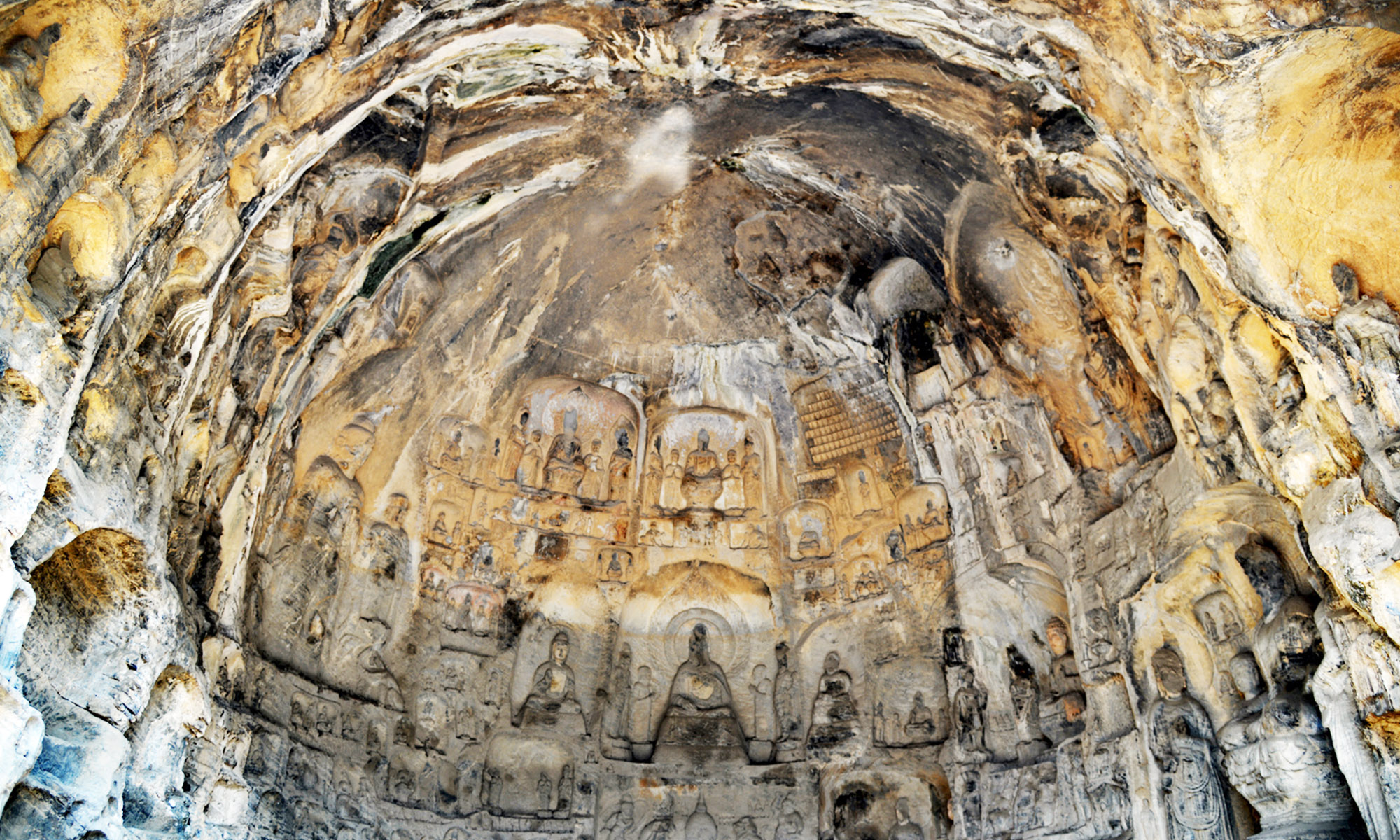
The Ten Thousand Buddhas Cave was built in 680 by Emperor Gaozong and his wife Emperess Wu Zetian. It houses 15,000 Buddhas carved in small niches, different from each other, with the smallest Buddha being 2 centimetres (0.79 في) in height. The central group of the cave is an Amida pentad; the water-bottle of its defaced Guanyin can be made out in the left corner. A smaller figure, within a mandorla, is fitted between Guanyin and the disciple. The smaller figure is itself flanked by other figures who are even more small. Above the central group, the souls who resurrect in Amida’s Western paradise are sitting upon lotus blossoms. On the side walls, are the innumerable tiny stamped buddha images that give the cave its name.
Lotus Flower Cave
The Lotus Flower Cave, dated to 527, belongs to the Northern Wei period. This cave is named for the spectacular lotus flower that is carved into the dome of its ceiling. The flower is surrounded by six apsarasas (heavenly maidens). Several small Buddhas are carved into the south wall. Also seen are shrines in the south and north wall in the niches.
كهف معبد فنغشيان
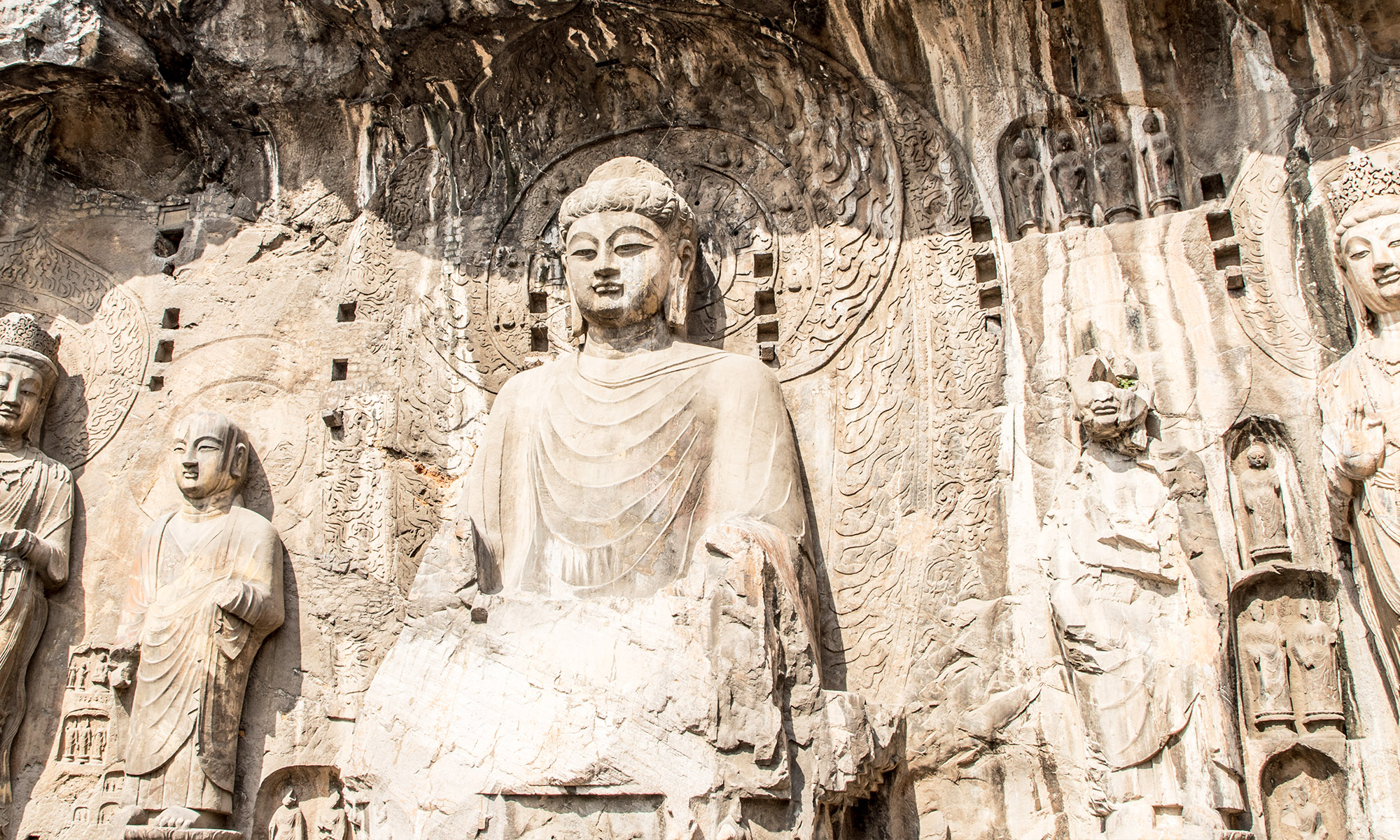
يُعد كهف معبد فنغشيان الأكبر بين جميع الكهوف المنحوتة على التل الغربي والذي تم بناؤه بين 672 و 676 للإمبراطورة وو زتيان. يُقال إن النقوش تمثل ذروة الكمال المعماري في عهد أسرة تانغ. المذبح داخل الكهف يبلغ قياسه 39 م × 35 م. ويحتوي على أكبر تمثال لبوذا في كهوف لونغمن. من بين التماثيل الضخمة التسعة المنحوتة, تم نحت الصورة المذهلة جدًا لبوذا فايروكانا على الجدار الخلفي لمعبد فنغشيان. ارتفاع الصورة 17.14 م ولها 2 أذنان طويلتان طول كل منهما م. نقش عند قاعدة هذه الصورة يذكر 676 سنة النحت. البوديساتفا على يسار الصورة الرئيسية لبوذا مزين بتاج ولآلئ. كما يظهر شخص إلهي يدوس على روح شريرة. The main Vairocana image’s features are plumpish and of peaceful and natural expression. Each of the other large statues are carved with expressions matching their representative roles. These were carved at the orders of Empress Wu Zetian, and are considered uniquely representative of the Tang dynasty’s “vigorous, elegant and realistic style.” The huge Vairocana statue is considered as “the quintessence of Buddhist sculpture in China.” The Vairocana statue also provides at its base the names of the artisans who worked here, the name of the Emperor Gaozong, who was the donor, and also honors Wu Zetian. It is said that Wu Zetian donated “twenty-thousand strings of her rouge and powder money” to complete this edifice. Hence, it is conjectured that the Vairocana Buddha was carved to resemble the Empress herself.
Medical Prescription Cave
The Medical Prescription Cave, has small inscriptions of 140 medical prescriptions for a wide range of medical problems from the common cold to insanity. These are seen carved right at the entrance on both walls. These carvings are dated from the late Northern Wei period to the early Tang Dynasty.
Guyang Cave
The Guyang Cave is recorded as the oldest Longmen cave with carvings in the Northern Wei style. It is also the largest cave, located in the central part of the west hill. It was carved under the orders of Emperor Xiaowen. The earliest carving in this limestone cave has been now dated at 478 ميلادي, during the period when Emperor Xiaowen is thought to have been moving his capital from Datong to Luoyang. The Buddhist statues in the niches of this cave are very well sculpted. Also found here are 600 inscriptions in fine calligraphy of writings in the Northern Wei style. Many of the sculptures inside the cave were contributed by royalty; religious groups supported this activity. The cave has three very large images – the central image is of Sakyamuni Buddha with Bodhisattvas on either side. The features of the images are indicative of the Northern Wei style, typically of slim and emaciated figures. هناك حوالي 800 inscriptions on the walls and in the niches inside the cave, the most in any cave in China. There are two rows of niches on the northern and southern walls of the cave, الذي يضم عددًا كبيرًا جدًا من الصور; قام الفنانون بتسجيل أسمائهم, التواريخ, وأسباب نحتها.
كهف هوانغفوغونغ
تم نحت هوانغفوغونغ في 527. تم الانتهاء منه دفعة واحدة كوحدة واحدة وهو محفوظ جيدًا جدًا. هناك سبعة تماثيل للبوذا منقوشة على العتبة تعطي مظهر تشطيب خشبي. يُرى في القاعة الرئيسية سبعة صور كبيرة جدًا مع تمثال البوذا محاطًا باثنين من البوذيساتفا واثنين من التلاميذ. كما تُرى صور لمجموعات بوذية في تجاويف الكهف. تم نحت تصميم كبير جدًا لزهرة اللوتس في السقف, محاطًا بثمانية أفساراس موسيقية.
كيفية الوصول إلى كهوف لونغمن
• تقع كهوف لونغمن على بعد حوالي 15 كم من وسط مدينة لويانغ.
• خذ الحافلة 53/ K53, 60/ K60, 71, 81/ K81, 99/ K99, أو 167 إلى محطة لونغمن شيكو.
• Rent a car/bus from GGC to enjoy a hassle free private transfer from hotels in Luoyang to Longmen Grottoes.
Additional travel advice on Longmen Grottoes
• Please wear comfortable walking shoes as there are many stairs and take care while climbing up and down the stairs.
• The lights in the caves are dim, so take a flashlight will be helpful.
• Luoyang Peony Festival is from April 1st to May 10th every year and there would be crowds at sightseeing spots. It is better to avoid travelling in Luoyang during the peak season.