+86-29-8964-0200
info@islamichina.com

مقدمة عن منطقة بانمن السياحية
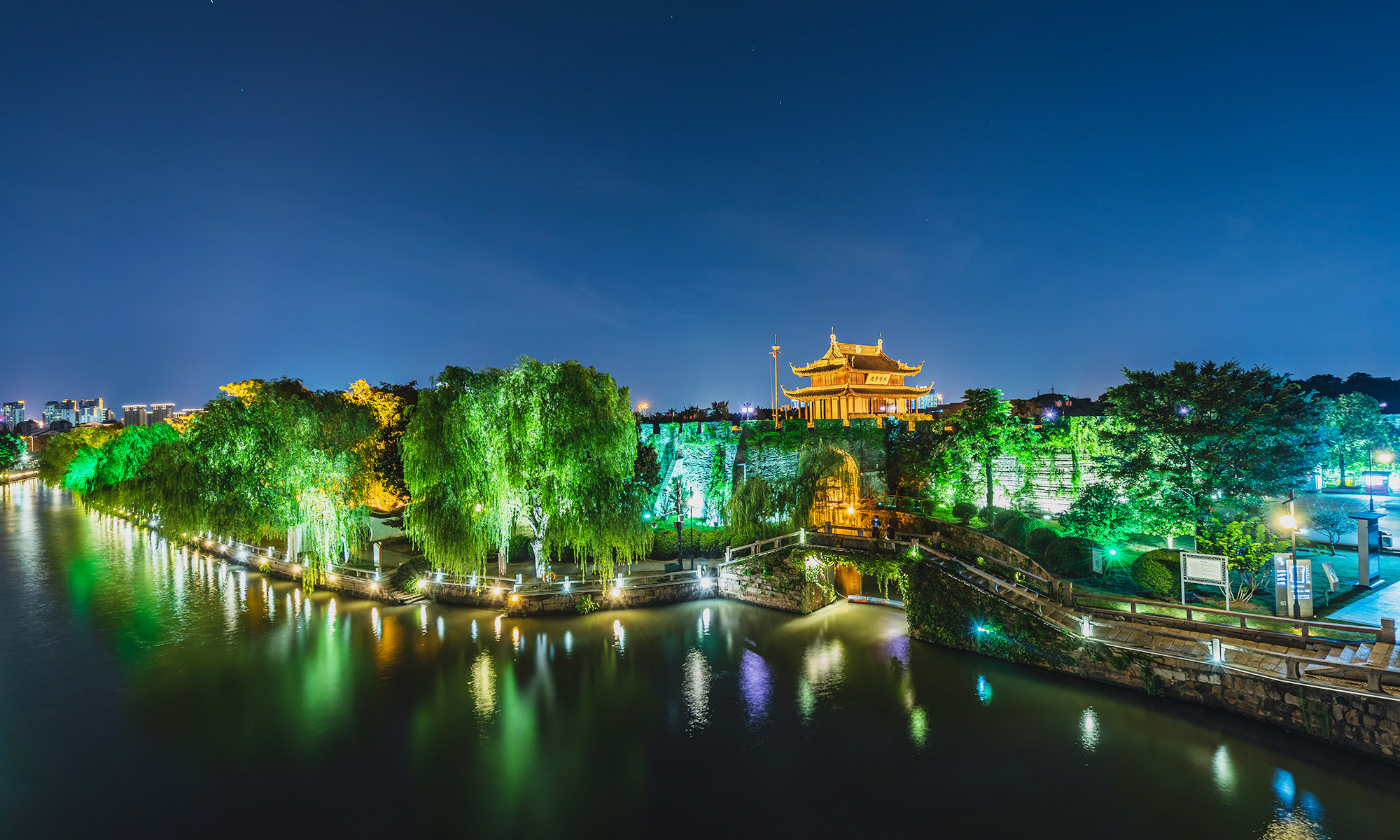
تقع منطقة بانمن السياحية إلى الجنوب الغربي من الجزء القديم من سوتشو, بجانب فندق ووجونغ بانا باسيفيك الكبير وطريق شينشي إلى الشمال, ونهر هوانتشنغ إلى الجنوب. تحتوي منطقة بانمن السياحية على ثلاثة مواقع سياحية شهيرة, بوابات المدينة المائية والبرية, برج رويغوانغ, وجسر وومين. تم افتتاح المنطقة السياحية الجديدة لبانمن رسميًا لعامة الزوار في سبتمبر 23, 1999. عندما عُقد اجتماع وزراء مالية منتدى التعاون الاقتصادي لآسيا والمحيط الهادئ (APEC) في سوتشو, في سبتمبر 2001, تم اختيار قاعة سيروي في المنطقة السياحية كمكان للاجتماع.
حقائق سريعة عن منطقة بانمن السياحية
• الاسم الصيني: بانمن جينغتشو 盘门景区
• أفضل وقت للزيارة: من أبريل إلى أكتوبر
• ساعات الزيارة الموصى بها: حوالي 2 إلى 3 ساعات
• الأنشطة التي يمكن ممارستها: التصوير, الهندسة المعمارية, التاريخ والثقافة
• ساعات العمل: 07:00-17:00 (النهار); 18:00-20:00 (الليل)
• رسوم الدخول: ¥40 (النهار) / ¥40 (حديقة الليل) / ¥6 (الصعود إلى البرج)
• العنوان: رقم. 49 الشارع الشرقي, منطقة كانغلانغ, سوتشو, مقاطعة جيانغسو
ما يمكن توقعه في منطقة بانمن السياحية
بوابة بانمن, والتي تقع تحت وحدة حماية الآثار على مستوى المقاطعة, was one of eight prominent gates in old Suzhou and was built in 514 قبل الميلاد. Panmen Gate got the name Panmen from a wooden carving, a Pan Long (coiled dragon) at the top of the gate to frighten State of Yue. It later got the name Panmen Gate, meaning winding (dragon) gate. The current gate was built during the Yuan Dynasty, and the gate tower was refurbished in the summer of 1986. The Panmen Gate consists of two gates on the water route, and two on land, as well as an enclosure between the inner and outer gates, gate towers, and city walls going out from the gates. Panmen Scenic Area is the only well-preserved land and water gate in Suzhou and in China for that matter.
Land-and-Water City Gates
The land gates have an inner and outer part, with an enclosure in between to hide troops to fight the enemy. The water gates and land gates are closely joined, with inner and outer parts, too, and hidden approaches to the towers. They are both equipped with a large portcullis which, in ancient times, could be lift or let down to control the flow of people or vessels to defend the town.
سور المدينة & Wumen Bridge
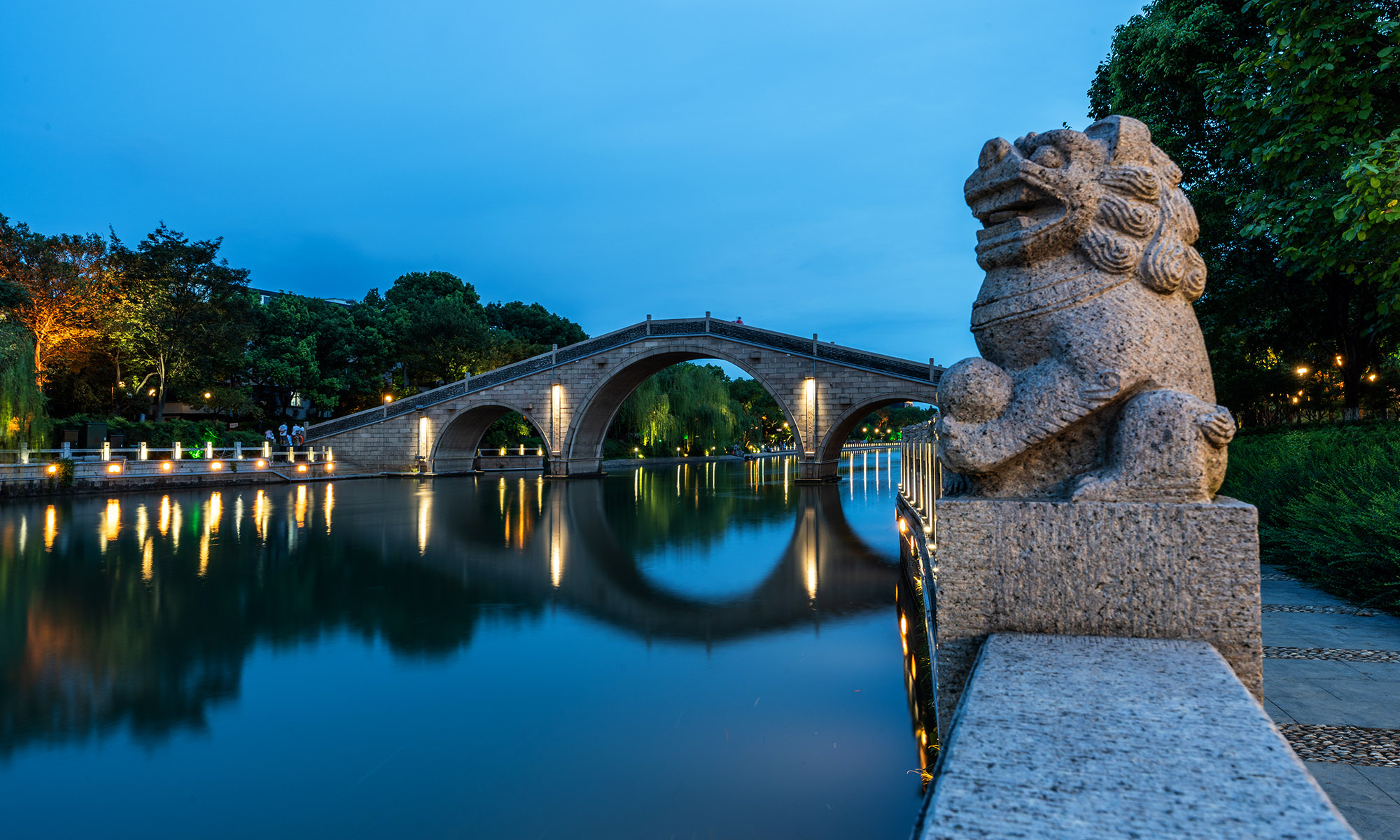
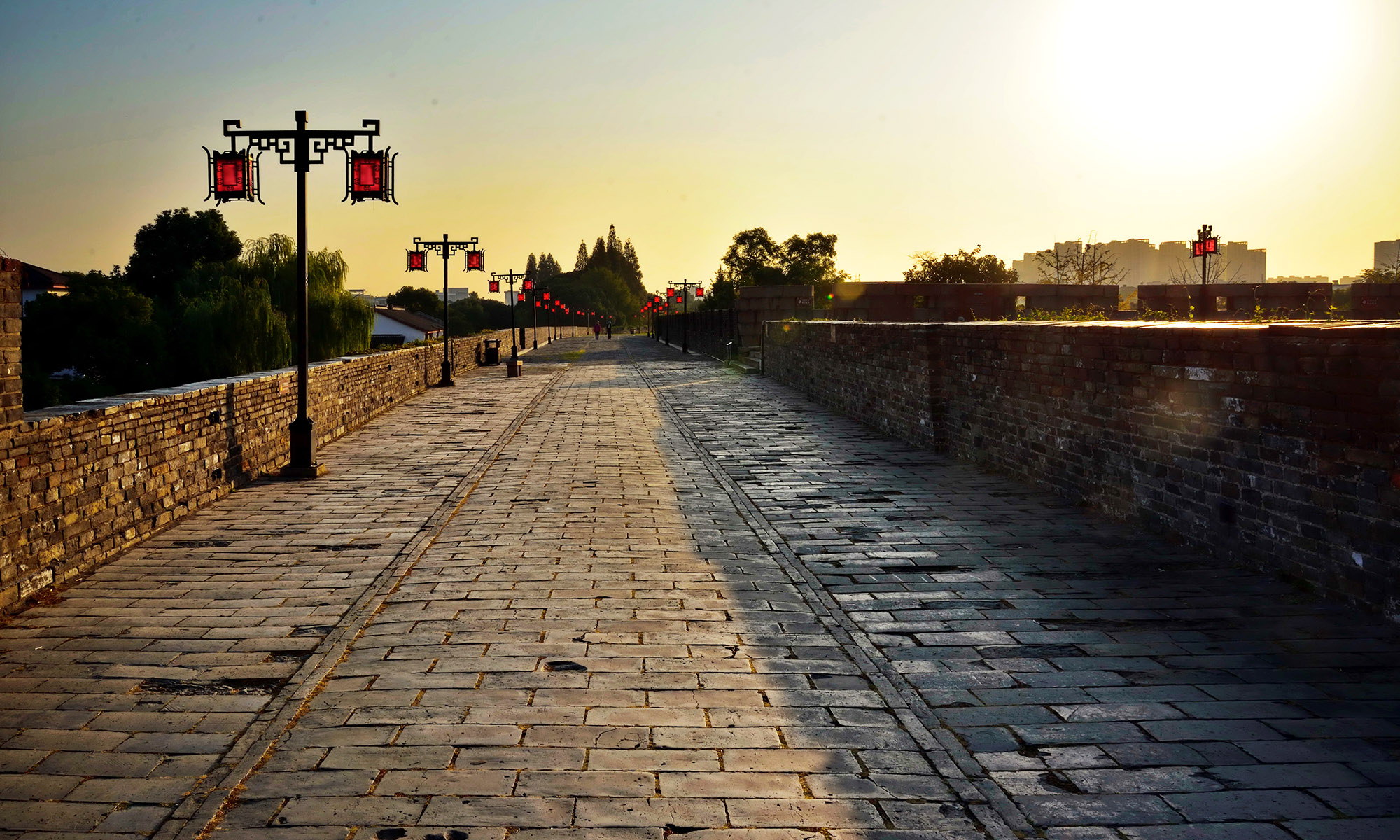
The walls are accessible from the northern slope and offer a panoramic view of the entire structure, both the land gates and water gates. The town walls were well equipped to defend the town, with battlements, cannon, arrow slits, holes to fire, locked entrances, gates, and a way to prevent fires. The running water beyond the Panmen Gate had a strategic importance during warfare in times past. So there is an inscription on the Panmen gate tower announcing that it is, Key to the Central State of Wu. There are also opposing couplets reading, “City walls of ancient Wu are thick and solid, swords and flames are often brought to the capital.” A visitor can hardly help being a bit nostalgic while examining the couplets and historical relics. The Wumen Bridge, which is adjacent to the Panmen Gate and crosses the old Grand Canal, was first built during the Song Dynasty and rebuilt during the Qing, so it has a history of 130 years and is Suzhou’s only single-arch stone bridge still standing. Panmen Scenic Area is now a cultural relic under municipal protection. Panmen Scenic Area resembles a full moon and is 66 meters long, 16 meters along the clear span of the arch, و 9.85 meters on the arch rise. The southern and northern steps are paved with slate and supported with carved stone on both sides. The bridge has a light, graceful structure that is a good example of the features of bridges in waterside towns along the Yangtze River.
برج رويغوانغ
The 13-storey Ruiguang (Auspicious light) Pagoda, in the Puji Temple, was built by Sun Quan during the Three Kingdoms period (ميلادي 220-280) as a way to repay maternal love. It is also known as Bao’en (Paying for maternal love) pagoda, and was the earliest Buddhist pagoda in Suzhou. According to a popular legend, the pagoda could give off multi-colored light. During the Song, Yuan Zhao, an eminent monk, would lecture on abstruse parts of Buddhist sutras so wondrously that the temple was the site of four auspicious omens — the drums in the hall chimed by themselves; withered bamboos in the courtyard turned green; a white turtle in the pond listened to Zen preaching; and the pagoda gave off multi-colored light. The Huizong emperor of the Song gave instructions that a horizontal tablet saying “Ruiguang Temple” be made. So, the Bao’en pagoda became the Ruiguang Temple pagoda.
The pagoda as it now is was built during the first year of Jingde during the Northern Song Dynasty (1004). It is 53.6 meters tall and has seven stories and eight sides. The pagoda slopes inward as it goes up with a curved line. It has a primitive simplicity, but is delicate and soft and shows the style and structures of a Tang and Song pagoda. Its main body was made of brick dating back to the Song Dynasty. The third story was the core of the pagoda. في 1978, a “heavenly palace” was found hidden in the storey, containing precious relics. The pagoda has an ingenious structure and has great historical, artistic and scientific value. In Jan 1988, the State Council added it to a third group of key cultural relics under national protection.
How to get to Panmen Scenic Area
• استقل الحافلة رقم. 39, 935, 949, خط سياحي 2 أو الخط 5 and get off at Panmen Scenic Area North Station.
• استقل الحافلة رقم. 921 and get off at Xinshiqiao South Station.
Additional travel advice on Panmen Scenic Area
• Tourist Center is at the east entrance of the scenic area, offering multiple services: Information Inquiry, Baby stroller/Phone charger/Wheelchair lending, إلخ.
• The entrance ticket includes boating (حوالي 10 الدقائق) for sightseeing.