+86-29-8964-0200
info@islamichina.com

تقديم معبد الإوزة الكبيرة البرية
تم بناء معبد الإوزة الكبيرة البرية بواسطة الراهب البوذي شوانتسانغ. شوانتسانغ هو أحد أعظم الرحالة والمستشرقين الصينيين القدماء, العلماء والمترجمين. بالنسبة للصينيين, اسمه مشهور مثل ماركو بولو لدى الغربيين. خلال أوائل عهد أسرة تانغ, بين 629 و 645, سافر شوانتسانغ إلى الهند وزار أكثر من مئة مملكة, وكتب تقارير واسعة ومفصلة عن اكتشافاته. خلال رحلاته تعلم تعاليم دينه, ودرس مع العديد من أساتذة البوذية المشهورين, لا سيما في المركز الشهير لتعليم البوذية في جامعة نالاندا في الهند. كتب سجلات تانغ الكبرى عن المناطق الغربية, تم تسجيل رحلته البرية إلى الهند التي استمرت سبعة عشر عاماً بالتفصيل. الرواية الصينية رحلة إلى الغرب, واحدة من أربع الروايات الكلاسيكية الكبرى للأدب الصيني, مستوحاة من سيرته الذاتية. عند عودته إلى الصين في 645, استقبل شوانزانغ باحترام كبير لكنه رفض جميع المناصب المدنية العليا التي عرضها عليه الإمبراطور تايزونغ. بدلاً من ذلك, اعتزل إلى دير وكرس طاقته لترجمة النصوص البوذية. في 648, تم بناء معبد داتشيان من قبل ولي العهد لي تشي تكريمًا لأمه الإمبراطورة تشانغسون. تم دعوة شوانزانغ من قبل ولي العهد لي تشي ليكون رئيس دير هذا المعبد. أنشأ شوانزانغ مكتب ترجمة كبير في معبد داتشيان, جاذبًا الطلاب من جميع أنحاء شرق آسيا. بدعم من الإمبراطور جاؤزونغ, بنى شوانزانغ هذا 64 مئوية الببغاء الكبير عالية في 652 لإيواء 657 النصوص السنسكريتية, سبع تماثيل للبوذا و 150 رواسب السارييرا التي أحضرها من الهند. معبد داتشيان مُرتب على محور جنوب-شمال, and contains four main buildings. Beginning at the south is the main gate followed by the Mahavira Hall, Tusita Palace, the Big Wild Goose Pagoda and Xuanzang Sanzang Hall. The Big Wild Goose Pagoda was listed as UNESCO World Heritages Site under “Silk Roads: the Routes Network of Chang’an-Tianshan Corridor” في 2014.
Big Wild Goose Pagoda Fast Facts
• الاسم الصيني: Da Yan Ta 大雁塔
• أفضل وقت للزيارة: طوال العام
• ساعات الزيارة الموصى بها: حوالي 2-3 ساعات
• الأنشطة التي يمكن ممارستها: التصوير, Buddhist Study
• ساعات العمل: 8:00 – 18:00
• رسوم الدخول: ¥40/person for Da Ci’en Temple; extra ¥25/person for ascending the pagoda
• العنوان: Daci’en Temple, Yanta South Road, شيآن, Shaanxi Province
What to expect at Big Wild Goose Pagoda
Daci’en Temple
The name of Daci’en Temple is a story of mourning and filial piety, a concept held in high-esteem in Chinese culture. Daci’en Temple rests on the site of Wulou Temple or Five Storey Temple built in 589 during the Sui Dynasty. Over the years this temple fell into disrepair. في 648 خلال عهد أسرة تانغ, the Crown Prince Li Zhi spearheaded the renovation of the temple in honour of his mother, the Empress Zhangsun, who had tragically suffered an early death. Crown Prince Li Zhi wanted to pay tribute to his mother’s kindness and so named the temple Daci’en, which means kindness and grace in Chinese. The temple originally had 13 separate courtyards and 1,879 rooms, all of them unmatched in their grandeur, but tragically the temple once again fell into disrepair after the fall of the Tang Dynasty in 907. The temple was renovated during the Ming Dynasty (1367 – 1644) and the surviving halls and rooms were all built during the Ming Dynasty. The size of current Daci’en Temple is only one seventh of that of the Tang Dynasty Daci’en Temple.
Mahavira Hall
قاعة مهافيرا هي القاعة الرئيسية في معبد بوذي. تُعرف أيضًا باسم القاعة الثمينة للبطل العظيم. تعمل كالنواة المعمارية لجميع أرجاء المعبد وأيضًا مكانًا للرهبان لممارسة التأمل. تمثال شاكياموني, مؤسس البوذية موضوعة في مركز القاعة. تمثل بوذا شاكياموني في وضعية التأمل, جالسًا على زهرة اللوتس; تماثيل اثنين من التلاميذ’ موضوعة على يمينه ويساره, الأكبر يسمى كاشيابا والشخص الشاب المظهر يسمى أناندا. على الجانب الشرقي والغربي للقاعة مرتبة ثمانية عشر تمثالاً من الأرهماء. يستمعون إلى بوذا, بعضهم متأمل, وبعضهم مسرور.
قصر توشيطا
توشيطا هو السماوة الرابعة من بين السماوات الست في عالم الرغبة بحسب البوذية. It is said that bodhisattvas are reborn in this heaven just before their rebirth in the world where they will attain Buddhahood. Shakyamuni is said to have descended from this heaven and entered the womb of his mother, Maya. Tushita consists of an inner court and an outer court. The inner court is the abode of Bodhisattva Maitreya, who is constantly preaching until his future rebirth in the human world as a Buddha. Tusihta Heaven is where all Bodhisattvas destined to reach full enlightenment in their next life dwell. Many Buddhists vow to be reborn in Tushita so that they can hear the teachings of Maitreya and ultimately be reborn with him when he becomes a Buddha. A bronze Maitreya Buddha image, 2.7 meter high, is enshrined in the middle of this Tushita Palace.
البرج الكبير للغُراب البري
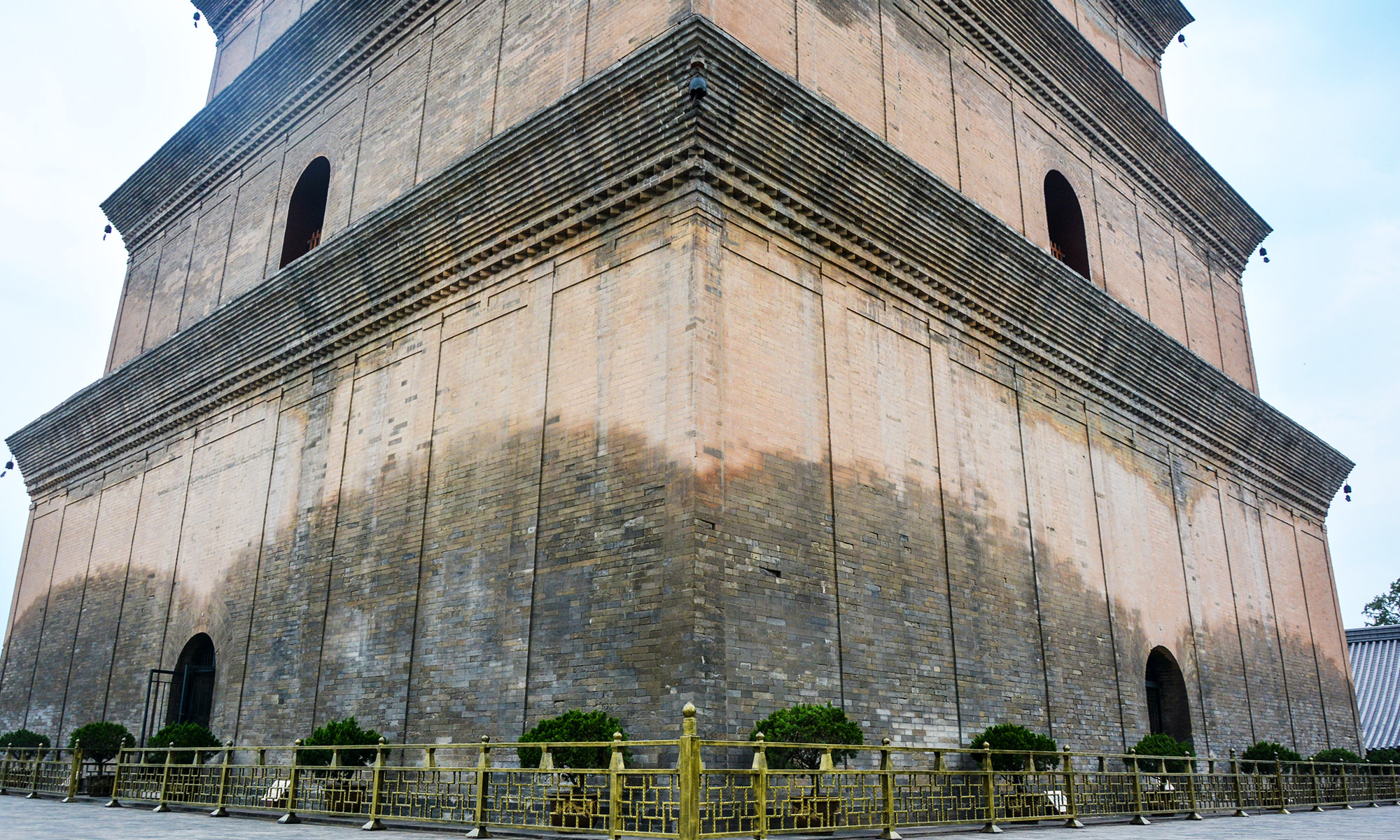
Here are some fast facts on the Big Wild Goose Pagoda. This pagoda was built in 652. It was built by Xuanzang. It is seven storeys, 64 أمتار عالية. It was built to house the 657 النصوص السنسكريتية, سبع تماثيل للبوذا و 150 Sarira relics brought to China from India by Xuanzang. The current pagoda is a leaning tower, leaning somewhat one meter to the northwest. Xuanzang named this pagoda Big Wild Goose Pagoda for the reason that he visited a pagoda with the same name in India, The Indian pagoda’s name comes from a famous Buddhist history. Once upon a time, there were two branches of Buddhism in India, for one of which eating meat was not a taboo. One day, the monks couldn’t find meat to eat. Upon seeing a group of big wild geese flying by, a monk said to himself: “Today we have no meat. I hope the merciful Buddha will give us some.” At that very moment, the leading wild goose broke its wings and fell to the ground. All the monks were startled and believed that this was a warning from Buddha, prompting them to be more pious and less fixated on worldly pleasures, and so they stopped eating meat. A pagoda was supposedly built on the spot where the famed wild goose fell and the pagoda was named Big Wild Goose Pagoda.
Xuanzang Sanzang Hall
The Xuanzang Sanzang Hall was completed in 2000. It consists of three courtyards of Tang Dynasty architecture and it is the largest memorial of Xuanzang now in the world. Born in what is now Henan province in 602, from boyhood Xuanzang took to reading religious books, including the Chinese classics and the writings of ancient sages. Xuanzang was ordained as a novice monk at the age of thirteen and as a full monk at the age of twenty. He travelled throughout China in search of sacred books of Buddhism. Fnally, he came to Chang’an, present day Xian and Tang Dynasty Chinese capital, where Xuanzang developed the desire to visit India, the birthplace of Buddhism. He started his life time trip of searching for Buddhist scriptures to India in 629 and returned to China in 645, with 657 النصوص السنسكريتية, 7 statues of the Buddha and 150 Sarira relics loaded onto twenty-two horses. بدعم من الإمبراطور جاؤزونغ, he set up a large Buddhist scripture translation center at Daci’en Temple, جاذبًا الطلاب من جميع أنحاء شرق آسيا. He is credited with the translation of some 1,330 fascicles of scriptures into Chinese. His strongest personal interest in Buddhism was in the field of Yogacara, أو “Consciousness-only”. It was here at Daci’en Temple Xuanzang founded the Chinese Yogacara School. The Chinese name for Yogachara School is Faxiangzong or Weishizong. The Chinese Yogacara School did not thrive for a long time in China. But, its theories regarding perception, consciousness, karma, rebirth, إلخ. found their way into the doctrines of other more successful Chinese Buddhist schools. Xuanzang’s most eminent student was Kuiji who became recognized as the first patriarch of the Chinese Yogacara School. The Chinese Yogacara School failed to be handed down after the death of Kuiji due to the fact that Yogacara School was too hard to be understood by Chinese Buddhists because they lack the necessary background in Indian logic.
Enlightenment Hall
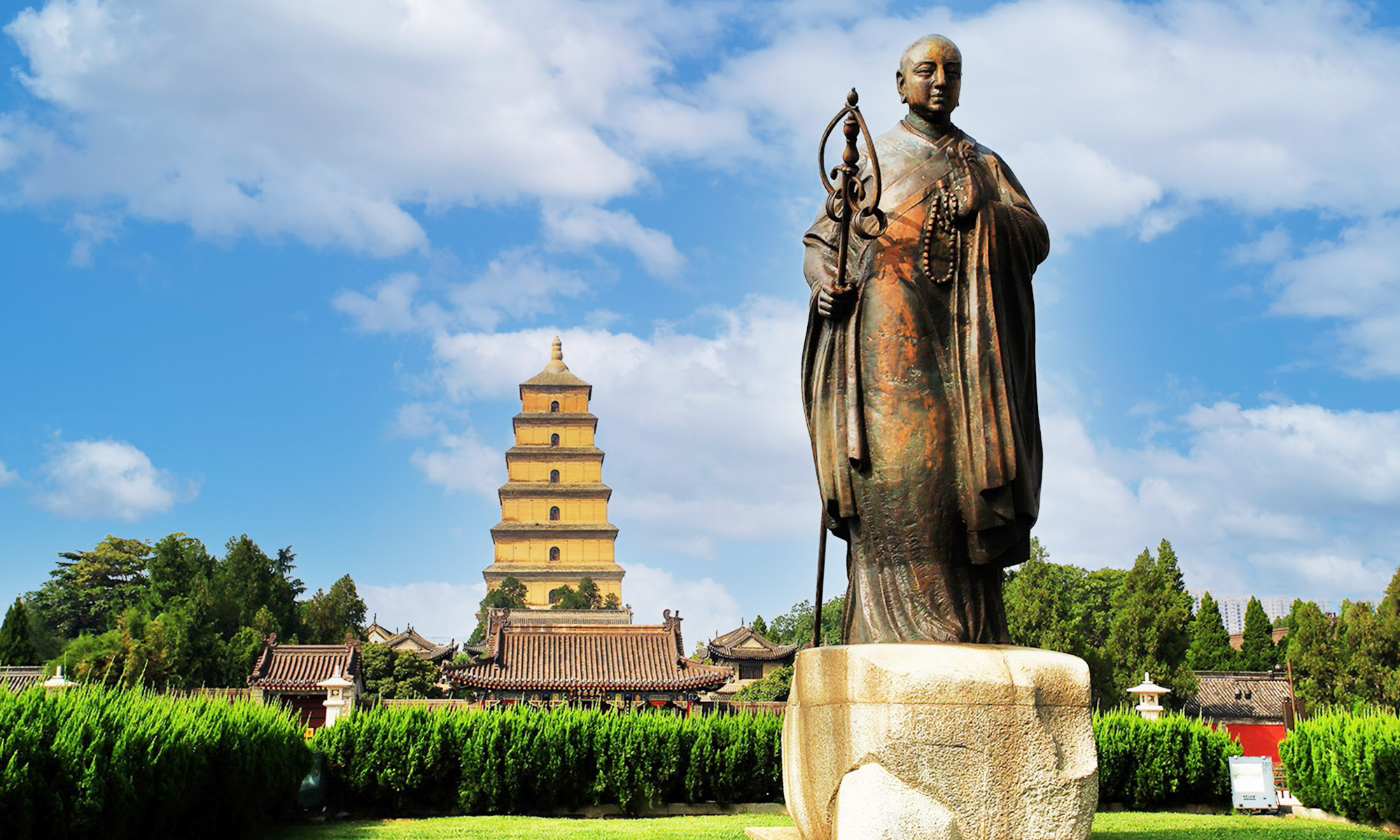
The central courtyard of Xuanzang Sanzang Hall is named Enlightenment Hall (Dabianjue Hall in Chinese). A bronze statue of Xuanzang is enshrined in the center of this hall. The Sarira of Xuanzang’s parietal bone is housed in a tiny gold gilded stupda in front of Xuanzang’s bronze statue. After the death of Xuanzang, Emperor Gaozong gave him a posthumous title, Dabianjue, meaning Complete Enlightenment. Xuanzang would have reached Tushita and become a Bodhisattva after his death. Frescoes on the walls of this hall depict the stories of Maitreya Buddha, his past, present and future. Some of the original palm-leaf manuscripts brought from India by Xuanzang are stored in the basement of this building.
Light Hall
The courtyard located to the west of Enlightenment Hall is named Light Hall. Frescoes on the wall of this hall depict the first half of Xuanzang’s life, from his birth to his conversion to Buddhism, the 17 year hard journey from China to India, his experience of studying Buddhism in India and his great achievements in Buddhism.
Prajna Hall
The courtyard located to the east of Enlightenment Hall is named Prajna Hall. Frescoes on the wall of this hall depict the life of Xuanzang from his return to China, the translation of Buddhist sutras from Sanskrit into Chinese, the founding of Yogacara School, to his death in 664.
Pagoda Forest
Pagoda Forest is the tomb area of Daci’en Temple. These pagodas were built to commemorate the eminence and contributions of prestigious and respectable Abbots of Daci’en Temple. After their death and cremation, the ashes would be put underground and a pagoda would be erected on the spot. The size, height and storeys of the pagoda indicate the accomplishments, prestige, merits and virtues of the abbot.
North Square of Big Wild Goose Pagoda
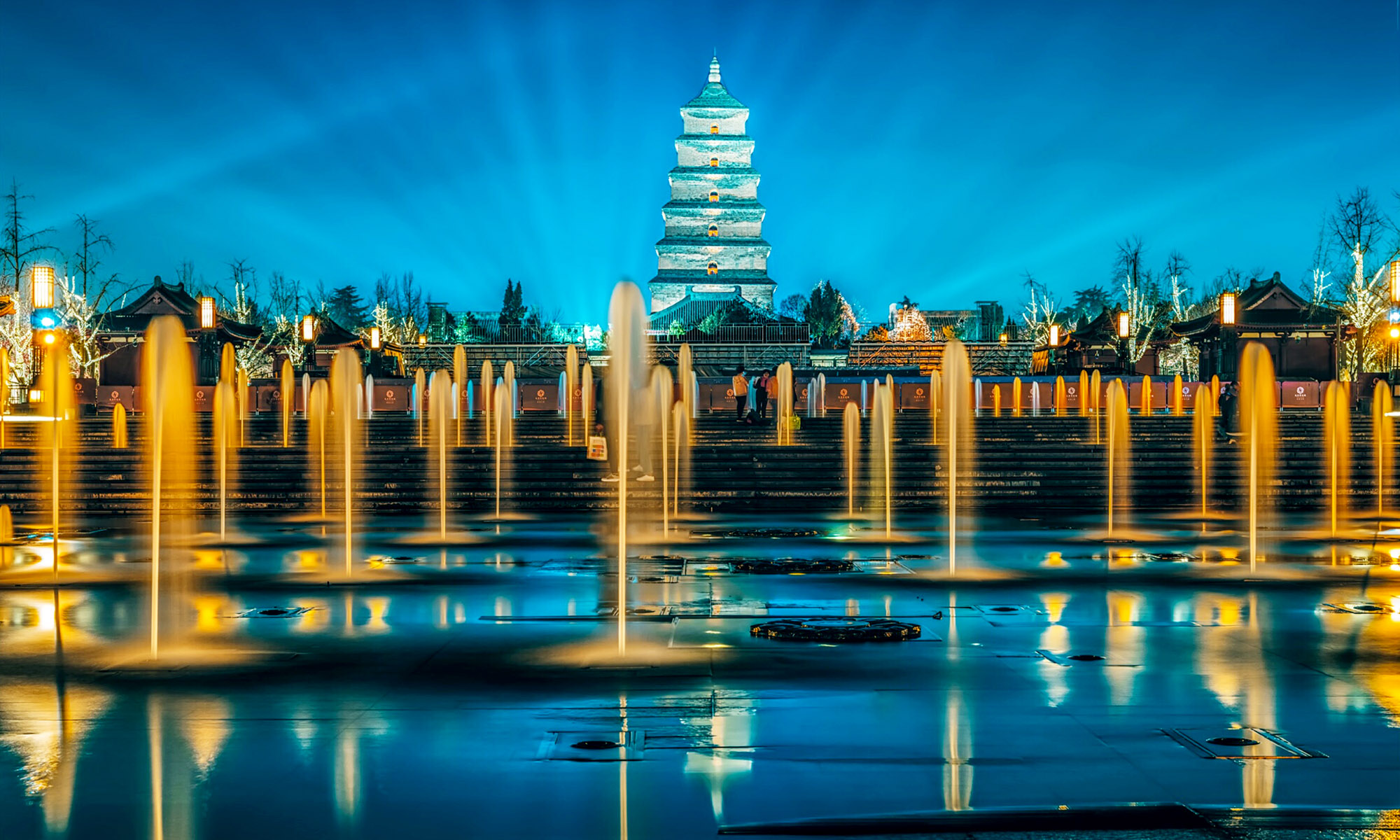
There are many featured squares and gardens around the Big Wild Goose Pagoda. The most remarkable one should be the North Square which is the largest musical fountain square in Asia. You can see the 2 group sculptures of 100m long, 8 large figure sculptures and 40 landscape sculptures, while appreciate the grand colorful fountain show dancing with the music.
Timetable of the Musical Fountain on the North Square: Tuesday (19:00, 21:00), other days (12:00,16:00, 19:00, 21:00).
How to get to Big Wild Goose Pagoda
بالأتوبيس
Take bus No. 5, 19, 21, 22, 23, 24, 27, 30, 34, 41, 44, 189, 224, 242, 271, 307, 400, 401, 408, 500, 521, 526, 527, 601, 606, 609, 701, Qujiang Tourist Bus, Huan Shan Tour Bus No. 1 & 2, خط الحافلة السياحية 6 & 8 (610) & 9(320), and get off at Dayanta Station.
عن طريق المترو: Take Metro Line 3 & 4 to Dayanta Station.
Additional travel advice on Big Wild Goose Pagoda
• Please watch out the steps while ascending the pagoda.
• The squares of Big Wild Goose Pagoda are always crowded with tourists during busy season. It is suggested to go to the north square in advance, if you want to appreciate the night view of the music fountain.