+86-29-8964-0200
info@islamichina.com

تقديم ممر يومن
ممر يومن, المعروف أيضًا باسم بوابة اليشم أو ممر بوابة اليشم, هو اسم ممر يقع غرب دونغهوانغ. في العصور القديمة, كان هذا ممراً مرّت به طريق الحرير, وكان الطريق الوحيد الذي يربط آسيا الوسطى بالصين, كانت تُسمى سابقًا الأقاليم الغربية. جنوبًا مباشرة كان ممر يانغغوان, الذي كان أيضًا نقطة مهمة على طريق الحرير.
حقائق سريعة عن ممر يومن
• الاسم الصيني: يومنغوان 玉门关
• أفضل وقت للزيارة: من مايو إلى أكتوبر
• ساعات الزيارة الموصى بها: حوالي 1 ساعة
• الأنشطة التي يمكن ممارستها: التصوير, المشي لمسافات طويلة, علم الآثار
• ساعات العمل: 08:00-18:00
• رسوم الدخول: ¥40
• العنوان: 90 كم شمال غرب دونغهوانغ, جيوتشيوان, مقاطعة غansu
ما يمكن توقعه في ممر يومن
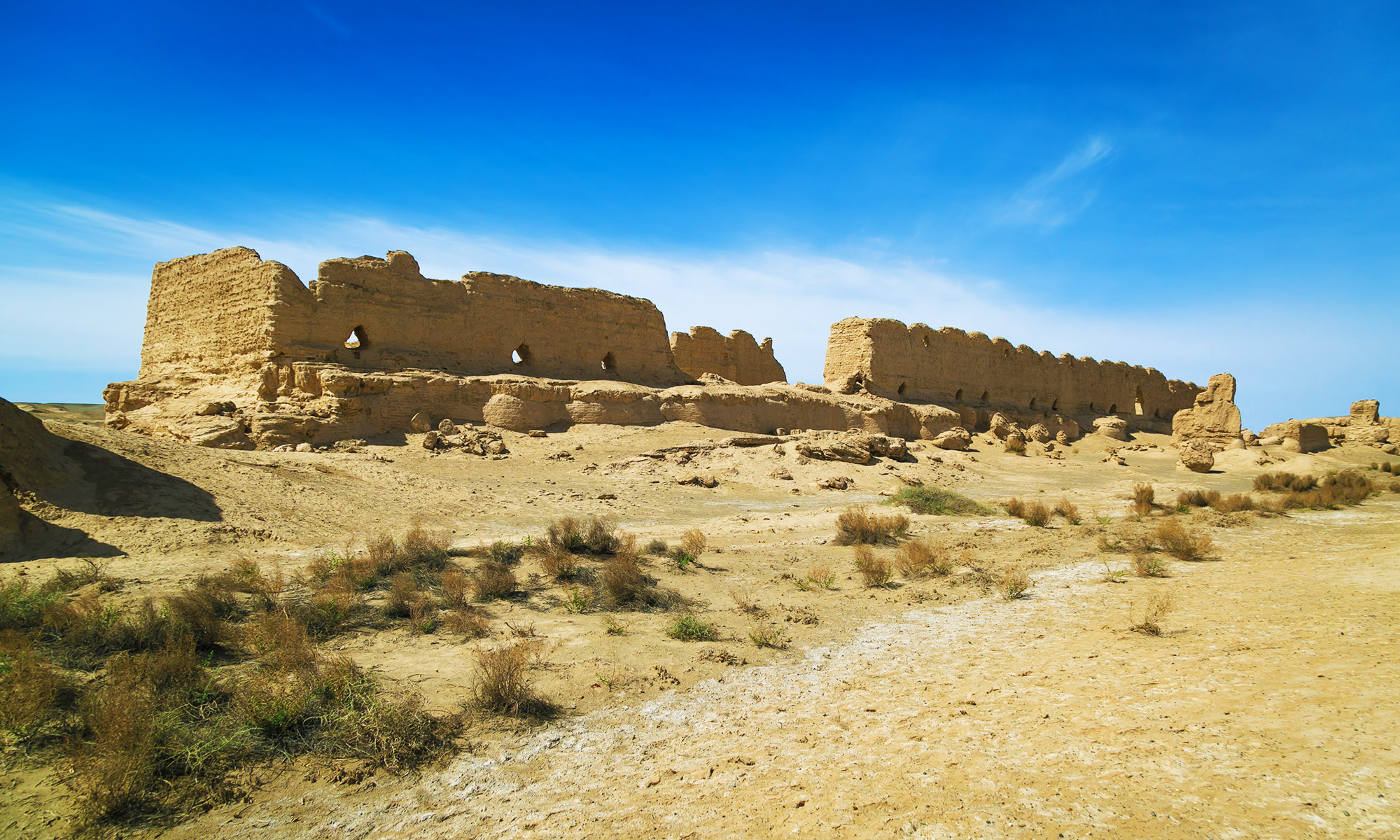
“كان المسافرون إلى 'الأقاليم الغربية' يغادرون الصين عبر ممر يومنغوان الشهير, أو 'بوابة اليشم العسكرية الأمامية',,’ سُمّي بهذا الاسم لكثرة القوافل التي تمر باليشم من خلاله. تم بناء بوابة اليشم الأصلية بواسطة الإمبراطور وودي (الإمبراطور وو من هان) بعد وقت قصير 121 BCE and its ruins may still be seen about 80 كيلومترات (50 أميال) to the northwest of Dunhuang which was, until the 6th century, the final outpost of Chinese territory for caravans on their long caravan journeys to India, Parthia, and the Roman Empire.”
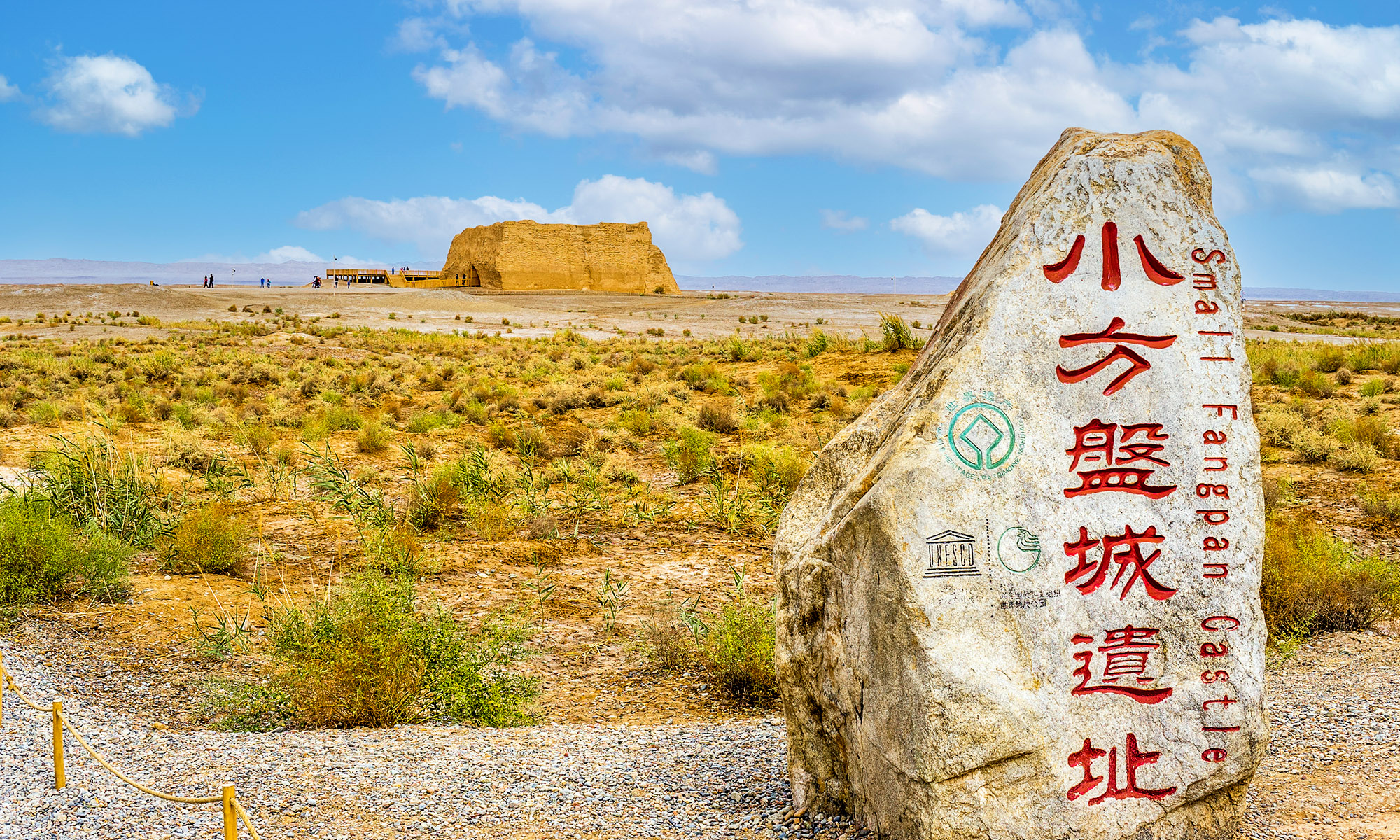
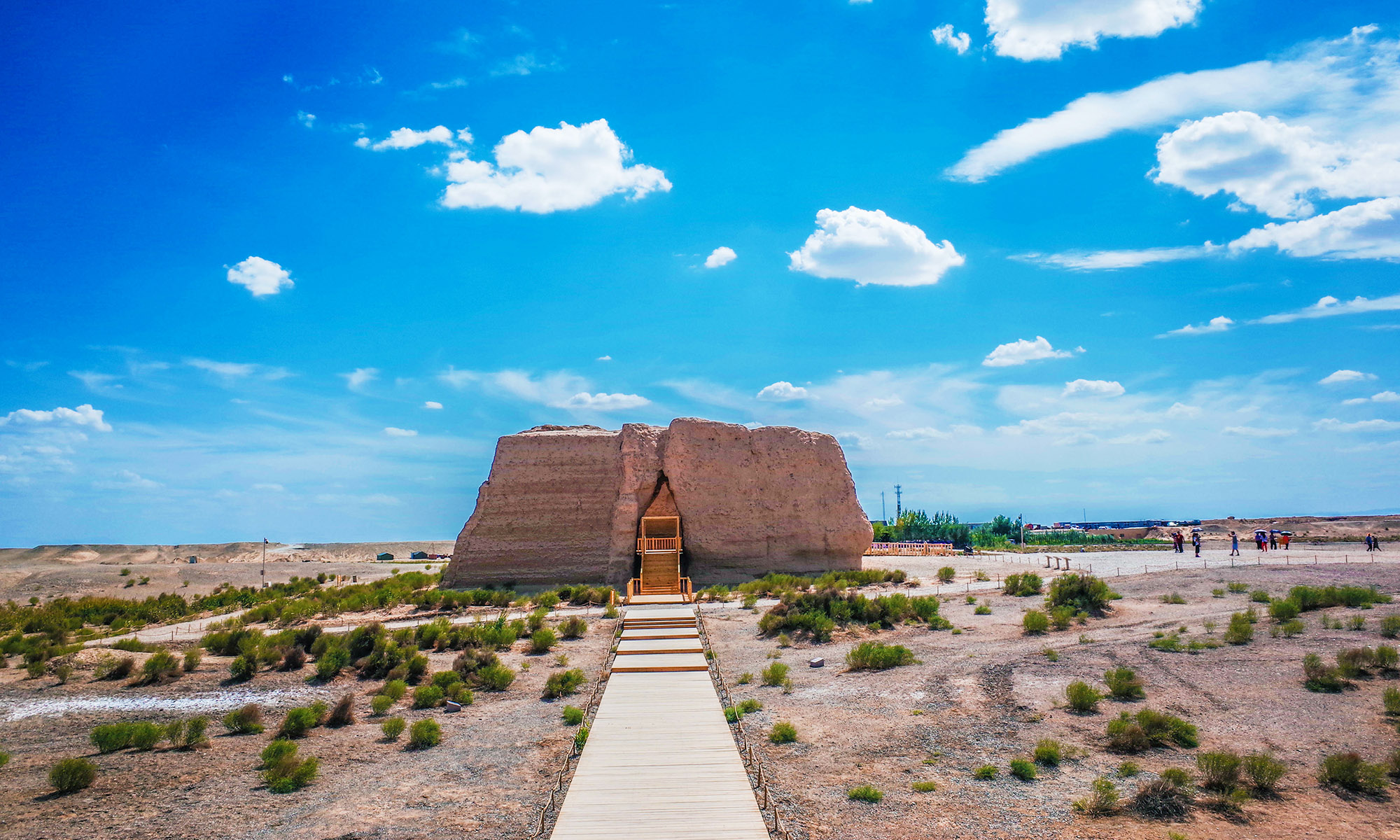
The remains of these two important Han-dynasty gates are about 68 كم (42 أميال) apart, at either end of the Dunhuang extension of the Great Wall. Until the Tang dynasty, when the gates fell into disuse, all caravans travelling through Dunhuang were required to pass through one of these gates, then the westernmost passes of China. Yumenguan lies about 80 كم (50 أميال) northwest of Dunhuang. It was originally called the ‘Square City,’ but because the great jade caravans from Khotan entered through its portals, it became known as the Jade Gate Pass. In the third and fourth centuries, turmoil swept through Central Asia, disrupting overland trade, and the sea route via India began to supplant it. By the sixth century, as caravans favored the northern route via Hami, the pass was abandoned. في 1907, Sir Aurel Stein found bamboo slips naming the site as Yumenguan, and in 1944 Chinese archaeologists discovered relics that confirmed this. With its 10-metre-high (32 foot) mud walls pierced by four gateways, the square enclosure covered more than 600 متر مربع (718 square yards) in the midst of unbounded desolation.
How to get to Yumen Pass
• Take a Tourist Bus from Dunhuang Hotel (North Section) to Yumen Pass. The bus stops at Dunhuang Tourist Center, Western Thousand Buddha Caves, Yanguan Pass, Yumen Pass and Yadan Geological Park. The bus departs at 08:30 كل يوم. Visitors can book the tickets at Dunhuang Tourist Center, each Tourist Information Center in Dunhuang and the Tourist Hall of Singing Sand Dunes & Crescent Lake Scenic Area.
• Rent a vehicle to the pass is more convenient.
Additional travel advice on Yumen Pass
• Please prepare a scarf to cover your face in case there are sandstorms.
• Please wear sunscreen creams.