+86-29-8964-0200
info@islamichina.com

Introducing Xian City Wall
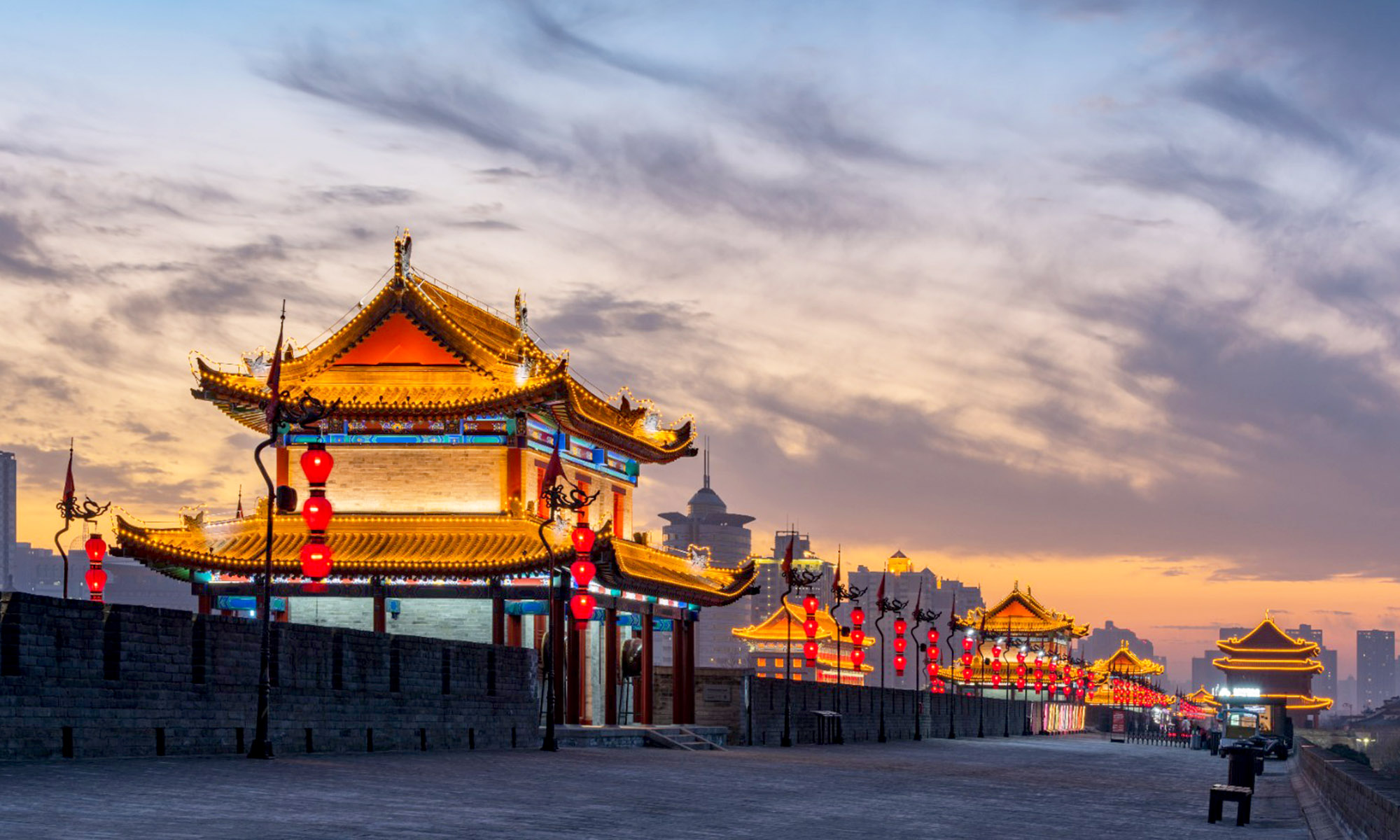
Xi’an City Wall is 13.74 kilometer (8.5 mile). Tembok Kota Xian adalah tembok kota kuno terbesar dan satu-satunya yang utuh di Tiongkok. Tembok Kota Xian menampilkan fitur lengkap dari arsitektur benteng masyarakat feodal. Situs warisan ini ada dalam daftar sementara Situs Warisan Dunia UNESCO. Tembok ini mengelilingi area seluas 11.3 kilometer persegi (4.4 mil persegi) di pusat kota tua Xi’an dalam sirkuit berbentuk persegi panjang. Sebagian dari Tembok Kota Dinasti Ming Xian hari ini dibangun di atas Tembok Kota Kekaisaran Dinasti Sui & Tembok Kota Kekaisaran Dinasti Tang Chang’an. Badan tembok dari Gerbang Barat hingga Gerbang Selatan awalnya dibangun pada 582 selama Dinasti Sui. Tembok ini terus digunakan sebagai tembok Kota Kekaisaran Chang’an selama Dinasti Tang dari 618 ke 907. Pembangunan Tembok Kota Dinasti Ming Xian dimulai pada 1370, Tembok Kota Kekaisaran Dinasti Tang yang asli dimasukkan ke dalam bagian barat dan selatan tembok. Bagian selatan Tembok Kota Kekaisaran Dinasti Tang diperpanjang lebih ke timur. Bagian timur dan utara tembok diperbesar ke skala saat ini. Di 1370, Pembangunan tembok kota Xian dimulai dengan cangkul di parit terlebih dahulu, kemudian tanah dipindahkan ke lokasi tembok, dipadatkan dengan kapur cepat dan ekstrak beras ketan. Setelah 8 bertahun-tahun kerja keras, tembok akhirnya selesai pada 1378.
Fakta Cepat Tembok Kota Xian
• Nama Cina: Xian Cheng Qiang 西安古城墙
• Waktu Terbaik untuk Mengunjungi: Maret – June / September – November
• Jam Kunjungan yang Disarankan: 1 jam
• Jam Buka: Gerbang Selatan: 8:00- 22:00; Gerbang Hanguang: 8:00-17:30;
Gerbang Lainnya: 8:00 ke 18:00 dari Nov. 01 sampai April. 30 / 8:00-19:00 dari Mei 01 hingga Okt. 31
• Biaya Masuk: ¥54/orang
Sejarah Tembok Kota Kuno Xian
Pada bulan Maret 1369, Tentara Dinasti Ming menaklukkan kota Dinasti Yuan Mongolia, Fengyuan, dan mengganti namanya menjadi Xian. Di 1370, Pembangunan Tembok Kota Xian Dinasti Ming dimulai atas arahan Zhu Yuanzhang – kaisar pertama Dinasti Ming, dengan ide membangun tembok yang tinggi, menyimpan persediaan makanan yang melimpah dan meluangkan waktu untuk merebut tahta. Ratusan ribu pria bekerja 8 bertahun-tahun di tembok besar ini hingga selesai pada 1378. Bertahan melewati tahun-tahun peperangan dan pasang surut dinasti, tembok hampir dihancurkan pada tahun 1950-an. Pada masa itu, tembok kota dianggap oleh Ketua Mao sebagai warisan feodal yang menghambat kemajuan sosial yang dijanjikan oleh Lompatan Jauh ke Depan. Xi’an’s City Wall was saved in part by a renowned historian who opposed the wall’s destruction and successfully lobbied then Secretary-General of the State Council Xi Zhongxun, father of current Chinese President Xi Jinping, to spare the wall. Di 1983, it was refurbished as the closed-circuit network that exists now.
Ancient Defence Fortification
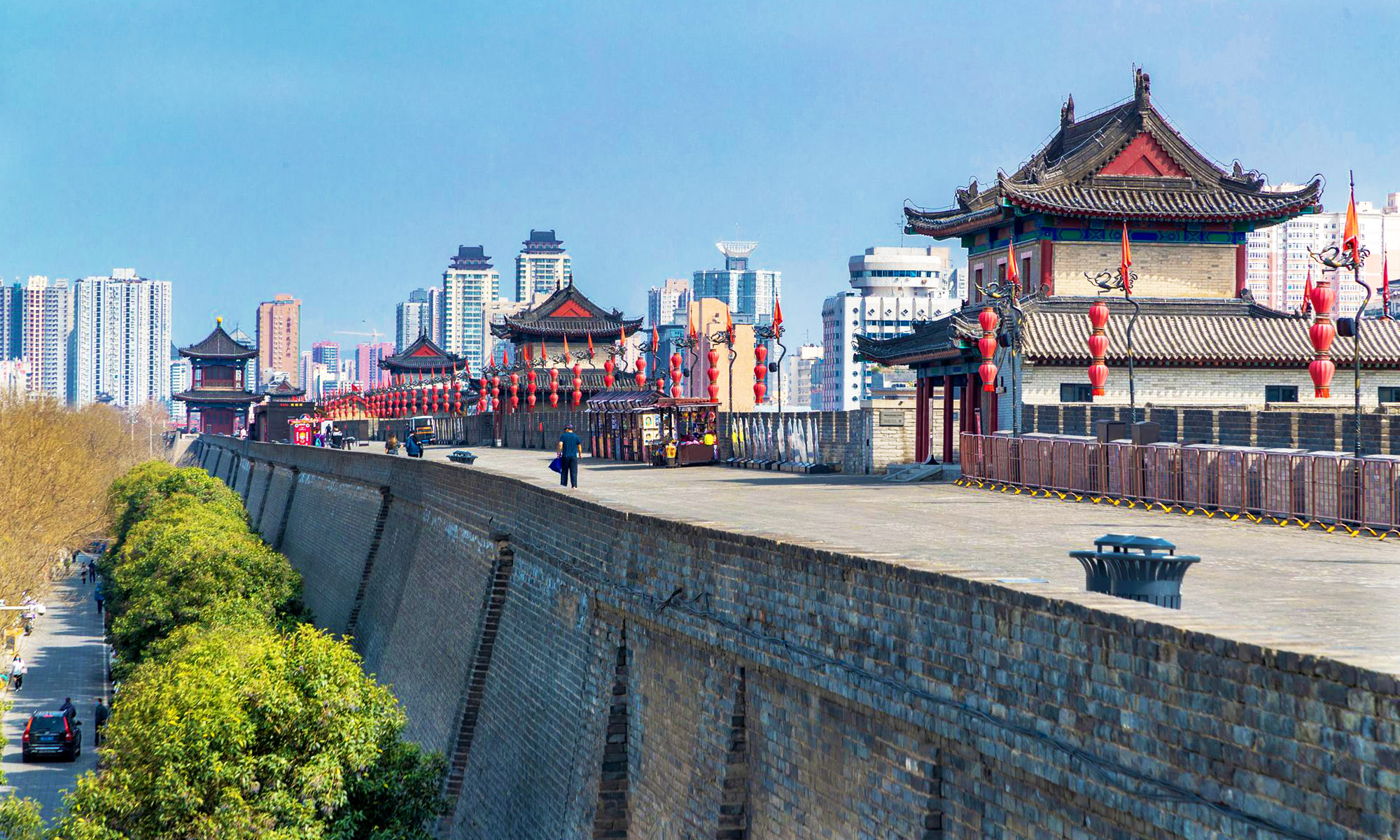
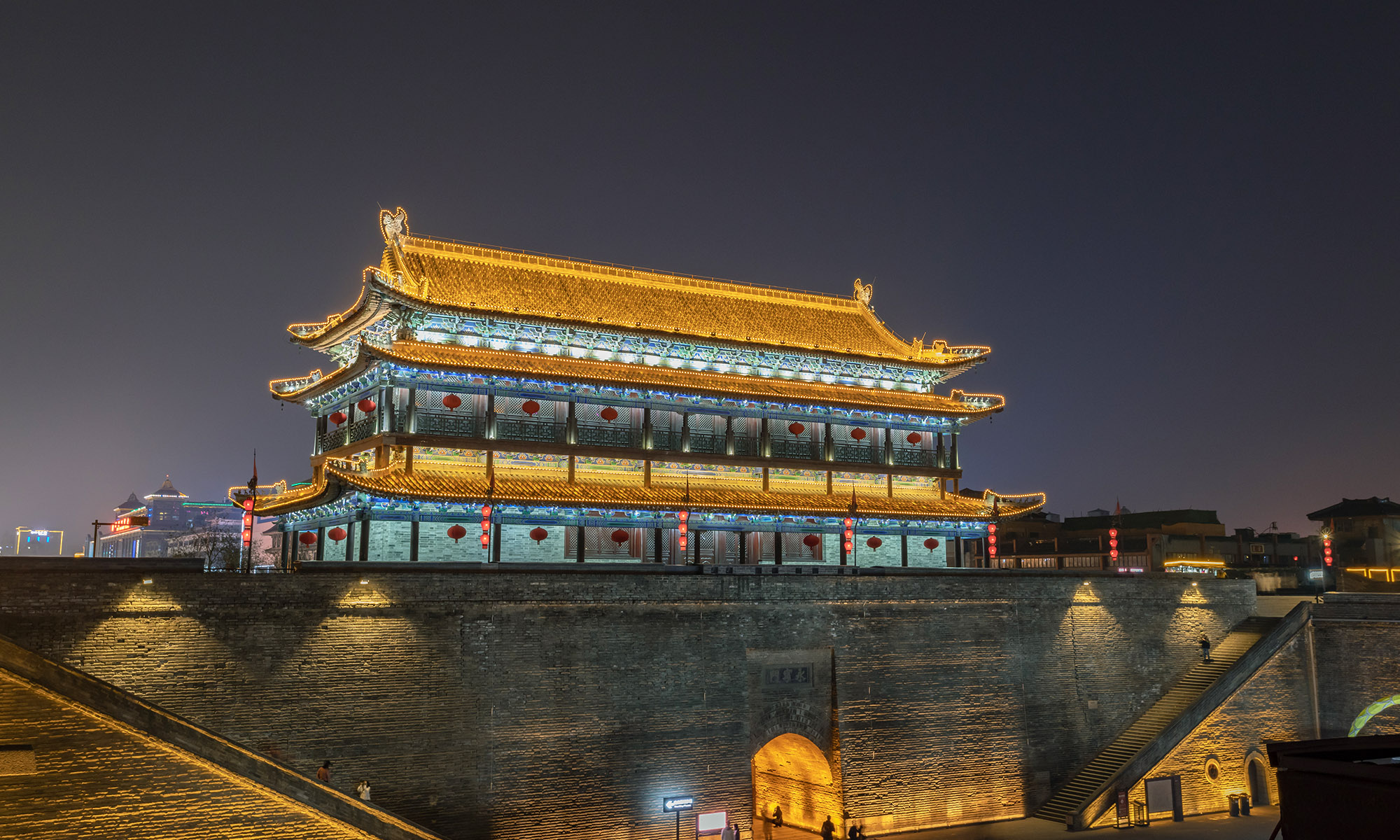
Xian City Wall was once one of the most impressive military defense systems in the world. It is rectangular in shape, with almost all stretches having seen some kind of restoration or rebuilding. As a defence fortification, it was constructed with a moat, drawbridges, menara pengawas, corner towers, protruding parapets and gate towers. The wall stands 12 meter (39 kaki) tinggi; the base is 15 meter ke 18 meter (49 ke 59 kaki) wide, while it is 12 meter ke 14 meter (39 ke 46 kaki) wide at the top. Protruding ramparts were built at intervals of 120 meter (390 kaki), projecting from the main wall, to allow soldiers to shoot enemies trying to climb the wall. A total of 98 protruding ramparts are found. Towers are built on top of protruding ramparts allowing defenders to have a bird’s eye view over both the city and its surroundings. There are parapets on the outer side of the wall, built with 5,984 crenels. Sejauh ini, there are eighteen city gates encircling the wall, including four main ones: East Gate (Changle Gate), West Gate (Anding Gate), Gerbang Selatan (Yongning Gate) and North Gate (Anyuan Gate). These four gates are also the original gates of the Ming Dynasty city wall. The South Gate (Yongning Gate) is the most time-honored and magnificent one among all the gates. Important greeting ceremonies organized by the Provincial Government are usually held in the South Gate Square.
The South Gate
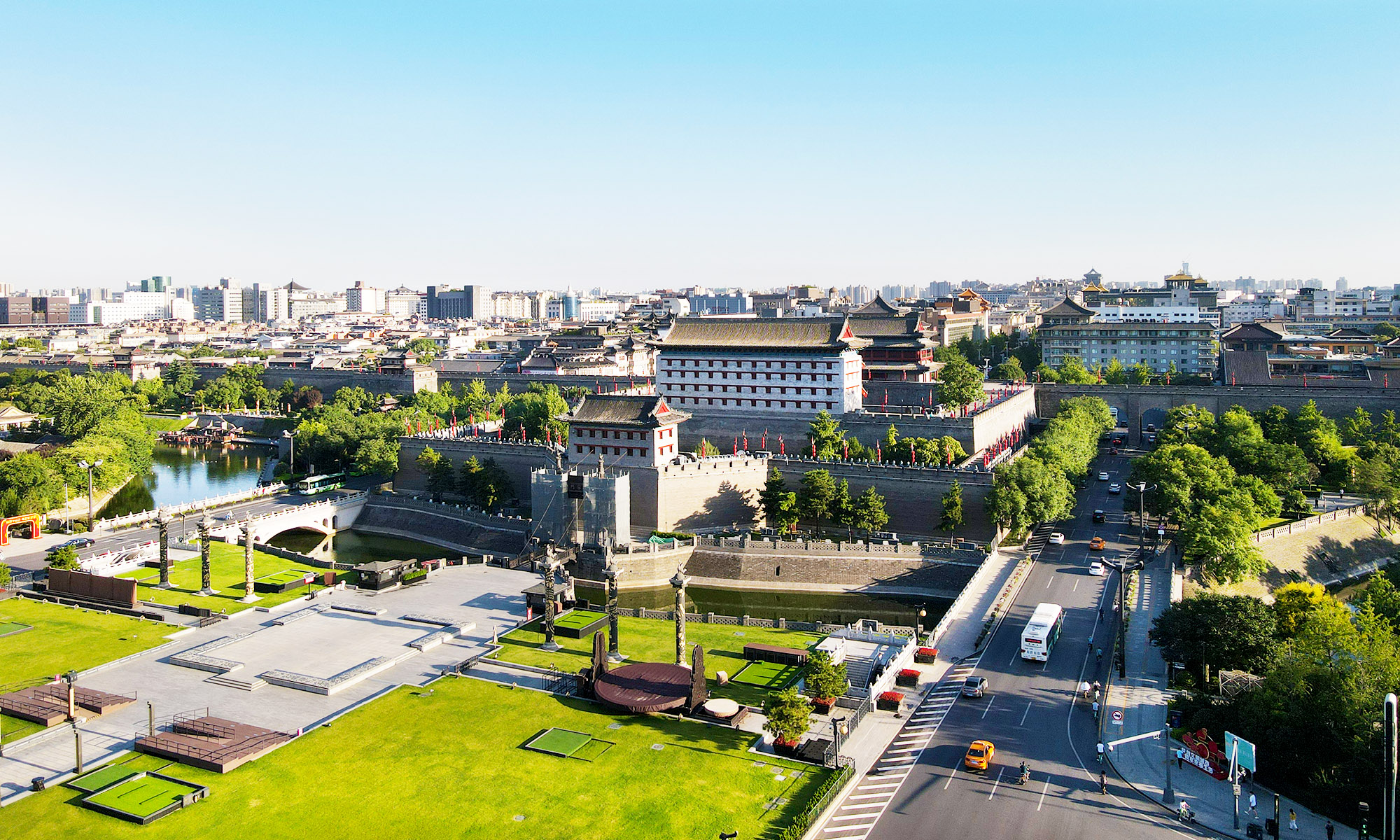
This South Gate was first built in 582 selama Dinasti Sui, it was one of the gates opened on the southeast Imperial City of Sui and Tang dynasty Chang’an. Di 1370, the construction of Ming Dynasty Xian City Wall began. The Sui and Tang dynasty gate was enlarged and it became the most important gate of Ming Dynasty Xian. Hari ini, the South Gate is the oldest and grandest of the wall’s four main gates. The South Gate is a showcase of the defense fortification during the Ming Dynasty. It was constructed with a moat, a drawbridge, an embrasured watchtower, an archery tower and a main gatehouse. The original embrasured watchtower was destroyed by fire in 1926 during the civil war, and was restored in 2014. Standing some distance in front of the main gatehouse, the archery tower is so-named because of its rows of archery placements, from which defenders could fire projectiles on attackers. The original Ming Dynasty archery tower was destroyed by fire in the civil war of 1926. It was restored in 2014.
The West Gate
Like the South Gate, the West Gate was first built in 582 selama Dinasti Sui. It was used as one of the gates opened on the Imperial City during the Tang Dynasty. The current buildings were constructed between 1374 dan 1378 during the Ming Dynasty.
The North Gate
The North Gate was built in 1370 during the Ming Dynasty. Di 1911, the barracks of the Manchu Army was inside the north gate and this Gate Tower served as the arsenal. Fierce battle was fought here at the north gate between the revolutionary and Manchu army during the Chinese Revolution of 1911. The gate tower was burnt to the ground. This revolution ended China’s last imperial dynasty, the Manchu-led Qing dynasty, and led to the establishment of the Republic of China.
The East Gate
The East Gate is also called Changle Gate. Changle means endless joy. Itu dibangun di 1374 during the Ming Dynasty. When Li Zicheng, the leader of the peasant uprising at the end of the Ming Dynasty, attached Xi’an from the East Gate, he told his army that if emperors receive endless joy, people will long suffer. The gate towers were burnt to the ground by rebels. Both the archery tower and gate tower were rebuilt during the Qing Dynasty.
The Barbican
Auxiliary walls, running perpendicularly to the main wall, connect the archery tower with the main gatehouse, enclosing a rectangular area called barbican. This area serves as a buffer zone, should the first gate be breached. Its Chinese name, “jar walls”, refers to the intended strategy whereby attackers coming through the archery tower would be trapped in the barbican, open to attack from all sides. Hence the Chinese idiom: catch a turtle in the jar, meaning go after an easy prey.
The Moat
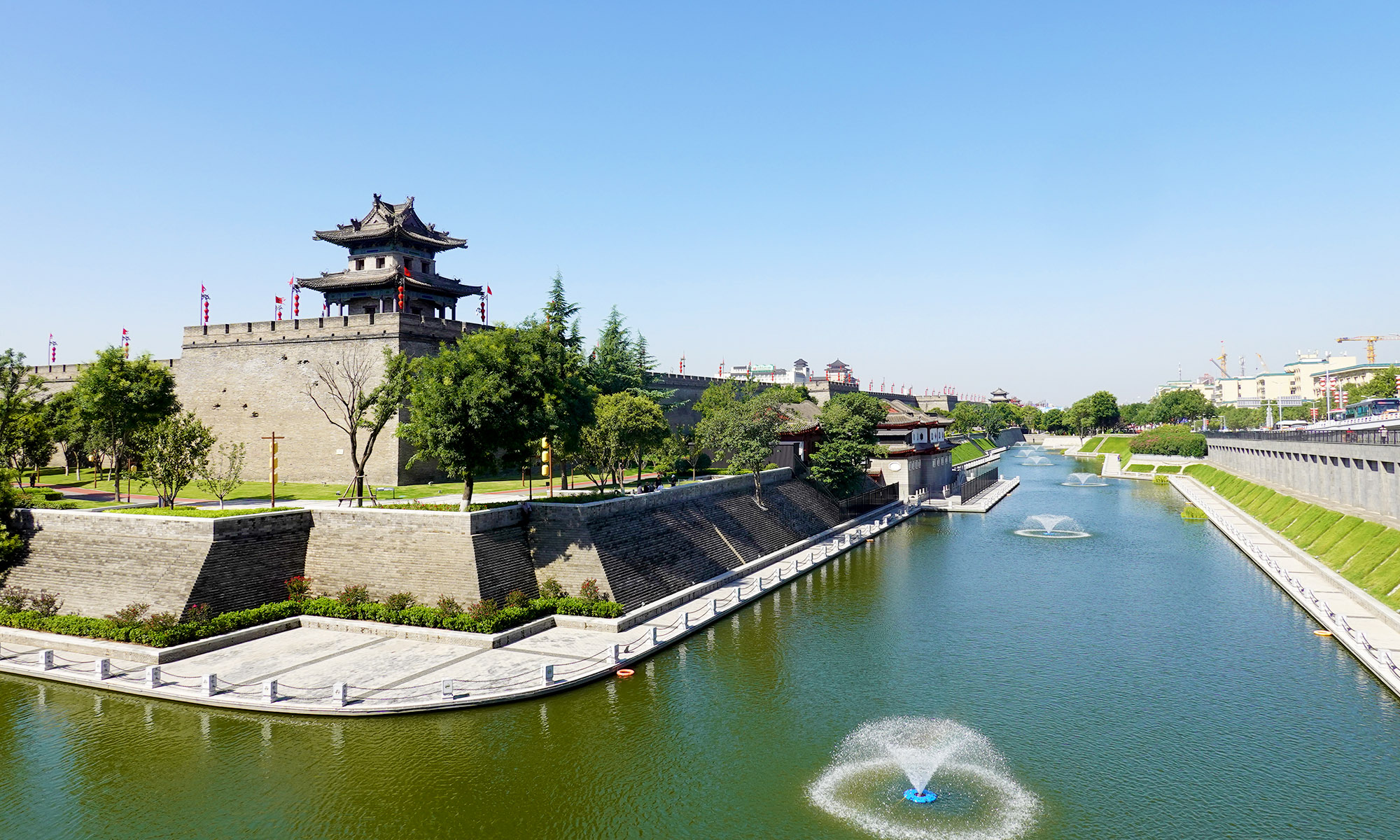
Located outside the city wall, the moat played an important defensive role in times of war. It kept the invaders at a distance, and prevented them from getting close to the wall. Attackers had to construct bridges in order to reach the top of the wall, thus exposing themselves to the defenders of the city. Di 1370, Pembangunan tembok kota Xian dimulai dengan cangkul di parit terlebih dahulu, kemudian tanah dipindahkan ke lokasi tembok, dipadatkan dengan kapur cepat dan ekstrak beras ketan. The moat is 148 feet wide and 16 feet deep. Four drawbridges was built on the moat which served as the entrance to the city on its four gates.
Corner Ramparts & Corner Towers
Corner ramparts and towers were placed where two walls joined. They gave defenders a bird’s eye view over both the city and its surroundings. The city wall of Xian is rectangular in shape. Four corner ramparts and towers were built on the wall. Unlike the other three corners which are square-shaped. The protruding rampart of the Southwest Corner is round. The reason might be that this rampart is a vestige of the Mongolian Yuan Dynasty. The Mongols live in portable, round tent, called Mongolian Yurt. When Mongols ruled Xian in 1312, the corners of the city wall were built in a round shape to resemble their round tent. Di 1370, when the wall was enlarged during the Ming Dynasty, only this round shaped corner was left and the other three were built in a square shape.
Tang Dynasty Welcome Ceremony
One of the highlights at the South Gate is a feast of interesting performances showcasing the charm of the bygone times of Xian. Called Tang Dynasty Welcome Ceremony, the ceremony made its debut in 1996. It is a faithful re-enactment of a classical welcoming ceremony in the style of Tang Dynasty, with warriors in Tang dynasty golden armors, maidens in beautiful Tang dynasty costumes. Red lanterns hung from the lampposts, and bright silk banners bearing images of mythical birds of good fortune. The former US president Bill Clinton was the first foreign leader to attend the ceremony in 1998.
Walking and Biking Tours
Along the top of the wall is a walkway and has become a city playground. Walking and biking tours atop the wall have become popular with locals and tourists. It takes about 4 hours of walking to traverse this 8.5 mile long wall. The bumpy, 2 hour ride offers a unique perspective on the two faces of Xi’an, modern Xi’an and the old city center. Outside the wall, high-rises and highways reveal new wealth. Inside the wall, yang 4.4 square mile old Xi’an comprises low, ancient buildings. No skyscrapers are allowed inside the city wall.
Xi’an City Wall International Marathon
The annual Xi’an City Wall International Marathon is a local highlight. Since 1993, thousands of athletes from China and overseas gather on the first Sunday in November to compete on this special track.
How to get to Xian City Wall
There are eight points for ascending the City Wall: Gerbang Selatan, East Gate, West Gate, North Gate, Heping Gate, Wenchang Gate, Hanguang Gate and Shangde Gate. The following are the ways to get to the four main gates of the Wall:
To South Gate (Yongning Gate)
• Naik Jalur Metro 2 to Yongningmen Station (Exit D1).
• Take bus No.6, 11, 12, 23, 46, 215, 239, 258, 600, 603, 608, 910, K600, dll.
To East Gate (Changle Gate)
• Take bus No.8, 22, 27, 29, 33, 37, 43, 45, 102, 203, 218, 235, 252, 300, 527, 602, 604, atau 903, dll.
To North Gate (Anyuan Gate)
• Naik Jalur Metro 2 to Anyuanmen Station (Keluar B).
• Take bus No.6, 26, 28, 33, 37, 39, 117, 205, 208, 214, 229, 236, atau 511, dll.
To West Gate (Anding Gate)
• Take bus No.4, 10, 15, 23, 31, 201, 205, 206, 215, 221, 222, 223, 300, 407, 504, 611 atau 701, dll.
Additional travel advice on Xian City Wall
• It takes 2 hours to cycle the entire wall. Two-hour bike rental costs RMB45 ($7).
• It takes about four hours to walk around the wall.
• Bring a bottle of water with you because there may no vendors selling drinks on the Wall.