+86-29-8964-0200
info@islamichina.com

Introducing Big Wild Goose Pagoda
Büyük Vahşi Kaz Pagodası, Budist rahip Xuanzang tarafından inşa edilmiştir. Xuanzang, en büyük eski Çinli gezginlerden biridir, bilginler ve çevirmenler. Çinliler için, adı Batılılar için Marco Polo kadar ünlüdür. Erken Tang Hanedanı sırasında, arasında 629 ve 645, Xuanzang Hindistan'a seyahat etti ve yüzün üzerinde krallığı ziyaret etti, ve bulgularını ayrıntılı ve kapsamlı bir şekilde yazdı. Seyahatleri sırasında inancının bilgisini öğrendi, ve birçok ünlü Budist üstadıyla çalıştı, özellikle Hindistan'daki ünlü Budist öğrenim merkezi Nalanda Üniversitesi'nde. Batı Bölgeleri Üzerine Büyük Tang Kayıtlarını yazdı, on yedi yıllık kara yolculuğu Hindistan'a detaylı bir şekilde kaydedilmiştir. Çin romanı Batıya Yolculuk, Çin edebiyatının Dört Büyük Klasik Romanı'ndan biri, onun otobiyografisinden esinlenmiştir. On his return to China in 645, Xuanzang was greeted with great honor but he refused all high civil appointments offered by Emperor Taizong. Instead, he retired to a monastery and devoted his energy to translating Buddhist texts. In 648, Daci’en Temple was built by Crown Prince Li Zhi in commemoration of his mother Empress Zhangsun. Xuanzang was invited by Crown Prince Li Zhi to be the Abbot of this temple. Xuanzang set up a large translation bureau in Daci’en Temple, drawing students from all over East Asia. With the support of Emperor Gaozong, Xuanzang built this 64 meter high Big Wild Goose Pagoda in 652 to house the 657 Sanskrit texts, seven statues of the Buddha and 150 Sarira relics that he brought from India. Daci’en temple is arranged on a south-north axis, and contains four main buildings. Beginning at the south is the main gate followed by the Mahavira Hall, Tusita Palace, the Big Wild Goose Pagoda and Xuanzang Sanzang Hall. The Big Wild Goose Pagoda was listed as UNESCO World Heritages Site under “Silk Roads: the Routes Network of Chang’an-Tianshan Corridor” in 2014.
Big Wild Goose Pagoda Fast Facts
• Çince Adı: Da Yan Ta 大雁塔
• Ziyaret İçin En İyi Zaman: Yıl boyunca
• Tavsiye Edilen Ziyaret Saatleri: Saat 2-3 saat
• Yapılacak Şeyler: Fotoğrafçılık, Buddhist Study
• Çalışma Saatleri: 8:00 – 18:00
• Giriş Ücreti: ¥40/person for Da Ci’en Temple; extra ¥25/person for ascending the pagoda
• Adres: Daci’en Temple, Yanta South Road, Xi'an, Shaanxi Province
What to expect at Big Wild Goose Pagoda
Daci’en Temple
The name of Daci’en Temple is a story of mourning and filial piety, a concept held in high-esteem in Chinese culture. Daci’en Temple rests on the site of Wulou Temple or Five Storey Temple built in 589 during the Sui Dynasty. Yıllar içinde bu tapınak harabeye dönüştü. In 648 Tang Hanedanı döneminde, Veliaht Prens Li Zhi, annesi İmparatoriçe Zhangsun adına tapınağın yenilenmesini başlattı, İmparatoriçe Zhangsun, trajik bir şekilde erken vefat etmişti. Veliaht Prens Li Zhi, annesinin iyiliğine saygı göstermek istedi ve bu yüzden tapınağa Daci'en adını verdi, Çince'de iyilik ve zarafet anlamına geliyor. Tapınak başlangıçta 13 ayrı avlulara sahipti ve 1,879 odalar, hepsi ihtişamlarında eşi benzeri yoktu, ama ne yazık ki Tang Hanedanı'nın yıkılmasından sonra tapınak tekrar harabeye döndü 907. Tapınak Ming Hanedanı sırasında yenilendi (1367 – 1644) ve günümüze ulaşan salonlar ve odaların tamamı Ming Hanedanı sırasında inşa edildi. Mevcut Daci’en Tapınağı'nın boyutu, Tang Hanedanı Daci’en Tapınağı'nın yalnızca yedide biri kadardır.
Mahavira Salonu
Mahavira Salonu bir Budist tapınağının ana salonudur. Ayrıca Büyük Kahramanın Kıymetli Salonu olarak da bilinir. Tüm tapınağın çekirdek yapısı olarak hizmet verir ve aynı zamanda keşişlerin uygulama yapabileceği bir yerdir. Shakyamuni heykeli, Budizmin kurucusu, salonun ortasında kutsal olarak yerleştirilmiştir. Shakyamuni Buda bir düşünme pozisyonunda temsil edilir, lotus çiçeği üzerinde oturur; iki öğrenci’ heykelleri sağında ve solunda yerleştirilmiştir, Yaşı ilerlemiş olan Kashyapa olarak adlandırılır ve genç görünümlü figür Ananda olarak adlandırılır. Salonun doğu ve batı taraflarında on sekiz Arhan figürü sıralanmıştır. Onlar Budayı dinlerler, bazıları düşünceli bir şekilde, bazıları keyifle.
Tushita Sarayı
Buda'ya göre Tushita, arzu dünyasındaki altı cennetten dördüncüsüdür. It is said that bodhisattvas are reborn in this heaven just before their rebirth in the world where they will attain Buddhahood. Shakyamuni is said to have descended from this heaven and entered the womb of his mother, Maya. Tushita consists of an inner court and an outer court. The inner court is the abode of Bodhisattva Maitreya, who is constantly preaching until his future rebirth in the human world as a Buddha. Tusihta Heaven is where all Bodhisattvas destined to reach full enlightenment in their next life dwell. Many Buddhists vow to be reborn in Tushita so that they can hear the teachings of Maitreya and ultimately be reborn with him when he becomes a Buddha. A bronze Maitreya Buddha image, 2.7 meter high, is enshrined in the middle of this Tushita Palace.
Büyük Vahşi Kaz Pagodası
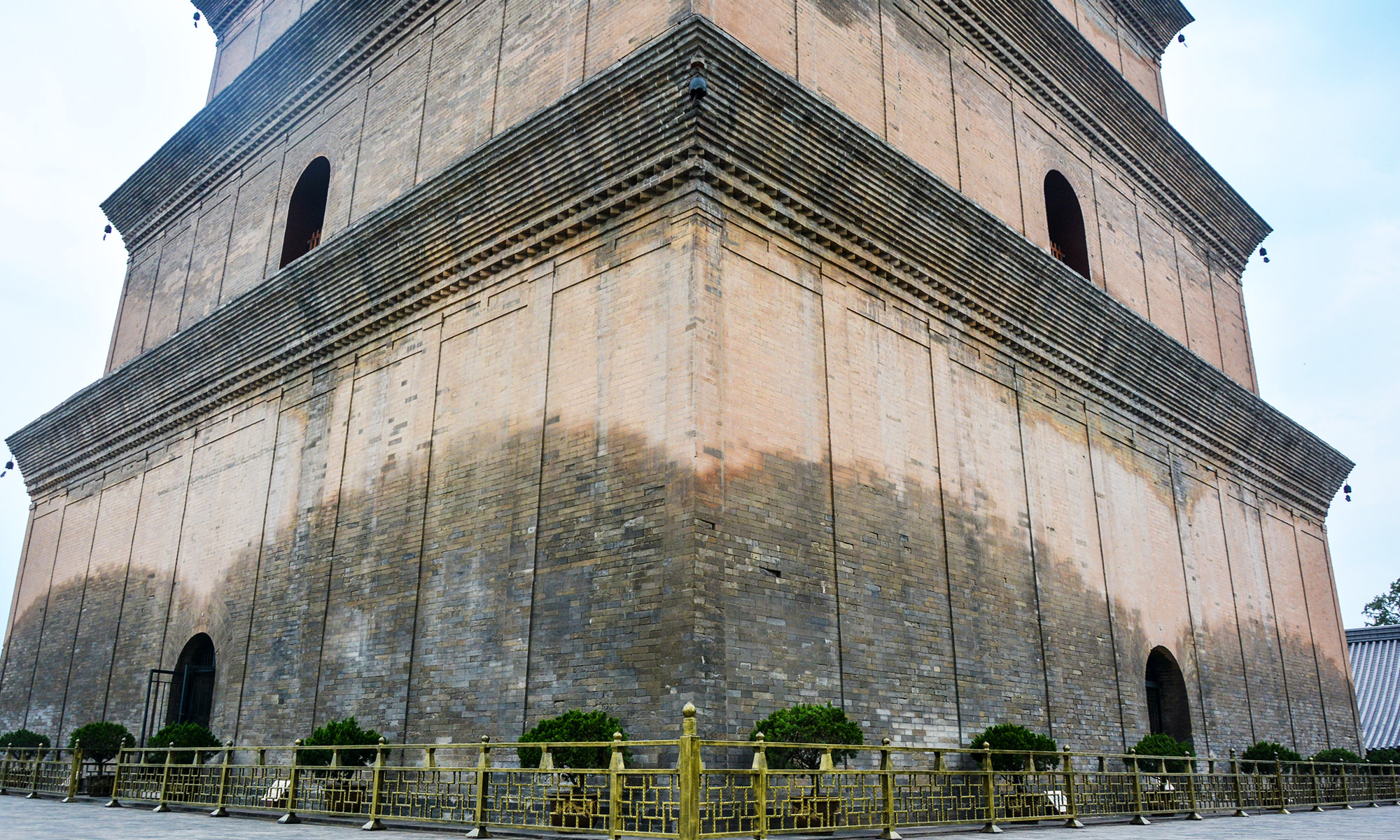
İşte Büyük Yaban Kazı Pagodası hakkında bazı hızlı bilgiler. Bu pagoda inşa edildi 652. Xuanzang tarafından inşa edildi. Yedi katlıdır, 64 metre yüksekliğinde. İçinde tutulmak üzere inşa edilmiştir 657 Sanskrit texts, seven statues of the Buddha and 150 Xuanzang tarafından Hindistan'dan Çin'e getirilen Sarira kalıntıları. Mevcut pagoda eğik bir kule durumundadır, Kuzeybatıya doğru yaklaşık bir metre eğiktir. Xuanzang, Hindistan'da aynı adı taşıyan bir pagodayı ziyaret ettiği için bu pagodaya Büyük Yaban Kazı Pagodası adını vermiştir, Hint pagodasının adı ünlü bir Budist tarihinden gelir. Bir zamanlar, Hindistan'da iki Budizm kolu vardı, Bunlardan biri için et yemek tabu değildi. Bir gün, Rahatça yemek yiyecek et bulamayan rahipler. Büyük yaban kazlarından oluşan bir sürüyü gördüklerinde, Bir rahip kendi kendine dedi ki: 'Bugün etimiz yok'. I hope the merciful Buddha will give us some.” At that very moment, the leading wild goose broke its wings and fell to the ground. All the monks were startled and believed that this was a warning from Buddha, prompting them to be more pious and less fixated on worldly pleasures, and so they stopped eating meat. A pagoda was supposedly built on the spot where the famed wild goose fell and the pagoda was named Big Wild Goose Pagoda.
Xuanzang Sanzang Hall
The Xuanzang Sanzang Hall was completed in 2000. It consists of three courtyards of Tang Dynasty architecture and it is the largest memorial of Xuanzang now in the world. Born in what is now Henan province in 602, from boyhood Xuanzang took to reading religious books, including the Chinese classics and the writings of ancient sages. Xuanzang was ordained as a novice monk at the age of thirteen and as a full monk at the age of twenty. He travelled throughout China in search of sacred books of Buddhism. Fnally, he came to Chang’an, present day Xian and Tang Dynasty Chinese capital, where Xuanzang developed the desire to visit India, the birthplace of Buddhism. He started his life time trip of searching for Buddhist scriptures to India in 629 and returned to China in 645, ile 657 Sanskrit texts, 7 statues of the Buddha and 150 Sarira relics loaded onto twenty-two horses. With the support of Emperor Gaozong, he set up a large Buddhist scripture translation center at Daci’en Temple, drawing students from all over East Asia. He is credited with the translation of some 1,330 fascicles of scriptures into Chinese. His strongest personal interest in Buddhism was in the field of Yogacara, ya da “Consciousness-only”. İşte Daci’en Tapınağı’nda Xuanzang Çin Yogaçara Okulu'nu kurdu. Yogaçara Okulu’nun Çincesi Faxiangzong veya Weishizong'dur. Çin Yogaçara Okulu Çin'de uzun süre geliştiremedi. Ama, algı, bilinç, karma, reenkarnasyon hakkındaki teorileri, vb. daha başarılı diğer Çin Budist okulların öğretilerine girdi. Xuanzang'ın en seçkin öğrencisi Kuiji idi ve Çin Yogaçara Okulu’nun ilk patriği olarak tanındı. Çin Yogaçara Okulu, Kuiji’nin ölümünden sonra nesilden nesile aktarılmayı başaramadı çünkü Yogaçara Okulu Çinli Budistler tarafından anlaşılması çok zordu, çünkü onların Hint mantığı konusunda gerekli arka plan bilgisi yoktu.
Aydınlanma Salonu
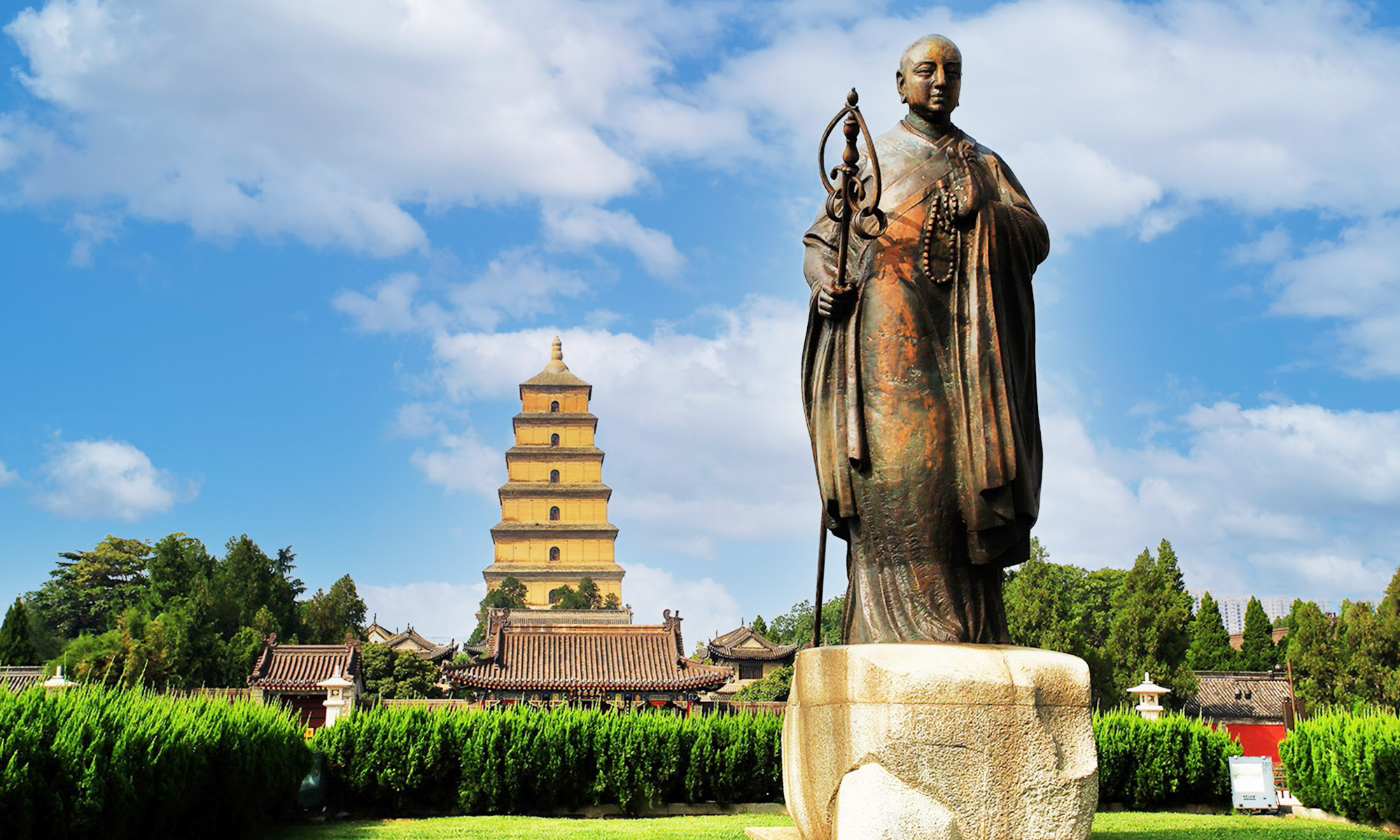
The central courtyard of Xuanzang Sanzang Hall is named Enlightenment Hall (Dabianjue Hall in Chinese). A bronze statue of Xuanzang is enshrined in the center of this hall. The Sarira of Xuanzang’s parietal bone is housed in a tiny gold gilded stupda in front of Xuanzang’s bronze statue. After the death of Xuanzang, Emperor Gaozong gave him a posthumous title, Dabianjue, meaning Complete Enlightenment. Xuanzang would have reached Tushita and become a Bodhisattva after his death. Frescoes on the walls of this hall depict the stories of Maitreya Buddha, his past, present and future. Some of the original palm-leaf manuscripts brought from India by Xuanzang are stored in the basement of this building.
Light Hall
The courtyard located to the west of Enlightenment Hall is named Light Hall. Bu salonun duvarlarındaki freskler, Xuanzang’ın hayatının ilk yarısını tasvir ediyor, doğumundan Budizme geçişine kadar, the 17 Çin’den Hindistan’a zor yolculuğu, Hindistan’da Budizm’i öğrenme deneyimi ve Budizm’deki büyük başarıları.
Prajna Salonu
Aydınlanma Salonu’nun doğusunda bulunan avlu, Prajna Salonu olarak adlandırılmıştır. Bu salonun duvarlarındaki freskler, Xuanzang’in Çin’e dönüşünden başlayarak hayatını tasvir ediyor, Budist sutralarının Sanskritçeden Çinceye çevirisi, Yogacara Okulu’nun kuruluşu, ölümüne kadar 664.
Pagoda Ormanı
Pagoda Ormanı, Daci’en Tapınağı’nın mezarlık alanıdır. Bu pagodalar, Daci’en Tapınağı’nın saygın ve prestijli başrahiplerinin önemi ve katkılarını anmak için inşa edilmiştir. Ölüm ve yakma işleminden sonra, the ashes would be put underground and a pagoda would be erected on the spot. The size, height and storeys of the pagoda indicate the accomplishments, prestige, merits and virtues of the abbot.
North Square of Big Wild Goose Pagoda
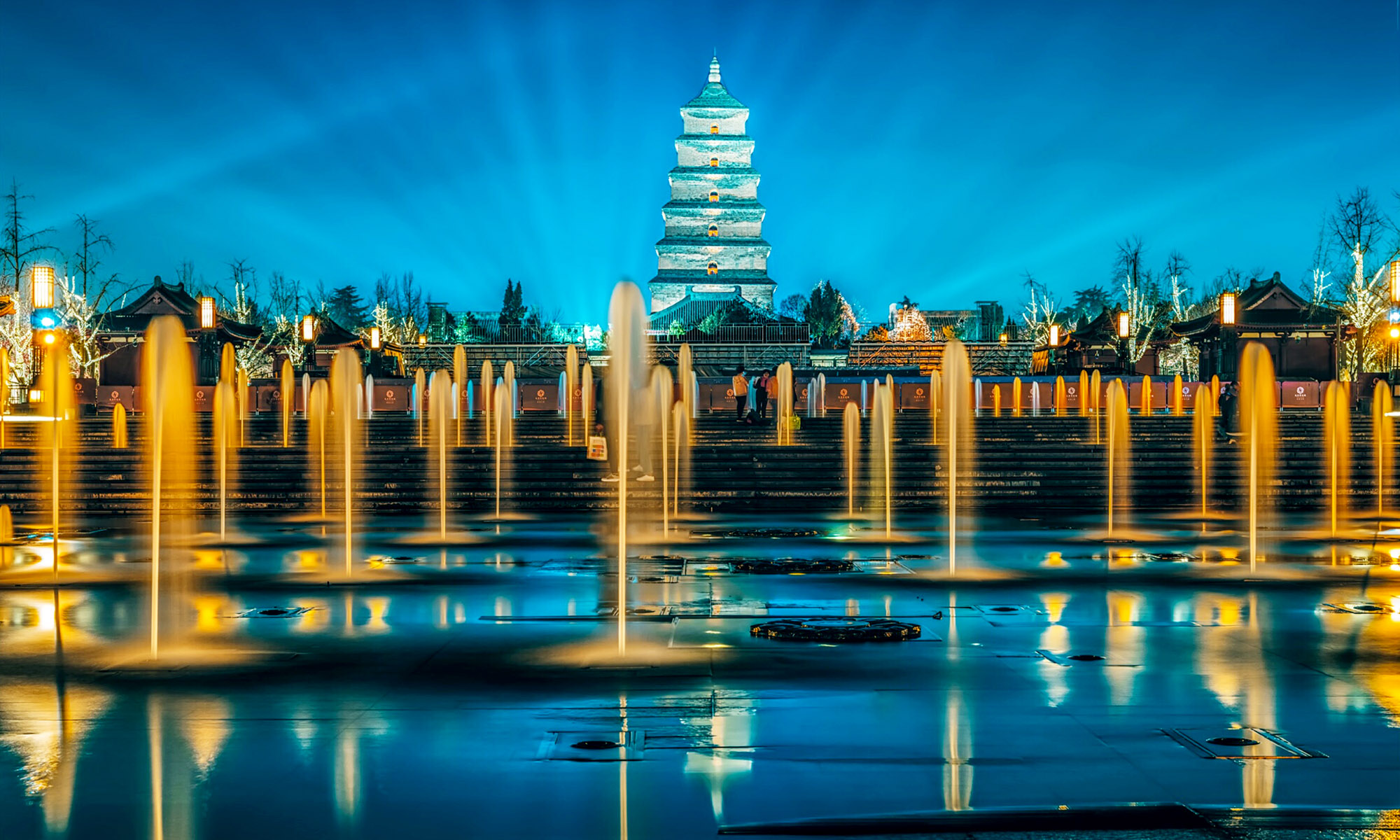
There are many featured squares and gardens around the Big Wild Goose Pagoda. The most remarkable one should be the North Square which is the largest musical fountain square in Asia. You can see the 2 group sculptures of 100m long, 8 large figure sculptures and 40 landscape sculptures, while appreciate the grand colorful fountain show dancing with the music.
Timetable of the Musical Fountain on the North Square: Tuesday (19:00, 21:00), other days (12:00,16:00, 19:00, 21:00).
How to get to Big Wild Goose Pagoda
Otobüsle
Otobüs No. ile gidin. 5, 19, 21, 22, 23, 24, 27, 30, 34, 41, 44, 189, 224, 242, 271, 307, 400, 401, 408, 500, 521, 526, 527, 601, 606, 609, 701, Qujiang Tourist Bus, Huan Shan Tour Bus No. 1 & 2, Turist Otobüsü Hattı 6 & 8 (610) & 9(320), and get off at Dayanta Station.
Metro ile: Metro Hattı 3 & 4 to Dayanta Station.
Big Wild Goose Pagodası hakkında ek seyahat tavsiyesi
• Pagodaya çıkarken basamaklara dikkat edin.
• Big Wild Goose Pagoda'sının meydanları yoğun sezonlarda her zaman turistlerle doludur. Kuzey meydanına önceden gitmek önerilir, müzik çeşmesinin gece manzarasını izlemek istiyorsanız.