+86-29-8964-0200
info@islamichina.com

Introducing Xian City Wall
Xi’an City Wall is 13.74 kilometre uzunluğundadır (8.5 mile). The City Wall of Xian is the largest and the only complete ancient city wall in China. Xian City Wall exhibits the complete features of the rampart architecture of feudal society. The heritage site is in the tentative list of UNESCO’s World Heritage Sites. It encloses an area of 11.3 square kiliometer (4.4 square mile) of old Xi’an city center in a rectangular circuit. Part of today’s Ming Dynasty City Wall of Xian was built on the Sui & Tang Dynasty Imperial City Wall of Chang’an. The earthen body of the wall from the West Gate to the South Gate was originally built in 582 during the Sui Dynasty. It was continuously used as the wall of the Imperial City of Chang’an during the Tang Dynasty from 618 to 907. The construction of Ming Dynasty Xian City Wall kicked off in 1370, Orijinal Tang Hanedanı İmparatorluk Şehri Surları, surların batı ve güney kısımlarına dahil edildi. Tang Hanedanı İmparatorluk Şehri Surlarının güney kısmı doğuya doğru uzatıldı. Surların doğu ve kuzey kısımları bugünkü ölçülerine genişletildi. In 1370, Xi’an şehir surlarının inşaatına önce hendeğe küreklerle başlanıldı, daha sonra toprak surun bulunduğu alana taşındı, kireç ve yapışkan pirinç özü ile sıkıştırıldı. Sonra 8 yıllarca süren sıkı çalışmanın ardından, sur sonunda tamamlandı 1378.
Xi’an Şehir Surları Hızlı Bilgiler
• Çince Adı: Xi’an Cheng Qiang 西安古城墙
• Ziyaret İçin En İyi Zaman: March – June / September – November
• Tavsiye Edilen Ziyaret Saatleri: 1 saat
• Çalışma Saatleri: Güney Kapısı: 8:00- 22:00; Hanguang Kapısı: 8:00-17:30;
Diğer Kapılar: 8:00 to 18:00 Kasım’dan itibaren. 01 Nisan'a kadar. 30 / 8:00-19:00 Mayıs’tan itibaren 01 Ekim'e kadar. 31
• Giriş Ücreti: Kişi başı 54 ¥
Xi’an Eski Şehir Surları Tarihi
Mart’ta 1369, Ming Hanedanlığı ordusu, Moğol Yuan Hanedanlığı şehri Fengyuan'ı işgal etti ve adını Xian olarak değiştirdi. In 1370, Ming Hanedanlığı Xian Şehir Surları'nın inşasına, Ming Hanedanlığı'nın ilk imparatoru Zhu Yuanzhang'ın talimatları altında başlandı, Yüksek surlar inşa etme fikriyle, Bol miktarda yiyecek stoklamak ve tahta geçmek için zaman kazanmak. Yüz binlerce adam çalıştı 8 bu devasa sur üzerinde yıllarca, tamamlanmasına kadar 1378. Savaşların ve hanedan değişimlerinin yıllarına dayanarak, Surlar, 1950'lerde neredeyse yıkıldı. O dönemde, Şehir surları, Başkan Mao tarafından Büyük Atılım'ın vaat ettiği sosyal ilerlemeleri engelleyen feodal bir miras olarak görülüyordu. Xi’an’s City Wall was saved in part by a renowned historian who opposed the wall’s destruction and successfully lobbied then Secretary-General of the State Council Xi Zhongxun, father of current Chinese President Xi Jinping, to spare the wall. In 1983, it was refurbished as the closed-circuit network that exists now.
Ancient Defence Fortification
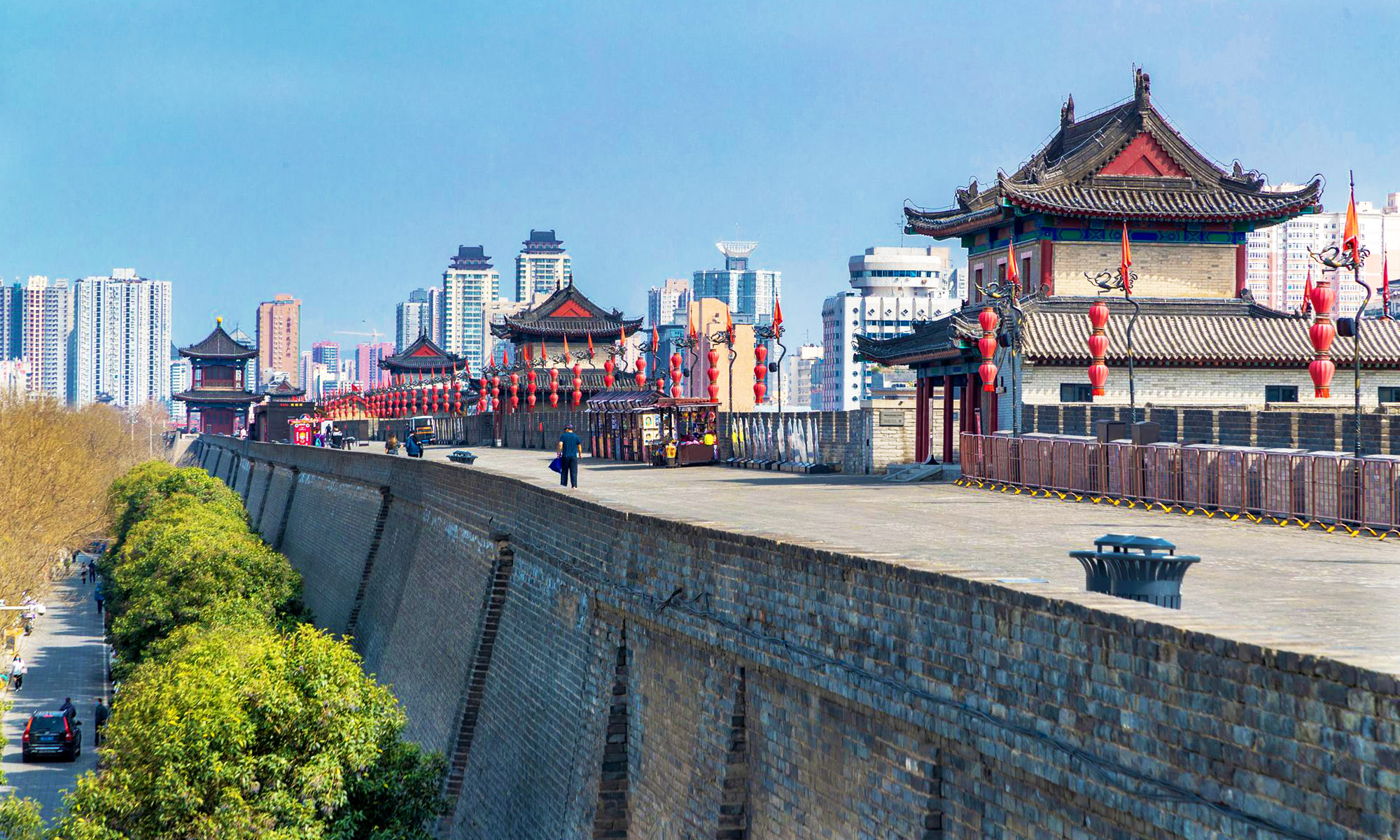
Xian City Wall was once one of the most impressive military defense systems in the world. It is rectangular in shape, with almost all stretches having seen some kind of restoration or rebuilding. As a defence fortification, it was constructed with a moat, drawbridges, gözetleme kuleleri, corner towers, protruding parapets and gate towers. The wall stands 12 metre (39 feet) yüksek; the base is 15 meters to 18 metre (49 to 59 feet) wide, while it is 12 meters to 14 metre (39 to 46 feet) wide at the top. Ana duvardan projeksiyon yapan çıkıntılı surlar aralıklarla inşa edildi 120 metre (390 feet), ana duvardan çıkan, duvarı tırmanmaya çalışan düşmanları askerlerin vurmasına izin vermek için. Toplamda 98 çıkıntılı burçlar bulunur. Burçların üzerine inşa edilen kuleler, savunucuların hem şehir hem de çevresini kuş bakışı görmesini sağlar. Duvarın dış tarafında korkuluklar vardır, ile inşa edilmiştir 5,984 merlons. Şimdiye kadar, duvarı çevreleyen on sekiz şehir kapısı vardır, bunlar arasında dört ana kapı bulunmaktadır: Doğu Kapısı (Changle Kapısı), Batı Kapısı (Anding Kapısı), Güney Kapısı (Yongning Kapısı) ve Kuzey Kapısı (Anyuan Kapısı). Bu dört kapı aynı zamanda Ming Hanedanı şehir duvarının orijinal kapılarıdır. Güney Kapısı (Yongning Kapısı) tüm kapılar arasında en köklü ve görkemli olanıdır. İl Hükümeti tarafından düzenlenen önemli karşılama törenleri genellikle Güney Kapısı Meydanı'nda gerçekleştirilir.
Güney Kapısı
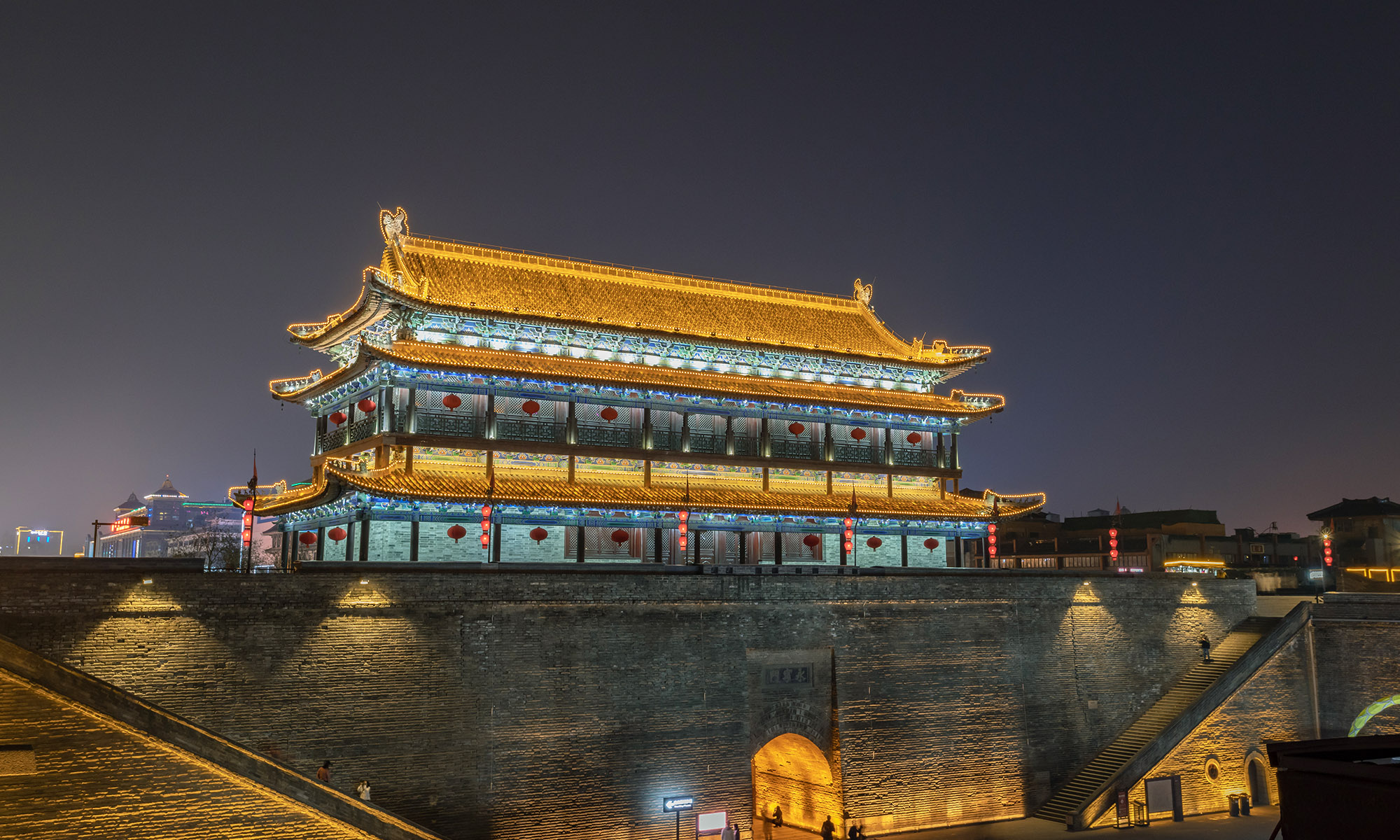
Bu Güney Kapısı ilk olarak inşa edilmiştir 582 during the Sui Dynasty, Sui ve Tang hanedanlığı Chang’an’ın güneydoğusundaki İmparatorluk Şehri’ne açılan kapılardan biriydi. In 1370, Ming Hanedanlığı Xi’an Şehir Duvarı'nın inşasına başlandı. Sui ve Tang hanedanlığı kapısı büyütüldü ve Ming Hanedanlığı Xi’an’ın en önemli kapısı oldu. Bugün, Güney Kapısı duvarın dört ana kapısından en eski ve en görkemlisidir. Güney Kapısı Ming Hanedanlığı sırasında savunma tahkimatlarının bir vitrinidir. Hendek ile inşa edilmiştir, asansörlü köprü, ok atış kulesi (embrasurelu gözetleme kulesi), okçuluk kulesi ve ana kapı binası. Orijinal embrasurelu gözetleme kulesi yangın sırasında yıkıldı 1926 iç savaş sırasında, ve tadil edildi 2014. Ana kapı binasının biraz önünde yer almaktadır, okçuluk kulesi, okçuluk sıralarının yerleştirilmesi nedeniyle bu adla adlandırılmıştır, saldırganlara mermi atabilecek savunucuların bulunduğu yerden. Orijinal Ming Hanedanlığı okçuluk kulesi, iç savaş sırasında yangında yok oldu 1926. Restorasyonu yapıldı 2014.
Batı Kapısı
Güney Kapısı gibi, Batı Kapısı ilk olarak ... yılında inşa edildi 582 during the Sui Dynasty. Tang Hanedanlığı sırasında İmparatorluk Şehri'ne açılan kapılardan biri olarak kullanıldı. Mevcut yapılar ... yılları arasında inşa edildi 1374 ve 1378 Ming Hanedanlığı sırasında.
Kuzey Kapısı
Kuzey Kapısı ... yılında inşa edildi 1370 Ming Hanedanlığı sırasında. In 1911, Mançu Ordusu'nun kışlası kuzey kapısının içindeydi ve bu Kapı Kulesi cephanelik olarak hizmet veriyordu. Çin Devrimi sırasında devrimci ve Mançu ordusu arasında kuzey kapısında şiddetli bir savaş yapıldı 1911. Kapı kulesi tamamen yandı. Bu devrim Çin’in son imparatorluk hanedanını sona erdirdi, Mançu liderliğindeki Qing hanedanı, ve Çin Cumhuriyeti'nin kurulmasına yol açtı.
Doğu Kapısı
Doğu Kapısı aynı zamanda Changle Kapısı olarak da adlandırılır. Changle sonsuz sevinç anlamına gelir. Burada inşa edildi 1374 Ming Hanedanlığı sırasında. Li Zicheng, Ming Hanedanı sonundaki köylü ayaklanmasının lideri, Xi'an'ı Doğu Kapısı'ndan bağladığında, ordusuna, eğer imparatorlar sonsuz sevinç alırsa, insanlar uzun süre acı çekecek. kapı kuleleri isyancılar tarafından yerle bir edildi. Okçuluk kulesi ve kapı kulesi Qing Hanedanı döneminde yeniden inşa edildi.
Barbikan
Yardımcı duvarlar, ana duvara dik uzanan, okçuluk kulesini ana kapı eviyle birleştirecek, barbican adı verilen dikdörtgen bir alanı çevreliyor. Bu bölge tampon bölge görevi görür, ilk kapı aşılırsa. Çince adı, “kavanoz duvarları”, refers to the intended strategy whereby attackers coming through the archery tower would be trapped in the barbican, open to attack from all sides. Hence the Chinese idiom: catch a turtle in the jar, meaning go after an easy prey.
The Moat
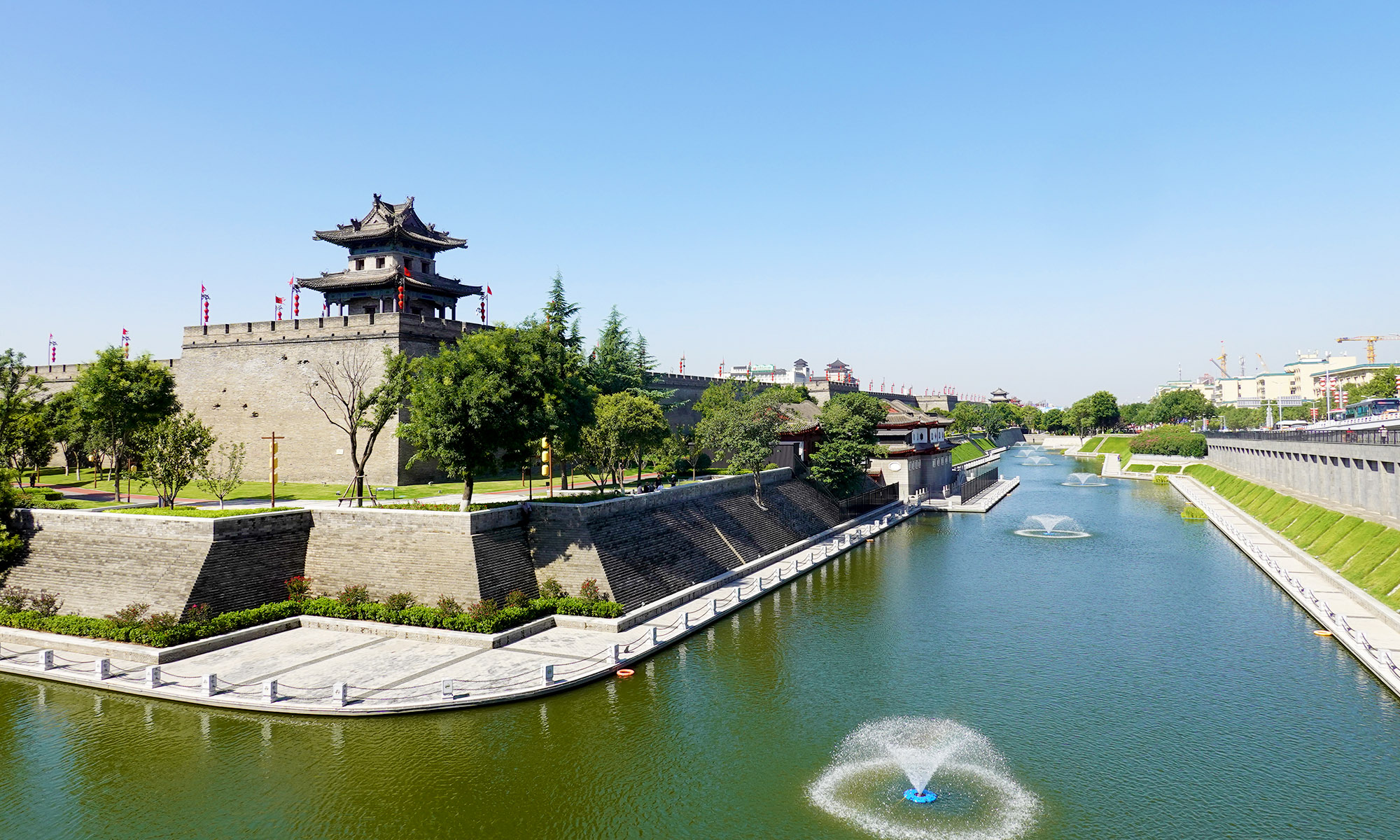
Located outside the city wall, the moat played an important defensive role in times of war. It kept the invaders at a distance, and prevented them from getting close to the wall. Attackers had to construct bridges in order to reach the top of the wall, thus exposing themselves to the defenders of the city. In 1370, Xi’an şehir surlarının inşaatına önce hendeğe küreklerle başlanıldı, daha sonra toprak surun bulunduğu alana taşındı, kireç ve yapışkan pirinç özü ile sıkıştırıldı. The moat is 148 feet wide and 16 feet deep. Four drawbridges was built on the moat which served as the entrance to the city on its four gates.
Corner Ramparts & Corner Towers
Corner ramparts and towers were placed where two walls joined. They gave defenders a bird’s eye view over both the city and its surroundings. The city wall of Xian is rectangular in shape. Four corner ramparts and towers were built on the wall. Unlike the other three corners which are square-shaped. The protruding rampart of the Southwest Corner is round. The reason might be that this rampart is a vestige of the Mongolian Yuan Dynasty. The Mongols live in portable, round tent, called Mongolian Yurt. When Mongols ruled Xian in 1312, the corners of the city wall were built in a round shape to resemble their round tent. In 1370, when the wall was enlarged during the Ming Dynasty, only this round shaped corner was left and the other three were built in a square shape.
Tang Dynasty Welcome Ceremony
One of the highlights at the South Gate is a feast of interesting performances showcasing the charm of the bygone times of Xian. Called Tang Dynasty Welcome Ceremony, the ceremony made its debut in 1996. It is a faithful re-enactment of a classical welcoming ceremony in the style of Tang Dynasty, with warriors in Tang dynasty golden armors, maidens in beautiful Tang dynasty costumes. Red lanterns hung from the lampposts, and bright silk banners bearing images of mythical birds of good fortune. The former US president Bill Clinton was the first foreign leader to attend the ceremony in 1998.
Walking and Biking Tours
Along the top of the wall is a walkway and has become a city playground. Walking and biking tours atop the wall have become popular with locals and tourists. It takes about 4 bu duvarı geçmek için saatlerce yürüyerek 8.5 mil uzunluğundaki duvar. engebeli inişli, 2 saatlik yolculuk, modern Xi'an ve eski şehir merkezi. Duvarın dışında, yüksek katlar ve otoyollar yeni zenginliği ortaya koyuyor. Duvarın içinde, the 4.4 Eski mil kare Xi'an alçaklardan oluşur, antik binalar. Şehir surunun içine gökdelen izin verilmez.
Xi'an Şehir Suru Uluslararası Maratonu
Yıllık Xi'an Şehir Suru Uluslararası Maratonu yerel bir etkinlik olarak öne çıkıyor. O zamandan beri 1993, Çin ve yurtdışından binlerce sporcu Kasım ayının ilk Pazar günü bu özel pistte yarışmak için bir araya geliyor.
Xian Şehir Duvarı'na nasıl gidilir
Şehir Duvarına tırmanmak için sekiz puan var: Güney Kapısı, Doğu Kapısı, Batı Kapısı, Kuzey Kapısı, Heping Kapısı, Wenchang Kapısı, Hanguang Kapısı ve Shangde Kapısı. Aşağıda, Çin Seddi'nin dört ana kapısına ulaşmanın yolları verilmiştir:
Güney Kapısına (Yongning Kapısı)
• Metro Hattı'na binin 2 Yongningmen İstasyonu'na (D1 Çıkışı).
• 6 numaralı otobüse binin, 11, 12, 23, 46, 215, 239, 258, 600, 603, 608, 910, K600, vb.
Doğu Kapısına (Changle Kapısı)
• 8 numaralı otobüse binin, 22, 27, 29, 33, 37, 43, 45, 102, 203, 218, 235, 252, 300, 527, 602, 604, ya da 903, vb.
Kuzey Kapısına (Anyuan Kapısı)
• Metro Hattı'na binin 2 Anyuanmen İstasyonu'na (B Çıkışı).
• 6 numaralı otobüse binin, 26, 28, 33, 37, 39, 117, 205, 208, 214, 229, 236, ya da 511, vb.
Batı Kapısına (Anding Kapısı)
• 4 numaralı otobüse binin, 10, 15, 23, 31, 201, 205, 206, 215, 221, 222, 223, 300, 407, 504, 611 ya da 701, vb.
Xi'an Şehir Duvarı hakkında ek seyahat önerileri
• Tüm duvar boyunca bisikletle gitmek 2 saat sürer. İki saatlik bisiklet kiralama ücreti 45 RMB ($7).
• Duvarın etrafında yürümek yaklaşık dört saat sürer.
• Yanınıza bir şişe su alın çünkü duvarda içecek satacak satıcılar olmayabilir.