+86-29-8964-0200
info@islamichina.com

Introducing Terracotta Warriors & Atlar
Terrakotta Askerleri & Atlar 20. yüzyılın en önemli arkeolojik kazılarıdır. Bu sitede çalışmalar devam etmektedir, ki bu 1.5 İmparator Qin Shi Huang’ın Mozolesi’nin doğusunda kilometrelerce uzaklıktadır, Lintong Bölgesi, Shaanxi Eyaleti. Çin’i ziyaret eden hiçbir kişinin kaçırmaması gereken bir manzaradır. Tahta çıkar çıkmaz 13 (in 246 MÖ), Qin Shi Huang, daha sonra tüm Çin’in ilk İmparatoru, mozolesinde çalışmalar başlatmıştır. Bitişi 11 yıl almıştır. İmparatora diğer dünyasında eşlik eden birçok gömülü hazine ve fedakarlık nesnesi olduğu spekülasyon edilmektedir. Bir grup köylü, kraliyet mezarının yakınında bir kuyu kazarken bazı çömlekler buldu 1974. Bu bulgu arkeologların hemen dikkatini çekti. Onlar Xi’an’a akın ederek kazıları incelemeye ve genişletmeye geldi. They had established beyond doubt that these artifacts were associated with the Qin Dynasty (211 –206 MÖ). The State Council authorized to build a museum on site in 1975. When completed, people from far and near came to visit. Xian and the Museum of Qin Terra Cotta Warriors & Horses have become landmarks on all travelers’ itinerary. Life size terracotta figures of Warriors and Horses arranged in battle formations are the star features at the museum. They are replicas of what the imperial guard should look like in those days of pomp and vigor. Terrakotta Askerleri & Horses is a sensational archeological find of all times. Terra Cotta Warriors & Horses has put Xian on the map for tourists. Terra Cotta Warriors & Horses was listed by UNESCO in 1987 as one of the world cultural heritages.
Pişmiş Toprak Savaşçıları & Horses Fast Facts
• Çince Adı: Bing Ma Yong 兵马俑
• Ziyaret İçin En İyi Zaman: Yıl boyunca
• Tavsiye Edilen Ziyaret Saatleri: Saat 3 to 5 saat
• Yapılacak Şeyler: Fotoğrafçılık, Intangible Cultural Heritage Study
• Çalışma Saatleri: 9:00 – 16:00
• Giriş Ücreti: ¥120/kişi
• Adres: Lintong, 30km northeast of Xi’an, Shaanxi Province
What to expect at Terracotta Warriors & Atlar
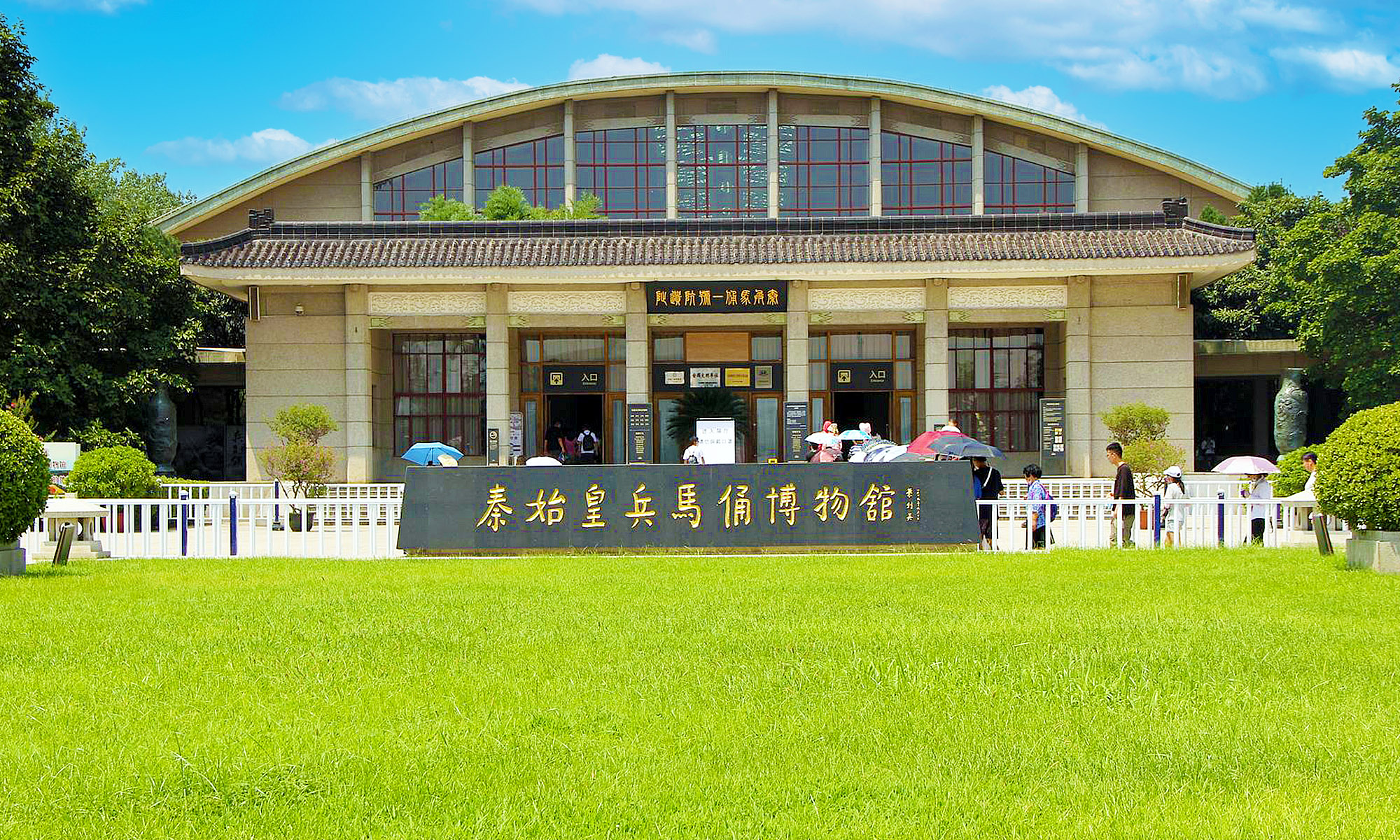
Terrakotta Askerleri & Horses Museum covers an area of 16,300 metrekare, divided into four sections: No.1 Pit, Hayır. 2 Pit, Hayır. 3 Pit and Exhibition Hall respectively. The Pits were then named Pit 1, Pit 2, and Pit 3 by order of discovery.
Pit One
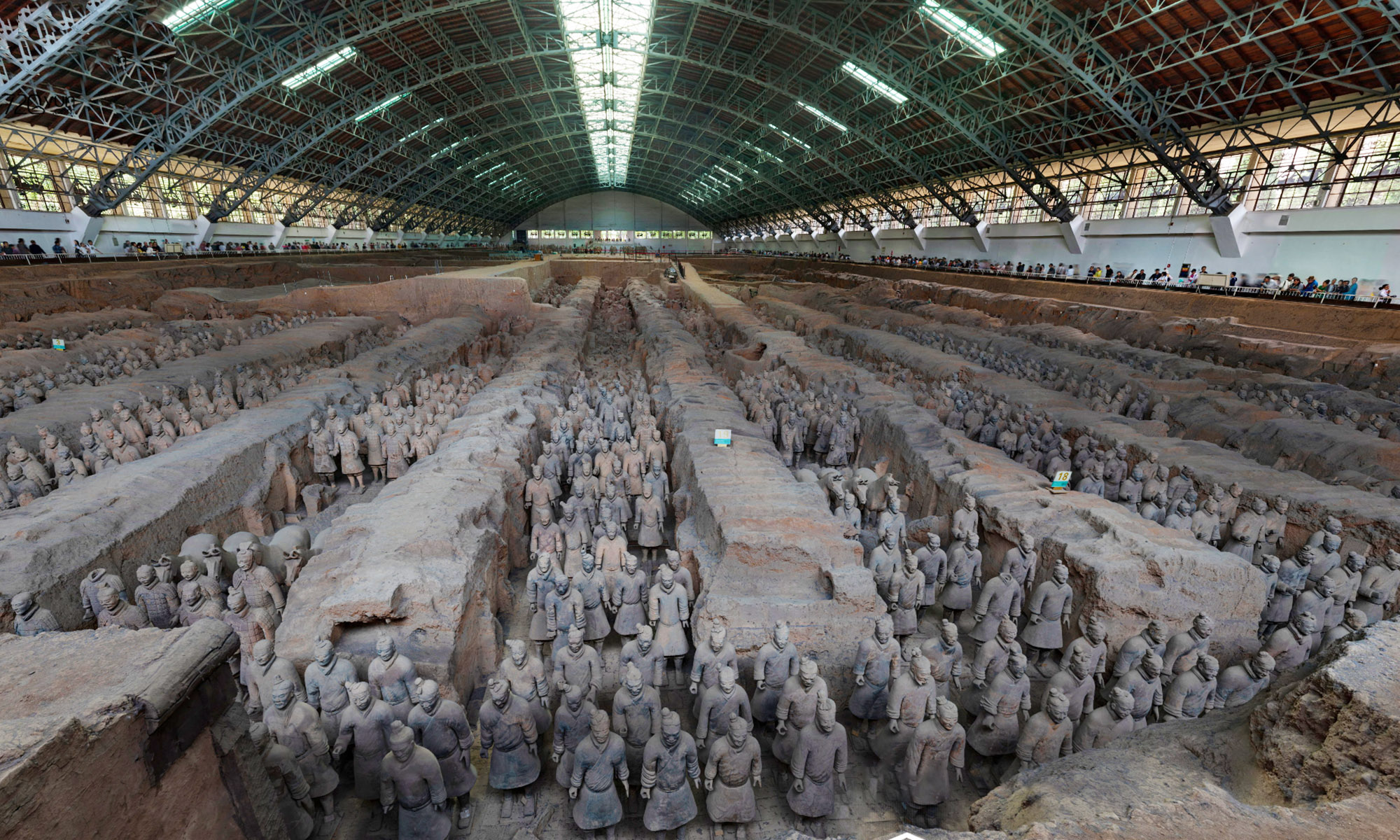
Pit 1 is the largest pit of the three pits. Pit 1 takes an oblong shape, measuring 230 metre uzunluğunda, 62 meters wide and 5 meters deep. The total area is 14, 260 metrekare, as large as two football fields. The terracotta warriors and horses in Pit 1 are arrayed in battle formation.It is assumed that there are more than 6, 000 terracotta warriors and horses in Pit 1, bunlardan 1, 000 have been unearthed. In the long corridor to the east end of the pit stand three rows of terracotta warriors facing east in the battle robes, 70 in each row, totaling 210. Armed with bows and arrows, they constitute the vanguard. There is one row of warriors in the south, north and west of the corridor respectively, facing outward. They are probably the flanks and the rear guard. Holding crossbows and arrows and other long-distance shooting weapons, they took up the job of defending the whole army. The ten rammed partition walls divide Pit 1 into 11 latitudinal corridors where stand 38 columns of warriors facing east with horse-drawn chariots in the center. These warriors are probably the main body of the formation and represent the principal fighting force.
Pit Two
Pit 2 was found in 1976, şehir merkezine 20 meters to the northeast of Pit 1. The pit is L-shaped and measured 6, 000 metrekare. It consists of four different mixed military forces, including infantry, charioteer, cavalry and archers. It is estimated that there are over warriors and horses, and thousands of bronze weapons inside it. Dört dizilecek tamamen birbirine bağlı olarak tam bir savaş formasyonu oluşturur ve bağımsız hareket edecek şekilde ayrılabilir, saldırı, savunma ve hızlı müdahale yapabilen özelliklere. Çukurdaki dört diziden üçü 2 savaş arabası sürücüsü. savaş formasyonunun çoğunu arabalar aldı. Ahşap arabalar yaşla çürümüştür, ama şaftlar, ve tekerlekler kilde şeffaf translar bıraktı. Savaş arabalarının bronz parçaları sağlam kaldı. İlk olarak terrakota generali bulmak bir keşiftir, çukurda diz çöken okçu ve eyer atlı süvari savaşçısı. Kuzey tarafında iki eğimli giriş var, ve doğu ile batı taraflarının her iki ucunda dört giriş var.
Çukurlardaki bazı figürler 1 ve 2 yangın hasarı gösteriyor, yanmış tavan kirişlerinin kalıntıları da bulundu. Ne zaman yakıldığı ve bunu kimin yaptığı tarih kitaplarında kaydedilmemiştir. Yıkımıyla ilgili akademik dünyada çeşitli görüşler vardır.
Çukur Üç
Yürüyün 25 Çukurun kuzeybatısından metreler uzaklıkta 1, P3'e ulaşacağız. P3, üç ana çukurun en küçüğüdür ve ilk ikisinden çok farklı olduğu bulunmuştur. U şeklindedir, toplam yaklaşık 520 metrekare. Sadece 68 seramik figürler, dört at tarafından çekilen bir ahşap araba ve 34 bronz silahlar bu çukurdaki kazılarda ortaya çıkarılmıştır. Çukurdaki savaşçılar 1 and Pit 2 savaş düzeninde yerleştirilmiştir. Ama çukurdaki savaşçılar 3 duvar boyunca birbirine karşı dizilmiş durumdadır, iki sırada. Yalnızca Shu adı verilen bir tür silah Çukur'da keşfedilmiştir 3. Bu tür silahın bıçağı yoktur ve onur muhafızları tarafından kullanıldığına inanılmaktadır. A remaining deer-horn and animal bones were also unearthed in this pit. This is probably the place where sacrificial offerings and war prayer were practiced. Judging from the layout of Pit 3, most scholars believe that Pit 3 is the headquarters directing the Emperor’s underground army.
Bronze Chariots and Horses
Various articles from Qin Dynasty and the models of Bronze Chariot and Horses are displayed in the Exhibition Hall of Historical Relics of Emperor Qin’s Mausoleum next to Terracotta Warriors Pit 2.
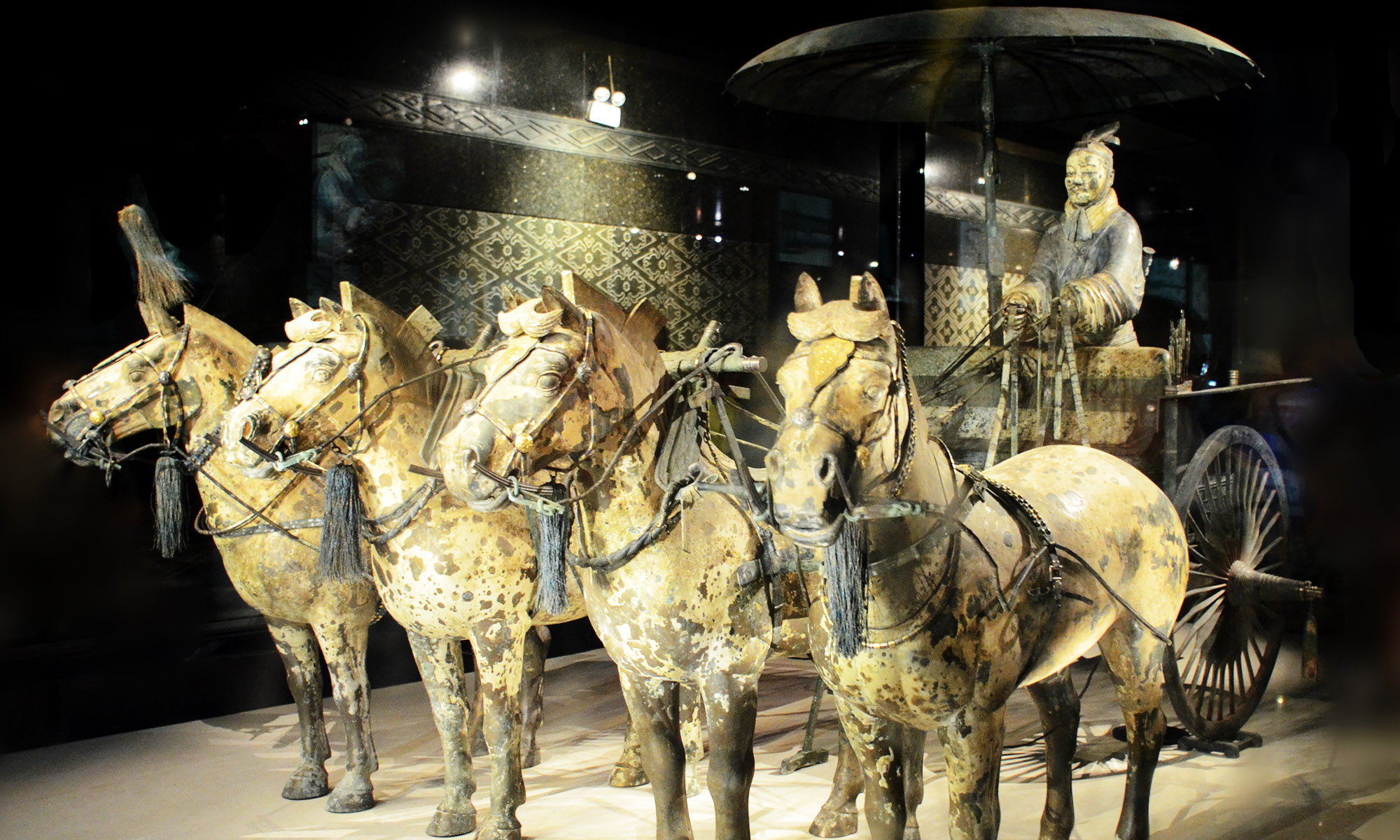
Aralık ayında 1980, two sets of large painted bronze chariots and horses were unearthed 20 meters west of the First Qin Emperor’s Mausoleum. They were labeled as Chariot No. 1 and No. 2 respectively by the order of discovery. Due to the fact that the wooden crate naturally decayed over time and the rammed soil that surrounded the pit caved in, the bronze chariots and horses had been broken into nearly 3,000 pieces when archaeologists discovered them. Fortunately, as this pit had neither been looted nor disturbed, their original positions remained intact, moreover, all parts of the chariots and horses were complete and in a condition that made them restorable. After eight years of careful and painstaking restoration, they have been restored to their original shape and now are displayed in the exhibition hall.
The two sets of bronze chariots and horses were intended to be used by the soul of the Emperor for his travels in the afterlife, so they are exact imitations of the actual ones of Emperor Qin Shihuang in half life-size. The two bronze chariots and horses represent the pinnacle of ancient Chinese metallurgical technology, and provide valuable materials and data for the research of the mechanism behind chariots of the Qin Dynasty. They are the largest, most complex and best preserved bronze wares discovered in the history of the Chinese archaeology, and have been praised as the “the top bronze works” of Ancient China.
The bronze chariots drawn by four horses, with a single shaft, were placed one before the other vertically.
Hayır. 1 Chariot is 2.25 metre uzunluğunda, 1.52 metre yüksekliğinde, with the total weight of 1,061 kilogram. It was equipped with crossbows, arrow heads and shields. There is a large umbrella providing shade from the sun. Its handle is flexible and rotatable to block the sun from different angles. The charioteer wore a hat. This shows that it was employed to protect the No. 2 Chariot behind.
Hayır. 2 Chariot is larger than the No.1 Chariot. Burası 3.17 metre uzunluğunda, 1.06 metre yüksekliğinde, with the total weight of 1,241 kilogram. The chariot was fitted with more than 1,500 pieces of silver and gold and other ornaments, and was probably used for the Emperor Qin Shihuang’s soul to go out on inspection. The chariot has three windows, one to the front, and one on either side in the compartment, and a door opens at the back. One may open and close the windows and the door. The roof is umbrella shaped, said to be symbolic of the round sky. There is a kneeling figure driving the No. 2 bronze vehicle.
How were the terracotta warriors & horses made?
The terracotta figures are life-sized, typically ranging from 175 cm to about 200 cm. Boyları, rütbelerine göre değişiklik gösterir, üniforma, ve saç stilleri, rütbesine göre değişir. Yüzleri, her bir figür için farklı gibi görünmektedir. Her bir savaşçının gerçek cesur Qin ordusu askerine göre yapıldığı tahmin edilmektedir. Hükümet işçileri ve yerel zanaatkarlar tarafından atölyelerde yerel malzemeler kullanılarak üretilmişlerdir. Başlar, kollar, bacaklar, ve gövdeler ayrı ayrı yaratılmış ve sonra parçalar yapıştırılarak birleştirilmiştir. Figürler hazır olduktan sonra, fırınlara konularak pişirilmişlerdir. Daha sonra, kil figürler dikkatlice boyalarla renklendirilmiştir. Figürler yanmış ve doğal çürüme sürecinden geçtiği için, orijinal görkemli renklerini göremiyoruz. Ancak, figürlerin çoğunda orijinal renklerin izleri bulunmaktadır, ve bazıları hâlâ yepyeni kadar parlaktır.
Terracotta Savaşçıları'na nasıl gidilir & Atlar
Terracotta Savaşçıları'na giden doğrudan toplu taşıma aracı yok & Atlar. GoGrandChina.com üzerinden araç kiralamanız veya aşağıdaki talimatları denemeniz önerilir:
Xian şehir merkezinden Terracotta Savaşçıları'na
• Metro Hattı'na binin 1 Fangzhicheng terminal durağına. Turist otobüsü No.5'e binin veya 306 yoldaki bir otobüs durağından 25-30 yaklaşık kuzeydeki Fangzhicheng Otobüs Durağı'na, arasında çalışır 7:00 ve 19:00. Sizi Terracotta Savaşçıları Müzesi'ne götürecektir.
• Taksi ile: 1 saat; yaklaşık ¥170.
Xian Uluslararası Havalimanı'ndan Terracotta Savaşçıları'na
• Havalimanı servis otobüsüne binin ve Fangzhicheng Otobüs Durağı'nda turist otobüs hattına transfer yapın 5 ya da 306 müzeye.
• Metro Hattı'na binin 13 Xi’an Kuzey Tren İstasyonu'na, hat değiştirin 4 Wulukou'ya, sonra hat değiştirin 1 Fangzhicheng'e, buradan turist otobüs hattına binebilirsiniz 5 ya da 306 müzeye.
• Havalimanı servis otobüsüne Lintong'a binin, and then take bus Lintong 101 müzeye.
• Taksi ile: 70 dakikalar; about ¥230.
From Xian North Railway Station to Terracotta Warriors
• Metro Hattı'na binin 2 to Beidajie, sonra hat değiştirin 1 Fangzhicheng'e, finally take a tourist bus line 5 ya da 306 müzeye.
• By Taxi: 1 saat; about ¥160.
Additional travel advice on Terracotta Warriors & Atlar
• To protect the Terracotta Warriors & Atlar, please turn off the flash of your camera when you take photos.
• The admission ticket is a pass for Qin Terracotta Warriors & Horses Museum and Emperor Qin’s Mausoleum. Normally, it’s recommended to visit Terracotta Warriors first, and if you have extra time, you can take the free shuttle bus (about 2.2km) to the Mausoleum.
• The weather of Xian is very dry, drink more water and use some moisturizer to help your skin retain moisture. If you come in summer, use some sun block to protect your skin from the strong UV of Xian.